SHAWORDS
Wilhelm von Humboldt

Wilhelm von Humboldt

Wilhelm von Humboldt

Wilhelm von Humboldt

author
95Quotes

Friedrich Wilhelm Christian Karl Ferdinand von Humboldt was a Prussian philosopher, linguist, government functionary, diplomat, and founder of the Humboldt University of Berlin. In 1949, the university was named after him and his younger brother, Alexander von Humboldt, a naturalist.

Popular Quotes

95 total
Quote
"The impetuous conquests of Alexander, the more politic and premeditated extension of territory made by the Romans, the wild and cruel incursions of the Mexicans, and the despotic acquisitions of the incas, have in both hemispheres contributed to put an end to the separate existence of many tribes as independent nations, and tended at the same time to establish more extended international amalgamation. Men of great and strong minds, as well as whole nations, acted under the influence of one idea, the purity of which was, however, utterly unknown to them. It was Christianity which first promulgated the truth of its exalted charity, although the seed sown yielded but a slow and scanty harvest. Before the religion of Christ manifested its form, its existence was only revealed by a faint foreshadowing presentiment. In recent times, the idea of civilization has acquired additional intensity, and has given rise to a desire of extending more widely the relations of national intercourse and of intellectual cultivation; even selfishness begins to learn that by such a course its interests will be better served than by violent and forced isolation. Language more than any other attribute of mankind, binds together the whole human race. By its idiomatic properties it certainly seems to separate nations, but the reciprocal understanding of foreign languages connects men together on the other hand without injuring individual national characteristics."
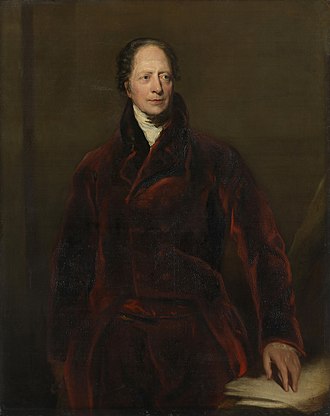
Wilhelm von HumboldtWilhelm von Humboldt
Quote
"If we would indicate an idea which, throughout the whole course of history, has ever more and more widely extended its empire, or which, more than any other, testifies to the much-contested and still more decidedly misunderstood perfectibility of the whole human race, it is that of establishing our common humanity — of striving to remove the barriers which prejudice and limited views of every kind have erected among men, and to treat all mankind, without reference to religion, nation, or color, as one fraternity, one great community, fitted for the attainment of one object, the unrestrained development of the physical powers. This is the ultimate and highest aim of society, identical with the direction implanted by nature in the mind of man toward the indefinite extension of his existence. He regards the earth in all its limits, and the heavens as far as his eye can scan their bright and starry depths, as inwardly his own, given to him as the objects of his contemplation, and as a field for the development of his energies. Even the child longs to pass the hills or the seas which inclose his narrow home; yet, when his eager steps have borne him beyond those limits, he pines, like the plant, for his native soil; and it is by this touching and beautiful attribute of man — this longing for that which is unknown, and this fond remembrance of that which is lost — that he is spared from an exclusive attachment to the present. Thus deeply rooted in the innermost nature of man, and even enjoined upon him by his highest tendencies, the recognition of the bond of humanity becomes one of the noblest leading principles in the history of mankind."
Wilhelm von HumboldtWilhelm von Humboldt

Similar Authors & Thinkers



