Quote
"I do not think there are many among Bishops that will be saved, but many more that perish: and the reason is, that it is an affair that requires a great mind."
J
John Chrysostom"A servant, indeed, one will be able perhaps to bind down by fear; nay, not even for him, for he will soon leave you. But the partner of ones life, the mother of ones children, the foundation of ones every joy, one ought never to chain down by fear and threats, but with love and good temper. For what sort of union is that, where the wife trembles at her husband? And what sort of pleasure will the husband have if he dwells with his wife as with a slave? Yea, even though you suffer everything on her account, do not scold her; for neither did Christ do this to the Church."
John Chrysostom was a Church Father who served as Archbishop of Constantinople. He is known for his preaching and public speaking, his Divine Liturgy of Saint John Chrysostom, and his ascetic sensibilities.
"I do not think there are many among Bishops that will be saved, but many more that perish: and the reason is, that it is an affair that requires a great mind."
"Tell me, then, whence are you rich? From whom did you receive it, and from whom he who transmitted it to you? From his father and his grandfather. But can you, ascending through many generations, show the acquisition just? It cannot be. The root and origin of it must have been injustice. Why? Because God in the beginning made not one man rich, and another poor. Nor did He afterwards take and show to one treasures of gold, and deny to the other the right of searching for it: but He left the earth free to all alike. Why then, if it is common, have you so many acres of land, while your neighbor has not a portion of it? ... Is not the earth Gods, and the fullness thereof? If then our possessions belong to one common Lord, they belong also to our fellow-servants. The possessions of one Lord are all common. Do we not see this the settled rule in great houses? To all is given an equal portion of provisions, for it proceeds from the treasures of their Lord. And the house of the master is opened to all. The kings possessions are all common, as cities, market-places, and public walks. We all share them equally. ... We are all formed with the same eyes, the same body, the same soul, the same structure in all respects, all things from the earth, all men from one man, and all in the same habitation. But these are not enough to shame us. Other things then (as we have said) He has made common, as baths, cities, market-places, walks. And observe, that concerning things that are common there is no contention, but all is peaceable. But when one attempts to possess himself of anything, to make it his own, then contention is introduced, as if nature herself were indignant, that when God brings us together in every way, we are eager to divide and separate ourselves by appropriating things, and by using those cold words mine and yours."
"O most grateful burden, which comforts them that carry it! The burdens of earthly masters gradually wear out the strength of those who carry them; but the burden of Christ assists the bearers of it, because we carry not grace, but grace us."
"Nothing is more miserable than those people who never failed to attack their own salvation. When there was need to observe the Law, they trampled it under foot. … On this account Stephen said: "You stiff-necked and uncircumcised in heart, you always resist the Holy Spirit", not only by transgressing the Law but also by wishing to observe it at the wrong time."
"His oratorical power was but the instrument, by which he readily, gracefully, adequately expressed,—expressed without effort and with felicity,—the keen feelings, the living ideas, the earnest practical lessons which he had to communicate to his hearers. He spoke, because his heart, his head, were brimful of things to speak about. His elocution corresponded to that strength and flexibility of limb, that quickness of eye, hand, and foot, by which a man excels in manly games or in mechanical skill. It would be a great mistake, in speaking of it, to ask whether it was Attic or Asiatic, terse or flowing, when its distinctive praise was that it was natural. His unrivalled charm, as that of every really eloquent man, lies in his singleness of purpose, his fixed grasp of his aim, his noble earnestness."
"[T]he Jewish people were driven by their drunkenness and plumpness to the ultimate evil; they kicked about, they failed to accept the yoke of Christ, nor did they pull the plow of his teaching. Another prophet hinted at this when he said: "Israel is as obstinate as a stubborn heifer." … Although such beasts are unfit for work, they are fit for killing. And this is what happened to the Jews: while they were making themselves unfit for work, they grew fit for slaughter. This is why Christ said: "But as for these my enemies, who did not want me to be king over them, bring them here and slay them." (Luke 19:27)"
"At one point a heated discussion arose over the possible interpretation of Lolita as a grandiose metaphor of the classic Europeans hopeless love for young, seductive, barbaric America. In his afterword to the novel Nabokov himself mentions this as the naive theory of one of the publishers who turned the book down. And although there cant be the slightest doubt that Nabokov did not mean to limit Lolita to that interpretation, there is no reason to exclude it as one of the novels many dimensions. The point, I felt, became obvious when one drew the line between Lolita as a delightfully frivolous story on the verge of pornography and Lolita as a literary masterpiece, the only convincing love story of our century."
 Lolita
"Lovely food, for rabbits, that is."
"One makes mistakes; that is life. But it is never a mistake to have loved."
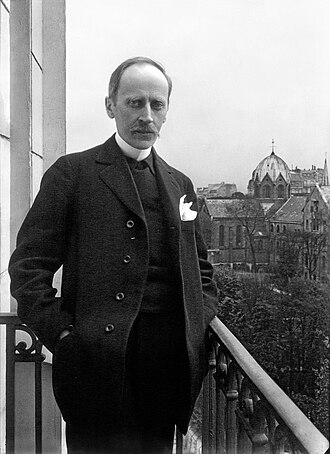 Romain Rolland
"[explaining to Ernie how April apologized to him] She just showed up at the factory, took off her coat, and begged me to take her. We made love in a way that Ive only ever seen in nature films."
 MouseHunt (film)
"Love is always love, come whence it may. A heart that beats at your approach, an eye that weeps when you go away are things so rare, so sweet, so precious that they must never be despised."
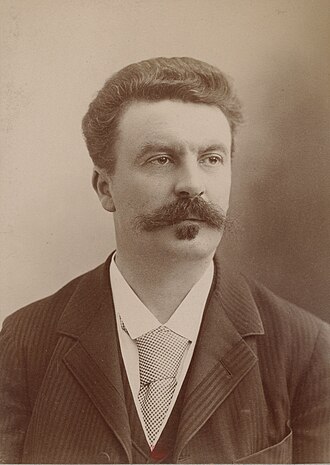 Guy de Maupassant
"He was obeyed, yet he inspired neither love nor fear, nor even respect. He inspired uneasiness. That was it! Uneasiness. Not a definite mistrust — just uneasiness — nothing more. You have no idea how effective such a... a... faculty can be. He had no genius for organizing, for initiative, or for order even. That was evident in such things as the deplorable state of the station. He had no learning, and no intelligence. His position had come to him — why? Perhaps because he was never ill . . . He had served three terms of three years out there . . . Because triumphant health in the general rout of constitutions is a kind of power in itself."