SHAWORDS

Aim at something great; aim at things which are difficult; and there i — John Stuart Mill

"Aim at something great; aim at things which are difficult; and there is no great thing which is not difficult. Do not pare down your undertaking to what you can hope to see successful in the next few years, or in the years of your own life. Fear not the reproach of Quixotism and impracticability, or to be pointed at as the knight-errants of an idea. After you have well weighed what you undertake, if you see your way clearly, and are convinced that you are right, go forward, even though you...do it at the risk of being torn to pieces by the very men through whose changed hearts your purpose will one day be accomplished. Fight on with all your strength against whatever odds, and with however small a band of supporters. If you are right, the time will come when that small band will swell into a multitude: you will at least lay the foundations of something memorable, and you may...—though you ought not to need or expect so great a reward—be spared to see that work completed which, when you began it, you only hoped it might be given to you to help forward a few stages on its way."
John Stuart Mill
John Stuart Mill
John Stuart Mill
author177 quotes

John Stuart Mill was an English philosopher, political economist, politician and civil servant. One of the most influential thinkers in the history of liberalism and social liberalism, he contributed widely to social theory, political theory, and political economy. Dubbed "the most influential English-speaking philosopher of the nineteenth century" by the Stanford Encyclopedia of Philosophy, he co

More by John Stuart Mill

View all →
Quote
"I soon perceived that she possessed in combination, the qualities which in all other persons whom I had known I had been only too happy to find singly. In her, complete emancipation from every kind of superstition (including that which attributes a pretended perfection to the order of nature and the universe), and an earnest protest against many things which are still part of the established constitution of society, resulted not from the hard intellect, but from strength of noble and elevated feeling, and co-existed with a highly reverential nature."
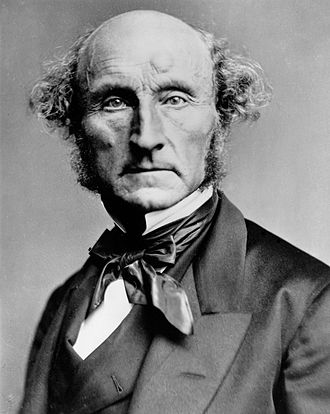
John Stuart MillJohn Stuart Mill
Quote
"As every reader of Representative Government soon discovers, it was Mill himself who undermined his own argument for universal inclusion by posing a counterargument based on consideration of competence. In the course of his discussion, he explicitly asserted that the criterion of competence must take priority over any principle, whether categorical or utilitarian, that makes inclusion in the demos a matter of general right among all adults subject to the laws... Mill brought into the open a problem that had been glossed over by some of his most illustrious predecessors. Yet in justifying an exclusionary demos Mill did no more than make implicit what had generally been implicit in all previous democratic theory and practice."
John Stuart MillJohn Stuart Mill
Quote
"We are far too apt to think of Mill as a technically philosophical writer, because we cannot help thinking of him as the author of the Logic, and to forget that he, no less than Bentham and the other utilitarians, is primarily dominated by the practical interest of the social reformer. He is really far more interested in the question of how, “once the general happiness is recognized as the ethical standard,” this ideal is to be practically realized, than in the question of the ethical criterion and its proof."
John Stuart MillJohn Stuart Mill

More on Life

View all →
Quote
"If it fulfills our hopes, this center will be, at once, a symbol and a reflection and a hope. It will symbolize our belief that the world of creation and thought are at the core of all civilization. Only recently in the White House we helped commemorate the 400th anniversary of Shakespeare. The political conflicts and ambitions of his England are known to the scholar and to the specialist. But his plays will forever move men in every corner of the world. The leaders that he wrote about live far more vividly in his words than in the almost forgotten facts of their own rule. Our civilization, too, will largely survive in the works of our creation. There is a quality in art which speaks across the gulf dividing man from man and nation from nation, and century from century. That quality confirms the faith that our common hopes may be more enduring than our conflicting hostilities. Even now men of affairs are struggling to catch up with the insights of great art. The stakes may well be the survival of civilization. The personal preferences of men in government are not important--except to themselves. However, it is important to know that the opportunity we give to the arts is a measure of the quality of our civilization. It is important to be aware that artistic activity can enrich the life of our people, which really is the central object of Government. It is important that our material prosperity liberate and not confine the creative spirit."
L
Lyndon B. Johnson
Quote
"I did not go to join Kurtz there and then. I did not. I remained to dream the nightmare out to the end, and to show my loyalty to Kurtz once more. Destiny. My destiny! Droll thing life is — that mysterious arrangement of merciless logic for a futile purpose. The most you can hope from it is some knowledge of yourself — that comes too late — a crop of unextinguishable regrets. I have wrestled with death. It is the most unexciting contest you can imagine. It takes place in an impalpable grayness, with nothing underfoot, with nothing around, without spectators, without clamor, without glory, without the great desire of victory, without the great fear of defeat, in a sickly atmosphere of tepid skepticism, without much belief in your own right, and still less in that of your adversary. If such is the form of ultimate wisdom, then life is a greater riddle than some of us think it to be. I was within a hairs-breadth of the last opportunity for pronouncement, and I found with humiliation that probably I would have nothing to say. This is the reason why I affirm that Kurtz was a remarkable man. He had something to say. He said it. Since I had peeped over the edge myself, I understand better the meaning of his stare, that could not see the flame of the candle, but was wide enough to embrace the whole universe, piercing enough to penetrate all the hearts that beat in the darkness. He had summed up — he had judged. The horror! He was a remarkable man. After all, this was the expression of some sort of belief; it had candor, it had conviction, it had a vibrating note of revolt in its whisper, it had the appalling face of a glimpsed truth — the strange commingling of desire and hate."
H
Heart of Darkness