Quote
"Economics is that way of understanding behavior that starts from the assumption that people have objectives and tend to choose the correct way to achieve them."
D
David Friedman"An ideal objectivist society with a limited government is superior to an anarcho-capitalist society in precisely the same way that an ideal socialist society is superior to a capitalist society. Socialism does better with perfect people than anarcho-capitalism with imperfect. And it is better to wear a bikini with the sun shining than a raincoat when it is raining. That is no argument against carrying an umbrella. (p.134)"
"Economics is that way of understanding behavior that starts from the assumption that people have objectives and tend to choose the correct way to achieve them."
"In the ideal socialist state, power will not attract power freaks. People who make decisions will show no slightest bias towards their own interests. There will be no way for a clever man to bend the institutions to serve his own ends. And the rivers will run uphill. (p.108)"
"The tendency to be rational is the consistent and hence predictable element in human behavior. (p.4)"
"The direct use of physical force is so poor a solution to the problem of limited resources that it is commonly employed only by small children and great nations. (p.4)"
"Perhaps the best way to see why anarcho-capitalism would be much more peaceful than our present system is by analogy. Consider our world as it would be if the cost of moving from one country to another were zero. Everyone lives in a housetrailer and speaks the same language. One day, the president of France announces that because of troubles with neighboring countries, new military taxes are being levied and conscription will begin shortly. The next morning the president of France finds himself ruling a peaceful but empty landscape, the population having been reduced to himself, three generals, and twenty-seven war correspondents. (p.123)"
"[T]he assumption describes our actions, not our thoughts. If you had to understand something intellectually in order to do it, none of us would be able to walk. Economics is based on the assumption that people have reasonably simple objectives and choose means to achieve them. Both assumptions are false-but useful. Suppose someone is rational only half the time. Since there is generally one right way of doing things and many wrong ways, the rational behavior can be predicted but the irrational cannot. If we assume he is rational, we predict his behavior correctly about half of the tie - far from perfect, but a lot better then nothing. If I could do well at the racetrack I would be a very rich man. [R]ationality is an assumption I make about other people. I know myself. [R]ationality is an assumption I make about other people. I know myself well enough to allow for the consequences of my own irrationality. But for the vast mass of my fellow humans, about whom I know very little, rationality is the best predictive assumption available. (pp.3-5)"
"Now Art, used collectively for painting, sculpture, architecture and music, is the mediatress between, and reconciler of, nature and man. It is, therefore, the power of humanizing nature, of infusing the thoughts and passions of man into everything which is the object of his contemplation."
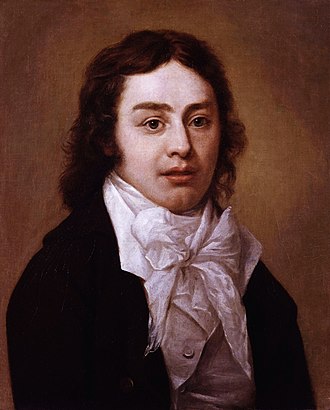 Samuel Taylor Coleridge
"The Good consists in the congruity of a thing with the laws of the reason and the nature of the will, and in its fitness to determine the latter to actualize the former: and it is always discursive. The Beautiful arises from the perceived harmony of an object, whether sight or sound, with the inborn and constitutive rules of the judgment and imagination: and it is always intuitive."
Samuel Taylor Coleridge"I believe that the unity of man as opposed to other living things derives from the fact that man is the conscious life of himself. Man is conscious of himself, of his future, which is death, of his smallness, of his impotence; he is aware of others as others; man is in nature, subject to its laws even if he transcends it with his thought."
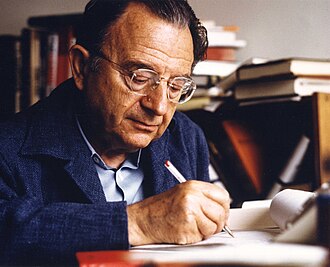 Erich Fromm
"Who made you glorious as the gates of heaven Beneath the keen full moon? Who bade the sun Clothe you with rainbows? Who, with living flower Of loveliest blue, spread garlands at your feet? God! let the torrents, like a shout of nations, Answer! and let the ice-plains echo, God! God! sing, ye meadow-streams, with gladsome voice! Ye pine-groves, with your soft and soul-like sounds! And they too have a voice, yon piles of snow, And in their perilous fall shall thunder, God!"
Samuel Taylor Coleridge"All Nature seems at work. Slugs leave their lair — The bees are stirring — birds are on the wing — And Winter slumbering in the open air, Wears on his smiling face a dream of Spring! And I the while, the sole unbusy thing, Nor honey make, nor pair, nor build, nor sing."
Samuel Taylor Coleridge"Taste is the intermediate faculty which connects the active with the passive powers of our nature, the intellect with the senses; and its appointed function is to elevate the images of the latter, while it realizes the ideas of the former."
Samuel Taylor Coleridge