Quote
"Im a Derek and Dereks dont run"
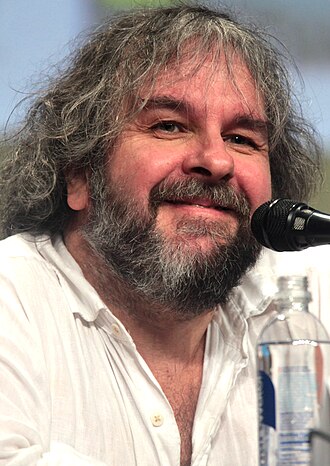 Peter Jackson
"And so I look back on not just the last ten years but everything that Ive done as being sort of an ongoing growing continual film school. I mean I dont think Ive got to a point where Ive achieved anything that feels like, a particular milestone, but theres still a lot more to learn and hopefully a lot more films to make."
Sir Peter Robert Jackson is a New Zealand filmmaker. He is best known as the director, writer, and producer of the Lord of the Rings trilogy (2001–2003) and the Hobbit trilogy (2012–2014), both of which are adapted from the novels of the same name by J. R. R. Tolkien.
"Im a Derek and Dereks dont run"
Peter Jackson"Kong bites his head off in a PG13 kinda way"
Peter Jackson"I dont take stuff seriously. I saw Hellraiser 3 the other day at Cannes; its OK, its a good film, I didnt hate it or anything. I thought it was quite good, but it was all just so serious. Some guy walking round with pins sticking out of his face. I just cant sit there and think ,this is really scary. If I made a Hellraiser film, Id like Pinhead to be whacked against a wall and have all the pins flattened into his face."
Peter Jackson"Remember, pain is temporary; film is forever."
Peter Jackson"I regard myself as an entertainer much more than an artist."
Peter Jackson"Fantasy is an F word that hopefully the five second delay wont do anything with"
Peter Jackson"One of the first major steps in the direction of modern skepticism came through the victory of Occam over Aquinas in a controversy about language. The statement that modi essendi were replaced by modi significandi et intelligendi, or that ontological referents were abandoned in favor of pragmatic significations, describes broadly the change in philosophy which continues to our time. From Occam to Bacon, from Bacon to Hobbes, and from Hobbes to contemporary semanticists, the progression is clear: ideas become psychological figments, words become useful signs. ... To one completely committed to this realm of becoming, as are the empiricists, the claim to apprehend verities is a sign of . Probably we have here but a highly sophisticated expression of the doctrine that ideals are hallucination and that the only normal, sane person is the healthy extrovert, making instant, instinctive adjustments to the stimuli of the material world."
"To have success in science, you need some luck. But to succeed in science, you need a lot more than luck. And its not enough to be smart — lots of people are very bright and get nowhere in life. In my view, you have to combine intelligence with a willingness not to follow conventions when they block your path forward."
"I, too, believed it was impossible to change the existing society into one that would be for the benefit of all; neither could I espouse any given ideal for society. But [...] I felt that even if one did not have an ideal vision of society, one could have one’s work to do. Whether it was successful or not was not our concern; it was enough that we believed it to be a valid work. The accomplishment of that work, I believed, was what our real life was about. Yes. I want to carry out a work of my own; for I feel that by so doing our lives are rooted in the here and now, not in some far-off ideal goal."
"We have already mentioned what may, perhaps, appear paradoxical to some of our readers, — that the division of labour can be applied with equal success to mental as to mechanical operations, and that it ensures in both the same economy of time."
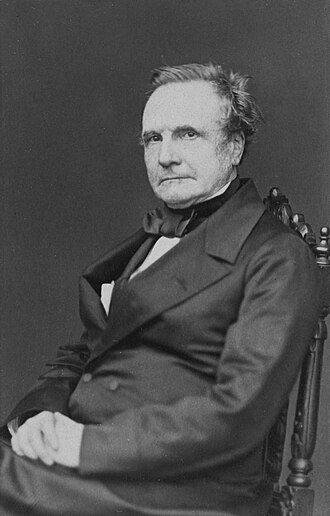 Charles Babbage
"The war was finished. It had lasted ten equivalent years and taken ten million lives. Thus it was neither of long duration nor of serious attrition. It hadnt any great significance; it was not intended to have. It did not prove a point, since all points had long ago been proven. What it did, perhaps, was to emphasize an aspect, sharpen a concept, underline a trend. On the whole it was a successful operation. Economically and ecologically it was of healthy effect, and who should grumble? And after wars, men go home. No, no, men start for home. Its not the same."
"The final test of a leader is that he leaves behind him in other men the conviction and the will to carry on. ... The genius of a good leader is to leave behind him a situation which common sense, without the grace of genius, can deal with successfully."
 Leadership