Quote
"To abjure the notion of the “truly human” is to abjure the attempt to divinize the self as a replacement for a divinized world."
R
Richard Rorty"As long as we try to project from the relative and conditioned to the absolute and unconditioned, we shall keep the pendulum swinging between dogmatism and skepticism. The only way to stop this increasingly tiresome pendulum swing is to change our conception of what philosophy is good for. But that is not something which will be accomplished by a few neat arguments. It will be accomplished, if it ever is, by a long, slow process of cultural change – that is to say, of change in common sense, changes in the intuitions available for being pumped up by philosophical arguments."
Richard McKay Rorty was an American philosopher, historian of ideas, and public intellectual. Educated at the University of Chicago and Yale University, Rorty's academic career included appointments as the Stuart Professor of Philosophy at Princeton University, the Kenan Professor of Humanities at the University of Virginia, and a professor of comparative literature at Stanford University. Among h
"To abjure the notion of the “truly human” is to abjure the attempt to divinize the self as a replacement for a divinized world."
"Citizens of a Jeffersonian democracy can be as religious or irreligious as they please as long as they are not “fanatical.” That is, they must abandon or modify opinion on matters of ultimate importance, the opinions that may hitherto have given sense and point to their lives, if these opinions entail public actions that cannot be justified to most of their fellow citizens."
"Philosophy makes progress not by becoming more rigorous but by becoming more imaginative."
"Nowadays, to say that we are clever animals is not to say something philosophical and pessimistic but something political and hopeful – namely, if we can work together, we can make ourselves into whatever we are clever and courageous enough to imagine ourselves becoming. This is to set aside Kant’s question “What is man?” and to substitute the question “What sort of world can we prepare for our great grandchildren?”"
"Philosophers get attention only when they appear to be doing something sinister—corrupting the youth, undermining the foundations of civilization, sneering at all we hold dear. The rest of the time everybody assumes that they are hard at work somewhere down in the sub-basement, keeping those foundations in good repair. Nobody much cares what brand of intellectual duct tape is being used."
"If I had to lay bets, my bet would be that everything is going to go to hell, but, you know, what else have we got except hope?"
"One of the first major steps in the direction of modern skepticism came through the victory of Occam over Aquinas in a controversy about language. The statement that modi essendi were replaced by modi significandi et intelligendi, or that ontological referents were abandoned in favor of pragmatic significations, describes broadly the change in philosophy which continues to our time. From Occam to Bacon, from Bacon to Hobbes, and from Hobbes to contemporary semanticists, the progression is clear: ideas become psychological figments, words become useful signs. ... To one completely committed to this realm of becoming, as are the empiricists, the claim to apprehend verities is a sign of . Probably we have here but a highly sophisticated expression of the doctrine that ideals are hallucination and that the only normal, sane person is the healthy extrovert, making instant, instinctive adjustments to the stimuli of the material world."
"To have success in science, you need some luck. But to succeed in science, you need a lot more than luck. And its not enough to be smart — lots of people are very bright and get nowhere in life. In my view, you have to combine intelligence with a willingness not to follow conventions when they block your path forward."
"I, too, believed it was impossible to change the existing society into one that would be for the benefit of all; neither could I espouse any given ideal for society. But [...] I felt that even if one did not have an ideal vision of society, one could have one’s work to do. Whether it was successful or not was not our concern; it was enough that we believed it to be a valid work. The accomplishment of that work, I believed, was what our real life was about. Yes. I want to carry out a work of my own; for I feel that by so doing our lives are rooted in the here and now, not in some far-off ideal goal."
"We have already mentioned what may, perhaps, appear paradoxical to some of our readers, — that the division of labour can be applied with equal success to mental as to mechanical operations, and that it ensures in both the same economy of time."
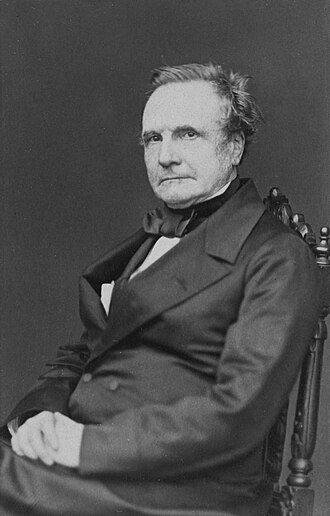 Charles Babbage
"The war was finished. It had lasted ten equivalent years and taken ten million lives. Thus it was neither of long duration nor of serious attrition. It hadnt any great significance; it was not intended to have. It did not prove a point, since all points had long ago been proven. What it did, perhaps, was to emphasize an aspect, sharpen a concept, underline a trend. On the whole it was a successful operation. Economically and ecologically it was of healthy effect, and who should grumble? And after wars, men go home. No, no, men start for home. Its not the same."
"The final test of a leader is that he leaves behind him in other men the conviction and the will to carry on. ... The genius of a good leader is to leave behind him a situation which common sense, without the grace of genius, can deal with successfully."
 Leadership