Quote
"I hear people say I swing at bad pitches. What is a bad pitch? If I can hit it, its not a bad pitch."
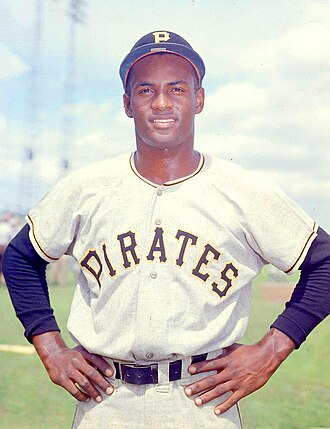 Roberto Clemente
"As we were talking, I was moving my neck around so he asked me what was the matter. I told him that my neck hurt because of an old baseball injury. In a 1958 spring training intrasquad game, I had cracked the third cervical vertebra in my neck when I had a collision with another player trying to catch a popup. Bobby told me to go take a shower with the water as hot as I could stand it. I did that and when I came out of the shower beet red all over, he had me lie on the trainer’s table for a massage. With his very strong hands, he kneaded the muscles in my neck and back and it felt wonderful. Afterwards, he told me to stand up with my back to him. He took two towels, wrapped them together into a cylindrical shape, placed them along my spine, and grabbed me in a bear hug. Then – in something similar to the Heimlich maneuver – he bent backward, pulled me toward him, lifted me off the ground, and sort of bounced me up and down for a moment. As he did, I heard a sound like a xylophone and felt my spine go into perfect alignment. He put me down and said, ‘You’ll feel better tomorrow.’ Heck, I felt better already. But the thing that really impressed me was that the next night I got a call from the visitors’ clubhouse in St. Louis. It was Bobby, and he wanted to know if my back was better. That was the act of a compassionate man, and I didn’t need the crash that ended his life to know that about Bobby."
Roberto Enrique Clemente Walker was a Puerto Rican professional baseball player who played 18 seasons in Major League Baseball (MLB) for the Pittsburgh Pirates, primarily as a right fielder. On December 31, 1972, Clemente was killed when his Douglas DC-7 airplane, which he had chartered for a flight to take and deliver emergency relief goods for the survivors of a massive earthquake in Nicaragua,
"I hear people say I swing at bad pitches. What is a bad pitch? If I can hit it, its not a bad pitch."
Roberto Clemente"If Roberto Clemente could sing, he would make Harry Belafonte wish he could hit."
Roberto Clemente"The American League must be that fountain of youth they talk about. A lot of National League pitchers did pretty good in the American League this year."
Roberto Clemente"He has these huge, strong hands. People always thought that because he hit with such power, he was this big guy. He wasnt, especially by todays standards. He came into spring training at 185 pounds. By the end of the season, he was 181. The power came from those hands."
Roberto Clemente"I played with Willie Mays and I played with Roberto Clemente, and what I see in Barry is the same ability I saw in Willie and Roberto. I see a guy who trusts himself at the plate and in the field. If I managed against Barry, I wouldnt let him beat me. I wouldnt give him the opportunity."
Roberto Clemente"I am having a plaque put on the front of my house. It will say, "To God, Mother, Father and Baseball."
Roberto Clemente"In the life of the mass-order, the culture of the generality tends to conform to the demands of the average human being. Spirituality decays through being diffused among the masses when knowledge is impoverished in every possible way by rationalisation until it becomes accessible to the crude understanding of all."
"The first thing I remember about the world — and I pray that it may be the last — is that I was a stranger in it. This feeling, which everyone has in some degree, and which is, at once, the glory and desolation of homo sapiens, provides the only thread of consistency that I can detect in my life."
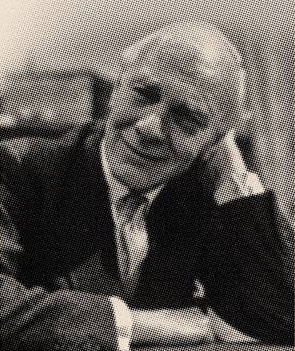 Malcolm Muggeridge
"Jewish custom, which traces descent solely from the mother, is more sensible and more discreet. Our own lawgivers cant accept the fact that there are many things in family life that are best kept shrouded in mystery."
"One makes mistakes; that is life. But it is never a mistake to have loved."
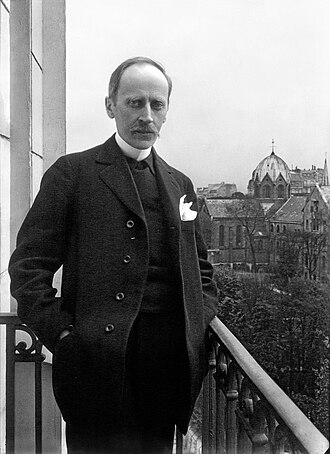 Romain Rolland
"If it fulfills our hopes, this center will be, at once, a symbol and a reflection and a hope. It will symbolize our belief that the world of creation and thought are at the core of all civilization. Only recently in the White House we helped commemorate the 400th anniversary of Shakespeare. The political conflicts and ambitions of his England are known to the scholar and to the specialist. But his plays will forever move men in every corner of the world. The leaders that he wrote about live far more vividly in his words than in the almost forgotten facts of their own rule. Our civilization, too, will largely survive in the works of our creation. There is a quality in art which speaks across the gulf dividing man from man and nation from nation, and century from century. That quality confirms the faith that our common hopes may be more enduring than our conflicting hostilities. Even now men of affairs are struggling to catch up with the insights of great art. The stakes may well be the survival of civilization. The personal preferences of men in government are not important--except to themselves. However, it is important to know that the opportunity we give to the arts is a measure of the quality of our civilization. It is important to be aware that artistic activity can enrich the life of our people, which really is the central object of Government. It is important that our material prosperity liberate and not confine the creative spirit."
"I did not go to join Kurtz there and then. I did not. I remained to dream the nightmare out to the end, and to show my loyalty to Kurtz once more. Destiny. My destiny! Droll thing life is — that mysterious arrangement of merciless logic for a futile purpose. The most you can hope from it is some knowledge of yourself — that comes too late — a crop of unextinguishable regrets. I have wrestled with death. It is the most unexciting contest you can imagine. It takes place in an impalpable grayness, with nothing underfoot, with nothing around, without spectators, without clamor, without glory, without the great desire of victory, without the great fear of defeat, in a sickly atmosphere of tepid skepticism, without much belief in your own right, and still less in that of your adversary. If such is the form of ultimate wisdom, then life is a greater riddle than some of us think it to be. I was within a hairs-breadth of the last opportunity for pronouncement, and I found with humiliation that probably I would have nothing to say. This is the reason why I affirm that Kurtz was a remarkable man. He had something to say. He said it. Since I had peeped over the edge myself, I understand better the meaning of his stare, that could not see the flame of the candle, but was wide enough to embrace the whole universe, piercing enough to penetrate all the hearts that beat in the darkness. He had summed up — he had judged. The horror! He was a remarkable man. After all, this was the expression of some sort of belief; it had candor, it had conviction, it had a vibrating note of revolt in its whisper, it had the appalling face of a glimpsed truth — the strange commingling of desire and hate."