Quote
"The clearest way to see through a culture is to attend to its tools for conversation."
N
Neil Postman"Because of what computers commonly do... With the exception of the electric light, there never has been a technology that better exemplifies Marshall McLuhans aphorism "The medium is the message." …the "message" of computer technology is comprehensive and domineering. The computer argues, to put it baldly, that the most serious problems confronting us at both personal and professional levels require technical solutions through fast access to information otherwise unavailable. ...this is... nonsense. Our most serious problems are not technical, nor do they arise from inadequate information. If a nuclear catastrophe occurs, it shall not be because of inadequate information. Where people are dying of starvation, it does not occur because of inadequate information. If families break up, children are mistreated, crime terrorizes a city, education is impotent, it does not happen because of inadequate information. Mathematical equations, instantaneous communication, and vast quantities of information have nothing whatever to do with any of these problems. And the computer is useless in addressing them."
Neil Postman was an American author, educator, media theorist, and cultural critic who eschewed digital technology, including personal computers and mobile devices, and was critical of the use of personal computers in schools. He is best known for 20 books about technology and education, including Teaching as a Subversive Activity (1970), The Disappearance of Childhood (1982), Amusing Ourselves to
"The clearest way to see through a culture is to attend to its tools for conversation."
"Definitions, like questions and metaphors, are instruments for thinking. Their authority rests entirely on their usefulness, not their correctness. We use definitions in order to delineate problems we wish to investigate, or to further interests we wish to promote. In other words, we invent definitions and discard them as suits our purposes. And yet, one gets the impression that... God has provided us with definitions from which we depart at the risk of losing our immortal souls. This is the belief that I have elsewhere called "definition tyranny," which may be defined... as the process of accepting without criticism someone elses definition of a word or a problem or a situation. I can think of no better method of freeing students from this obstruction of the mind than to provide them with alternative definitions of every concept and term with which they must deal in a subject. Whether it be "molecule," "fact," "law," "art," "wealth," "gene," or whatever, it is essential that students understand that definitions are hypotheses, and that embedded in them is a particular philosophical, sociological, or epistemological point of view."
"Since most subjects studied in school consist largely of theories... language education must include not only the serious study of what truth and falsehood mean in the context of a subject, but also what is meant by a fact, an inference, an assumption, a judgment, a generalization... In this way students will be learning both the language of a subject and the methods of inquiry in that subject, since inquiry consists of nothing else but the generation of questions, the invention of definitions and metaphors, the separation of facts from inferences, the forming of generalizations..."
"It may come as a surprise to our technocrat philosophers, but people do not read, write, speak, or listen primarily for the purpose of achieving a test score. They use language in order to conduct their lives, and to control their lives, and to understand their lives. An improvement in ones language abilities is therefore ...observed in changes in ones purposes, perceptions, and evaluations. Language education... may achieve what George Bernard Shaw asserted is the function of art. "Art," he said in Quintessence of Ibsenismn, "should refine our sense of character and conduct, of justice and sympathy, greatly heightening our self knowledge, self-control, precision of action and considerateness, and making us intolerant of baseness, cruelty, injustice, and intellectual superficialty and vulgarity." …For my purposes, if you replace the word "art" with the phrase "language education," you will have a precise statement of what I have been trying to say."
"The BASIC FUNCTION of all education, even in the most traditional sense, is to increase the survival prospects of the group. If this function is fulfilled, the group survives. If not, it doesnt. There have been times when this function was not fulfilled, and groups (some of them we even call "civilizations") disappeared. Generally, this resulted from changes in the kind of threats the group faced. The threats changed, but the education did not, and so the group, in a way, "disappeared itself" (to use a phrase from Catch-22). The tendency seems to be for most "educational" systems, from patterns of training in "primitive" tribal societies to school systems in technological societies, to fall imperceptibly into a role devoted exclusively to the conservation of old ideas, concepts, attitudes, skills, and perceptions. This happens largely because of the unconsciously held belief that these old ways of thinking and doing are necessary to the survival of the group. …Survival in a stable environment depends almost entirely on remembering the strategies for survival that have been developed in the past, and so the conservation and transmission of these becomes the primary mission of education. But, a paradoxical situation develops when change becomes the primary characteristic of the environment. Then the task turns inside out — survival in a rapidly changing environment depends almost entirely upon being able to identify which of the old concepts are relevant to the demands imposed by the new threats to survival, and which are not. Then a new educational task becomes critical: getting the group to unlearn (to "forget") the irrelevant concepts as a prior condition of learning. What we are saying is that the "selective forgetting" is necessary for survival."
"Someone needs to mention what may be lost. Of course, one of the problems is that what I would judge to be a negative consequence, someone else might see as a positive consequence. For example, telephones in automobiles seem to me a very bad idea. So does spending a lot of hours "communicating" on the Internet when one could use that time reading Cervantes Don Quixote."
"In the life of the mass-order, the culture of the generality tends to conform to the demands of the average human being. Spirituality decays through being diffused among the masses when knowledge is impoverished in every possible way by rationalisation until it becomes accessible to the crude understanding of all."
"I did not go to join Kurtz there and then. I did not. I remained to dream the nightmare out to the end, and to show my loyalty to Kurtz once more. Destiny. My destiny! Droll thing life is — that mysterious arrangement of merciless logic for a futile purpose. The most you can hope from it is some knowledge of yourself — that comes too late — a crop of unextinguishable regrets. I have wrestled with death. It is the most unexciting contest you can imagine. It takes place in an impalpable grayness, with nothing underfoot, with nothing around, without spectators, without clamor, without glory, without the great desire of victory, without the great fear of defeat, in a sickly atmosphere of tepid skepticism, without much belief in your own right, and still less in that of your adversary. If such is the form of ultimate wisdom, then life is a greater riddle than some of us think it to be. I was within a hairs-breadth of the last opportunity for pronouncement, and I found with humiliation that probably I would have nothing to say. This is the reason why I affirm that Kurtz was a remarkable man. He had something to say. He said it. Since I had peeped over the edge myself, I understand better the meaning of his stare, that could not see the flame of the candle, but was wide enough to embrace the whole universe, piercing enough to penetrate all the hearts that beat in the darkness. He had summed up — he had judged. The horror! He was a remarkable man. After all, this was the expression of some sort of belief; it had candor, it had conviction, it had a vibrating note of revolt in its whisper, it had the appalling face of a glimpsed truth — the strange commingling of desire and hate."
"Ive been taking a closer look at these graduates. They are actually taller, stronger, smarter than we were, smart enough maybe to take our mistakes as their messages, to make our weaknesses their lessons, and to make our example — good and not so good — part of their education."
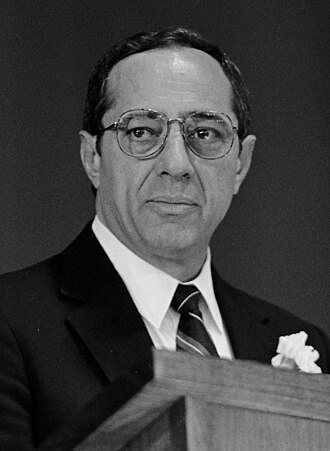 Mario Cuomo
"All men suppose what is called Wisdom to deal with the first causes and the principles of things; so that, as has been said before, the man of experience is thought to be wiser than the possessors of any sense-perception whatever, the artist wiser than the men of experience, the masterworker than the mechanic, and the theoretical kinds of knowledge to be more of the nature of Wisdom than the productive."
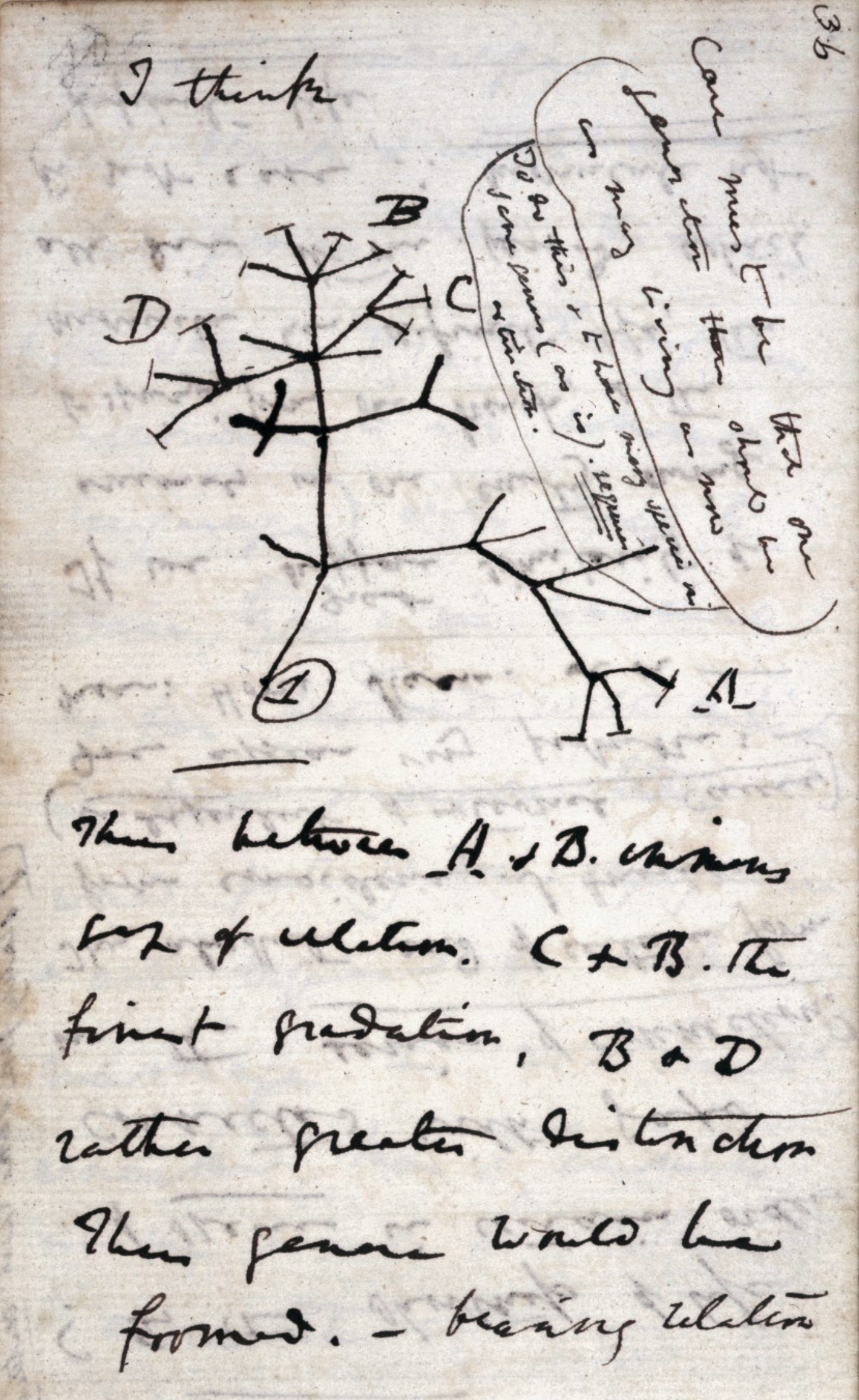 Theory
"My specific... object has been to contain, within the prescribed limits, the whole of the students course, from the confines of elementary algebra and trigonometry, to the entrance of the highest works on mathematical physics. A learner who has a good knowledge of the subjects just named, and who can master the present treatise, taking up elementary works on conic sections, application of algebra to geometry, and the theory of equations, as he wants them, will, I am perfectly sure, find himself able to conquer the difficulties of anything he may meet with; and need not close any book of Laplace, Lagrange, Legendre, Poisson, Fourier, Cauchy, Gauss, Abel, Hindenburgh and his followers. or of any one of our English mathematicians, under the idea that it is too hard for him."
"Religious faith in the case of the Hindus has never been allowed to run counter to scientific laws, moreover the former is never made a condition for the knowledge they teach, but there are always scrupulously careful to take into consideration the possibility that by reason both the agnostic and atheist may attain truth in their own way. Such tolerance may be surprising to religious believers in the West, but it is an integral part of Vedantic belief."
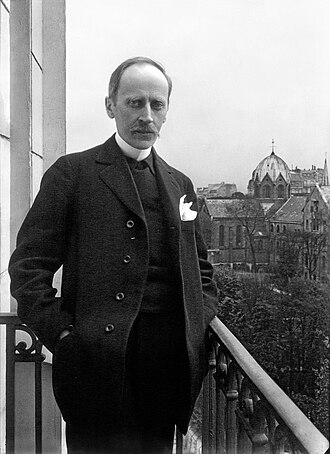 Romain Rolland