SHAWORDS

Bit by bit, at 124 and in the Clearing, along with others, she had cla — Toni Morrison

"Bit by bit, at 124 and in the Clearing, along with others, she had claimed herself. Freeing yourself was one thing; claiming ownership of that freed self was another."
Toni Morrison
Toni Morrison
Toni Morrison
author118 quotes

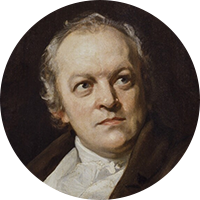
Chloe Anthony Wofford "Toni" Morrison was an American novelist and editor. She was awarded the Nobel Prize in Literature in 1993. Her first novel, The Bluest Eye, was published in 1970. The critically acclaimed Song of Solomon (1977) brought her national attention and won the National Book Critics Circle Award. In 1988, Morrison won the Pulitzer Prize for Beloved (1987).

More by Toni Morrison

View all →
Quote
"Except for an occasional request for color she said practically nothing — until the afternoon of the last day of her life when she got out of bed, skipped slowly to the door of the keeping room and announced to Sethe and Denver the lesson se had learned from her sixty years a slave and ten years free: that there was no bad luck in the world but whitepeople. "They dont know when to stop," she said, and returned to her bed, pulled up the quilt and left them to hold that thought forever."
Toni MorrisonToni Morrison
Quote
"It would seem that to continue to see race of people, any race of people as one single personality is an ignorance of gothic proportions, an ignorance so vast, so public, and perception so blind and so blunted, imagination so bleak that no nuance, no subtlety, no difference among them can be ascertained. Which may explain in part why in 1975 we are left with pretty much the same mental equipment we had in 1775 — the equipment that hadn’t the curiosity to record the names of human beings in a ship’s manifest, hasn’t the curiosity to examine the medieval minds of scientific racists, theologic [sic] racists, historical racists, literary racists; an intelligence that is so crippled that it could in all seriousness ask W.E.B. Du Bois, in 1905, in pursuit of some study as a White professor from Clark University did, whether colored people shed tears."
Toni MorrisonToni Morrison
Quote
"Pretty woman, he thought. Pretty little black-skinned woman. Who wanted to kill for love, die for love. The pride, the conceit of these doormat women amazed him. They were always women who had been spoiled children. Whose whims had been taken seriously by adults and who grew up to be the stingiest, greediest people on earth and out of their stinginess grew their stingy little love that ate everything in sight. They could not believe or accept the fact that they were unloved; they believed that the world itself was off balance when it appeared as though they were not loved. Why did they think they were so lovable? Why did they think their brand of love was better than, or even as good as, anybody elses? But they did. And they loved their love so much they would kill anybody who got in its way."
Toni MorrisonToni Morrison
Quote
"When he stood up from the supper table at 124 and turned toward the stairs, nausea was first, then repulsion. He, he. He who had eaten raw meat barely dead, who under plum trees bursting with blossoms had crunched through a doves breast before its heart stopped beating. Because he was a man and a man could do what he would: be still of six hours in a dry well while night dropped; fight raccoon with his hands and win; watch another man, just so the roasters would know what a man was like. And it was he, that man, who had walked from Georgia to Delaware, who could not go or stay put where he wanted to in 124 — shame."
Toni MorrisonToni Morrison

More on Self

View all →
Quote
"At one point a heated discussion arose over the possible interpretation of Lolita as a grandiose metaphor of the classic Europeans hopeless love for young, seductive, barbaric America. In his afterword to the novel Nabokov himself mentions this as the naive theory of one of the publishers who turned the book down. And although there cant be the slightest doubt that Nabokov did not mean to limit Lolita to that interpretation, there is no reason to exclude it as one of the novels many dimensions. The point, I felt, became obvious when one drew the line between Lolita as a delightfully frivolous story on the verge of pornography and Lolita as a literary masterpiece, the only convincing love story of our century."
LolitaLolita
Quote
"I did not go to join Kurtz there and then. I did not. I remained to dream the nightmare out to the end, and to show my loyalty to Kurtz once more. Destiny. My destiny! Droll thing life is — that mysterious arrangement of merciless logic for a futile purpose. The most you can hope from it is some knowledge of yourself — that comes too late — a crop of unextinguishable regrets. I have wrestled with death. It is the most unexciting contest you can imagine. It takes place in an impalpable grayness, with nothing underfoot, with nothing around, without spectators, without clamor, without glory, without the great desire of victory, without the great fear of defeat, in a sickly atmosphere of tepid skepticism, without much belief in your own right, and still less in that of your adversary. If such is the form of ultimate wisdom, then life is a greater riddle than some of us think it to be. I was within a hairs-breadth of the last opportunity for pronouncement, and I found with humiliation that probably I would have nothing to say. This is the reason why I affirm that Kurtz was a remarkable man. He had something to say. He said it. Since I had peeped over the edge myself, I understand better the meaning of his stare, that could not see the flame of the candle, but was wide enough to embrace the whole universe, piercing enough to penetrate all the hearts that beat in the darkness. He had summed up — he had judged. The horror! He was a remarkable man. After all, this was the expression of some sort of belief; it had candor, it had conviction, it had a vibrating note of revolt in its whisper, it had the appalling face of a glimpsed truth — the strange commingling of desire and hate."
H
Heart of Darkness
Quote
"He was obeyed, yet he inspired neither love nor fear, nor even respect. He inspired uneasiness. That was it! Uneasiness. Not a definite mistrust — just uneasiness — nothing more. You have no idea how effective such a... a... faculty can be. He had no genius for organizing, for initiative, or for order even. That was evident in such things as the deplorable state of the station. He had no learning, and no intelligence. His position had come to him — why? Perhaps because he was never ill . . . He had served three terms of three years out there . . . Because triumphant health in the general rout of constitutions is a kind of power in itself."
H
Heart of Darkness