Quote
"Calm on the listening ear of night Come Heaven’s melodious strains, Where wild Judea stretches far Her silver-mantled plains."
E
Edmund Sears"Death is a stage in human progress, to be passed as we would pass from childhood to youth, or from youth to manhood, and with the same consciousness of an everlasting nature."
Edmund Hamilton Sears was an American Unitarian parish minister and author who wrote a number of theological works influencing 19th-century liberal Protestants. Today, Sears is primarily known as the man who penned the words to "It Came Upon the Midnight Clear" in 1849. It has been sung to two tunes, one by Richard Storrs Willis and another adapted by Arthur Sullivan from a traditional English air
"Calm on the listening ear of night Come Heaven’s melodious strains, Where wild Judea stretches far Her silver-mantled plains."
"It came upon the midnight clear, That glorious song of old, From Angels bending near the earth To touch their harps of gold; "Peace on the earth, good will to man From Heaven’s all gracious King." The world in solemn stillness lay To hear the angels sing."
"For lo! the days are hastening on, By prophet-bards foretold, When with the ever-circling years, Comes round the age of gold; When Peace shall over all the earth Its ancient splendors fling And the whole world send back the song Which now the angels sing."
"Now Art, used collectively for painting, sculpture, architecture and music, is the mediatress between, and reconciler of, nature and man. It is, therefore, the power of humanizing nature, of infusing the thoughts and passions of man into everything which is the object of his contemplation."
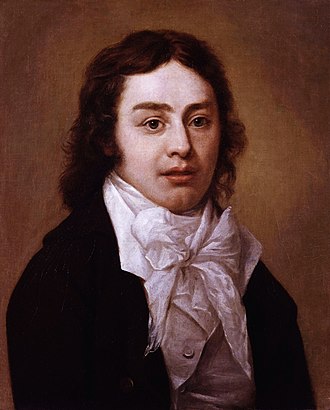 Samuel Taylor Coleridge
"The Good consists in the congruity of a thing with the laws of the reason and the nature of the will, and in its fitness to determine the latter to actualize the former: and it is always discursive. The Beautiful arises from the perceived harmony of an object, whether sight or sound, with the inborn and constitutive rules of the judgment and imagination: and it is always intuitive."
Samuel Taylor Coleridge"I believe that the unity of man as opposed to other living things derives from the fact that man is the conscious life of himself. Man is conscious of himself, of his future, which is death, of his smallness, of his impotence; he is aware of others as others; man is in nature, subject to its laws even if he transcends it with his thought."
 Erich Fromm
"Who made you glorious as the gates of heaven Beneath the keen full moon? Who bade the sun Clothe you with rainbows? Who, with living flower Of loveliest blue, spread garlands at your feet? God! let the torrents, like a shout of nations, Answer! and let the ice-plains echo, God! God! sing, ye meadow-streams, with gladsome voice! Ye pine-groves, with your soft and soul-like sounds! And they too have a voice, yon piles of snow, And in their perilous fall shall thunder, God!"
Samuel Taylor Coleridge"All Nature seems at work. Slugs leave their lair — The bees are stirring — birds are on the wing — And Winter slumbering in the open air, Wears on his smiling face a dream of Spring! And I the while, the sole unbusy thing, Nor honey make, nor pair, nor build, nor sing."
Samuel Taylor Coleridge"Taste is the intermediate faculty which connects the active with the passive powers of our nature, the intellect with the senses; and its appointed function is to elevate the images of the latter, while it realizes the ideas of the former."
Samuel Taylor Coleridge