SHAWORDS

Democracy doesnt mean much if people have to confront concentrated sys — The Chomsky Reader

"Democracy doesnt mean much if people have to confront concentrated systems of economic power as isolated individuals. Democracy means something if people can organize to gain information, to have thoughts for that matter, to make plans, to enter into the political system in some active way, to put forth programs and so on. If organizations of that kind exist, then democracy can exist too. Otherwise its a matter of pushing a lever every couple of years; its like having the choice between Coca-Cola and Pepsi-Cola."
T
The Chomsky Reader
The Chomsky Reader
author18 quotes

More by The Chomsky Reader

View all →
Quote
"Discussion of egalitarian views is often misleading, in that the criticism of such views is commonly directed against a straw-man opponent, as egalitarians have been quick to point out. In fact, "equality of condition," much deplored by contemporary ideologists, has rarely been the express goal of reformers or revolutionaries, at least on the left. In Marxs utopia, "the development of human energy" is to be taken as "an end in itself" as humans escape the "realm of necessity" so that questions of freedom can be seriously raised. The guiding principle, reiterated to the point of cliché, is: "From each according to his abilities, to each according to his needs." The principle of "equality of condition" is nowhere invoked. If one person needs medical treatment and another is more fortunate, they are not to be granted an equal amount of medical care, and the same is true of other human needs."
T
The Chomsky Reader
Quote
"I am personally quite convinced that no matter what training or education I might have received, I could never have run a four-minute mile, discovered Gödels theorems, composed a Beethoven quartet, or risen to any of other innumerable heights of human achievement. I feel in no way demeaned by these inadequacies. It is quite enough that I am capable, as I think any person of normal endowments probably is, of appreciating and in part understanding what others have accomplished, while making my own personal contributions in whatever measure and manner I am able to do so. Human talents vary considerably, within a fixed framework that is characteristic of the species and that permits ample scope for creative work, including the creative work of appreciating the achievements of others. This should be a matter for delight rather than a condition to be abhorred. Those who assume otherwise must be adopting the tacit premise that peoples rights or social reward are somehow contingent on their abilities. As for human rights, there is an element of plausibility in this assumption in the single respect already noted: in a decent society, opportunities should conform as far as possible to personal needs, and such needs may be specialized and related to particular talents and capacities. My pleasure in life is enhanced by the fact that others can do many things that I cannot, and I see no reason to want to deny these people the opportunity to cultivate their talents, consistent with general social needs. Difficult questions of practice are sure to arise in any functioning social group, but I see no problem of principle."
T
The Chomsky Reader

More on Dua

View all →
Quote
"As in respect of the first wonder we are all on the same level, how comes it that the philosophic mind should, in all ages, be the privilege of a few? The most obvious reason is this: The wonder takes place before the period of reflection, and (with the great mass of mankind) long before the individual is capable of directing his attention freely and consciously to the feeling, or even to its exciting causes. Surprise (the form and dress which the wonder of ignorance usually puts on) is worn away, if not precluded, by custom and familiarity."
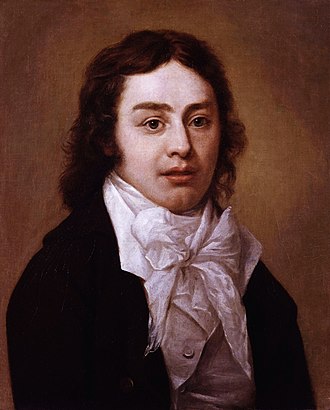
Samuel Taylor ColeridgeSamuel Taylor Coleridge