Quote
"Historical justice obliges me to state that of the enemies who took up positions against us, the Greek soldier particularly fought with the highest courage. He capitulated only when further resistance had become impossible and useless."

"Despite income differences in the population and a small upper stratum of established families in the larger cities, the class system has been marked by mobility since the establishment of the modern state. Former bases of wealth and power disappeared with the departure of the Ottomans and the dismantling of agricultural estates. A fluid class system fits the strongly egalitarian emphasis of the culture. The degree to which minority groups receive the rights and opportunities of Greeks is a topic of public discussion. Social status is not coterminous with economic class but results from a combination of wealth, education, occupation, and what is referred to as honor or love of honor (philotimo). While sometimes understood only as a source of posturing and argumentation, this concept refers to ones sense of social responsibility, esteem within the community, and attention to proper behavior and public decorum."

The Greeks or Hellenes are an ethnic group and nation native to Greece, Cyprus, southern Albania, Turkey, southern parts of Italy, parts of Egypt, and to a lesser extent, other countries surrounding the Eastern Mediterranean and Black Sea. They also form a significant diaspora, with many Greek communities established around the world.
"Historical justice obliges me to state that of the enemies who took up positions against us, the Greek soldier particularly fought with the highest courage. He capitulated only when further resistance had become impossible and useless."
"So far has Athens left the rest of mankind behind in thought and expression that her pupils have become the teachers of the world, and she has made the name of Hellas distinctive no longer of race but of intellect, and the title of Hellene a badge of education rather than of common descent."
"O Solon, Solon, Hellenes aei paides este, geron de Hellen ouk estin."
"The Frankish conquest and occupation which shook the Constantinopolitan empire to its roots were of major importance in redefining the Byzantine sense of identity away from the universalism of the ancient imperial Roman ideal, and towards a narrower Greek orthodox nationalism. Moreover, it might even be said that in this movement the Greeks rediscovered themselves, returning to and giving new value to the geographical heartland of ancient Hellas. In this context and argument, the apparent return by late Byzantine writers to the use of the ancient ‘Hellene’ as ethnic signifier in preference to ‘Roman’ – which had been the overwhelmingly dominant signifier in the eastern empire – is seen as being of crucial significance in confirming a basic continuity of self-identification as Hellenic on the part of the Greeks."
"Equo ne credite, Teucri. quidquid id est, timeo Danaos et dona ferentes."
"I thank Your Majesty for your friendly message which comes at a time when all free peoples are deeply impressed by the courage and steadfastness of the Greek nation."
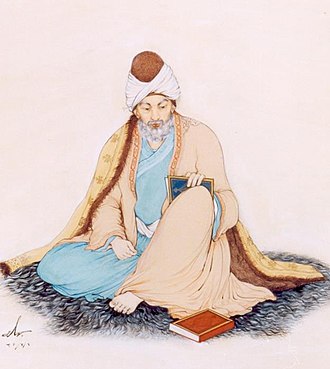
"The wound is the place where the Light enters you."
"yes is a pleasant country... love is a deeper season than reason"
"true lovers in each happening of their hearts live longer than all which and every who"
"What concerns me fundamentaly is a meteoric burlesk melodrama, born of the immemorial adage love will find a way."
"Who made you glorious as the gates of heaven Beneath the keen full moon? Who bade the sun Clothe you with rainbows? Who, with living flower Of loveliest blue, spread garlands at your feet? God! let the torrents, like a shout of nations, Answer! and let the ice-plains echo, God! God! sing, ye meadow-streams, with gladsome voice! Ye pine-groves, with your soft and soul-like sounds! And they too have a voice, yon piles of snow, And in their perilous fall shall thunder, God!"
"Unchanged within, to see all changed without, Is a blank lot and hard to bear, no doubt. Yet why at others Wanings shouldst thou fret? Then only mightst thou feel a just regret, Hadst thou withheld thy love or hid thy light In selfish forethought of neglect and slight."