Quote
"I have been in Munich this week, and got to know the whole Neue Künstlervereinigung at Tannhausers [gallery] – Jawlensky, Kandinsky etc. For Munich they are very, very good, I was interested."
A
August Macke"Everything he paints is a search, a self-development, a striving for understanding of the most profound kind. He is still experimenting, not executing, he often paints two or three pictures in a day, and his sketchbooks are already innumerable. He lives in a continuous, sharp criticism of his work and is thus constantly changing and developing. He has, by nature, absolutely no interest in the transcendental. His sensitivity is elemental and deep. He experiences – I would say – those many moments of ecstasy, the alternation between the greatest happiness and the deepest depression, which are the lot of a great artist, who must learn the whole gamut of feeling from his own experience."
August Robert Ludwig Macke was a German Expressionist painter. He was one of the leading members of the German Expressionist group Der Blaue Reiter. He lived during a particularly active time for German art: he saw the development of the main German Expressionist movements as well as the arrival of the successive avant-garde movements which were forming in the rest of Europe. As an artist of his t
"I have been in Munich this week, and got to know the whole Neue Künstlervereinigung at Tannhausers [gallery] – Jawlensky, Kandinsky etc. For Munich they are very, very good, I was interested."
"I have just been thinking that the Blaue Reiter (Blue Rider) does not really represent my work. I have always been convinced that other things of mine are more important. ... Narcism, fake heroism, and blindness have a lot to answer for, in the Blaue Reiter. All those high-sounding words about the birth of a great spiritual moment still resounding in my ears. Kandinsky can air his personal opinion about that or any other revolution he cares to mention. But I dislike the whole thing. ... Take my advice – work, and dont spent so much time thinking about blue riders or blue horses."
"I have been to [the gallery] Hagen, saw two Matisses, which enchanted me. A large collection of Japanese masks. Sublime! Neue [Künstler] Vereinigung were hung in a bad light. ... Kandinsky, Jawlensky, Bechteleff and Erbslöh have immense artistic sensibility. But the means of expression are to big for what they have to say. The sound of their voice is so good, so fine, that what is being said get lost. Consequently a human element is missing. They concentrate, too much, I think, on form. There is much to be learnt from their efforts. But early things by Kandinsky, and a few by Jawlensky too, seem a little empty to me. And Jawlenskys heads looked at me a little bit too much with colors. With blue and green. I hope you understand what I mean."
"He [Robert Delaunay] gives movement itself [in his pictures], the Futurists only illustrate movement."
"Time has a large part to play in looking at a picture. A picture (a stupid empty surface to begin with) gets covered in the course of its creation by a rhythmically measured network of colors, lines and dots, which evokes in its final form a total of living movement. The eye jumps from a blue to red, to green (even if there is only a change of form), to a black line, suddenly comes upon a sharp white eruption, follows it, floats on to... It is impossible to take it all in at once. Time is inseparable from surface."
"It was the desire for living, vital expression which built Gothic cathedrals, which created Mozart sonatas. I believe it is going to stay that way for long time to come."
"[explaining to Ernie how April apologized to him] She just showed up at the factory, took off her coat, and begged me to take her. We made love in a way that Ive only ever seen in nature films."
 MouseHunt (film)
"All men suppose what is called Wisdom to deal with the first causes and the principles of things; so that, as has been said before, the man of experience is thought to be wiser than the possessors of any sense-perception whatever, the artist wiser than the men of experience, the masterworker than the mechanic, and the theoretical kinds of knowledge to be more of the nature of Wisdom than the productive."
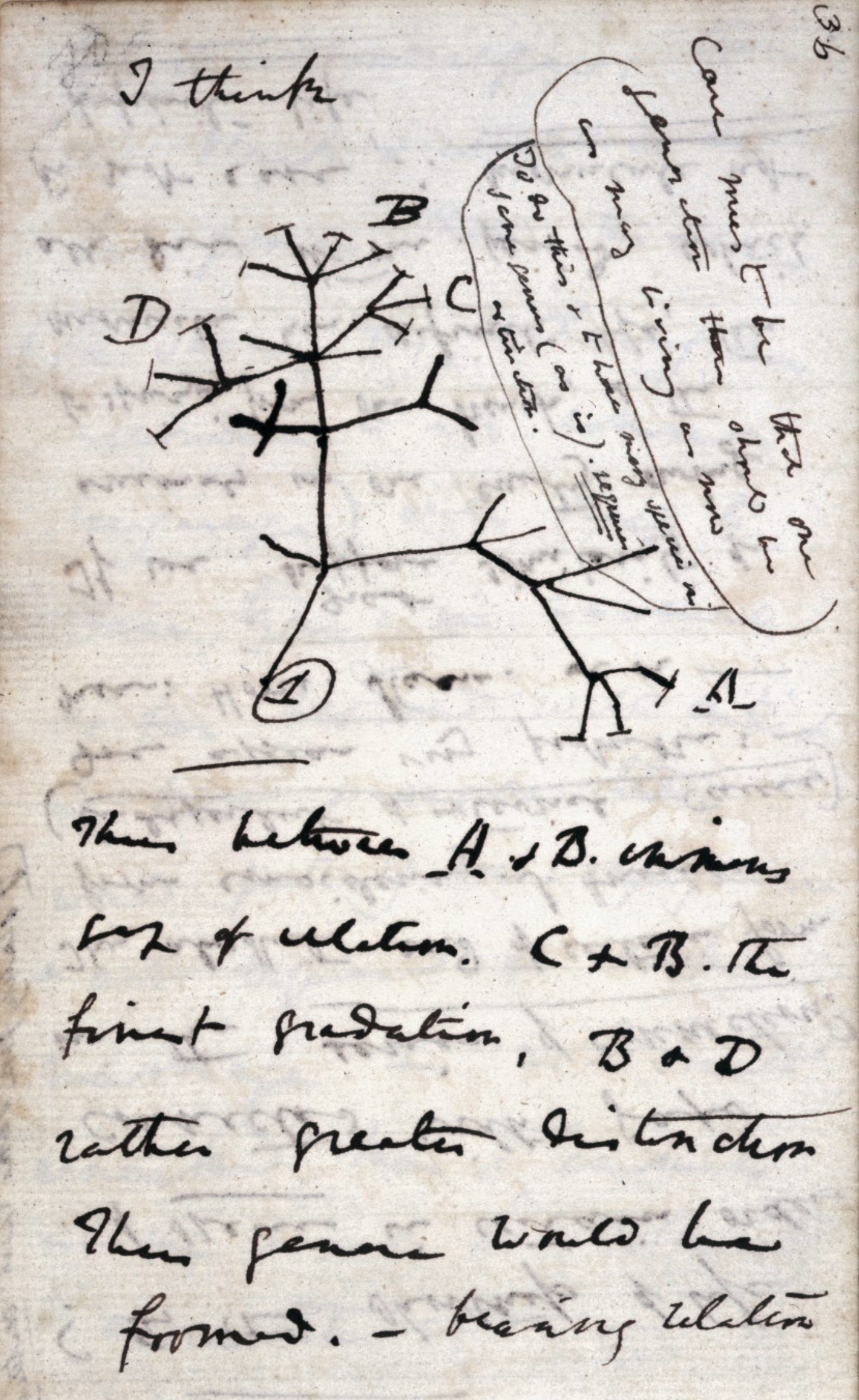 Theory
"The yarns of seamen have a direct simplicity, the whole meaning of which lies within the shell of a cracked nut. But Marlow was not typical (if his propensity to spin yarns be excepted), and to him the meaning of an episode was not inside like a kernel but outside, enveloping the tale which brought it out only as a glow brings out a haze, in the likeness of one of these misty halos that sometimes are made visible by the spectral illumination of moonshine."
"Going up that river was like traveling back to the earliest beginnings of the world, when vegetation rioted on the earth and the big trees were kings. An empty stream, a great silence, an impenetrable forest. The air was warm, thick, heavy, sluggish. There was no joy in the brilliance of sunshine. The long stretches of the waterway ran on, deserted, into the gloom of overshadowed distances."
"The intimate rapport with nature is one of the most precious things in life. Nature is indeed very close to us; sometimes closer than hands and feet, of which in truth she is but the extension. The emotional appeal of nature is tremendous, sometimes almost more than one can bear."
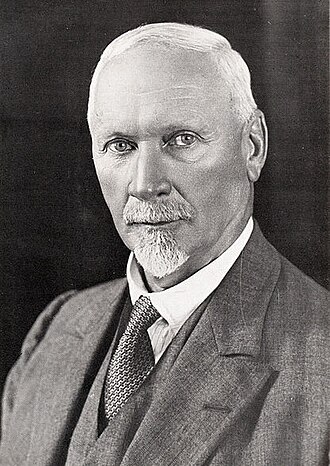 Jan Smuts
"Are people naturally destructive, immoral, predatory and self-seeking, only to be kept in order by harsh laws and fiercely deterrent mandatory sentences? Or are men and women naturally orderly, merciful, humane and bred with a need for justice and mutual aid? Of course these qualities, or defects, are not evenly distributed, and undoubtedly there is much of each in all of us, but when it comes to the law some sort of distinction can be drawn. Are you a Shylock or a Bassanio? Shylock pinned his faith on the words in the contract, the nature of his bond and the duty of the state to uphold the letter of the law regardless of human suffering. Bassanio put another point of view. More important than the sanctity of the law was the plight of the individual parties in the particular case."