SHAWORDS

Everything rhythmically organic is true. Everything, which results fro — Hans Hofmann

HomeHans HofmannQuote
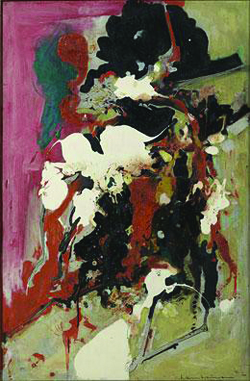
"Everything rhythmically organic is true. Everything, which results from the proper feeling for rhythmically organized spiritual units, is true and alive — alive within itself. When we lose the sense for such true beauty we lose our natural sense for the rich flavor of life, which is the basis for all inspirational work. Things generally taken for beautiful are nothing other than the product of frozen, stereotyped taste, bound by sterile rules and purely exterior judgment."
Hans Hofmann
Hans Hofmann
Hans Hofmann
author69 quotes

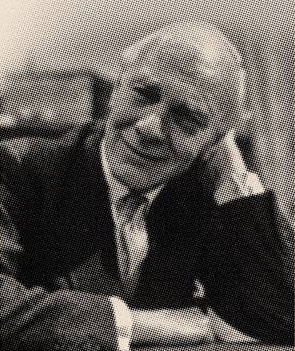
Hans Hofmann was a German-born American painter, renowned as both an artist and teacher. His career spanned two generations and two continents, and is considered to have both preceded and influenced Abstract Expressionism. Born and educated near Munich, he was active in the early twentieth-century European avant-garde and brought a deep understanding and synthesis of Symbolism, Neo-impressionism,

More by Hans Hofmann

View all →
Quote
"The reciprocal relation of color to color produces a phenomenon of a more mysterious order. This new phenomenon is psychological. A high sensitivity is necessary in order to expand color into the sphere of the surreal without losing creative ground. Color stimulates certain moods in us. It awakens joy or fear in accordance with its figuration. In fact, the whole world, as we experience it visually, comes to us through the mystic realm of color. Our entire being is nourished by it. This mystic quality of color should likewise find expression in a work of art."
Hans HofmannHans Hofmann

More on Life

View all →
Quote
"If it fulfills our hopes, this center will be, at once, a symbol and a reflection and a hope. It will symbolize our belief that the world of creation and thought are at the core of all civilization. Only recently in the White House we helped commemorate the 400th anniversary of Shakespeare. The political conflicts and ambitions of his England are known to the scholar and to the specialist. But his plays will forever move men in every corner of the world. The leaders that he wrote about live far more vividly in his words than in the almost forgotten facts of their own rule. Our civilization, too, will largely survive in the works of our creation. There is a quality in art which speaks across the gulf dividing man from man and nation from nation, and century from century. That quality confirms the faith that our common hopes may be more enduring than our conflicting hostilities. Even now men of affairs are struggling to catch up with the insights of great art. The stakes may well be the survival of civilization. The personal preferences of men in government are not important--except to themselves. However, it is important to know that the opportunity we give to the arts is a measure of the quality of our civilization. It is important to be aware that artistic activity can enrich the life of our people, which really is the central object of Government. It is important that our material prosperity liberate and not confine the creative spirit."
L
Lyndon B. Johnson
Quote
"I did not go to join Kurtz there and then. I did not. I remained to dream the nightmare out to the end, and to show my loyalty to Kurtz once more. Destiny. My destiny! Droll thing life is — that mysterious arrangement of merciless logic for a futile purpose. The most you can hope from it is some knowledge of yourself — that comes too late — a crop of unextinguishable regrets. I have wrestled with death. It is the most unexciting contest you can imagine. It takes place in an impalpable grayness, with nothing underfoot, with nothing around, without spectators, without clamor, without glory, without the great desire of victory, without the great fear of defeat, in a sickly atmosphere of tepid skepticism, without much belief in your own right, and still less in that of your adversary. If such is the form of ultimate wisdom, then life is a greater riddle than some of us think it to be. I was within a hairs-breadth of the last opportunity for pronouncement, and I found with humiliation that probably I would have nothing to say. This is the reason why I affirm that Kurtz was a remarkable man. He had something to say. He said it. Since I had peeped over the edge myself, I understand better the meaning of his stare, that could not see the flame of the candle, but was wide enough to embrace the whole universe, piercing enough to penetrate all the hearts that beat in the darkness. He had summed up — he had judged. The horror! He was a remarkable man. After all, this was the expression of some sort of belief; it had candor, it had conviction, it had a vibrating note of revolt in its whisper, it had the appalling face of a glimpsed truth — the strange commingling of desire and hate."
H
Heart of Darkness