Quote
"There is a great deal of unmapped country within us which would have to be taken into account in an explanation of our gusts and storms."
G
George Eliot"Fancy what a game at chess would be if all the chessmen had passions and intellects, more or less small and cunning; if you were not only uncertain about your adversarys men, but a little uncertain also about your own; if your knight could shuffle himself on to a new square by the sly; if your bishop, in disgust at your castling, could wheedle your pawns out of their places; and if your pawns, hating you because they are pawns, could make away from their appointed posts that you might get checkmate on a sudden. You might be the longest-headed of deducted reasoners, and yet you might be beaten by your own pawns. You would be especially likely to be beaten, if you depended arrogantly on your mathematical imagination, and regarded your passionate pieces with contempt. Yet this imaginary chess is easy compared with the game a man has to play against his fellow-men with other fellow-men for his instruments. He thinks himself sagacious, perhaps, because he trusts no bond except that of self-interest; but the only self-interest he can safely rely on is what seems to be such to the mind he would use or govern. Can he ever be sure of knowing this?"
Mary Ann Evans, known by her pen name George Eliot, was an English novelist, poet, journalist, translator, and one of the leading writers of the Victorian era. She wrote seven novels: Adam Bede (1859), The Mill on the Floss (1860), Silas Marner (1861), Romola (1862–1863), Felix Holt, the Radical (1866), Middlemarch (1871–1872) and Daniel Deronda (1876). Like Charles Dickens and Thomas Hardy, she e
"There is a great deal of unmapped country within us which would have to be taken into account in an explanation of our gusts and storms."
"O may I join the choir invisible Of those immortal dead who live again In minds made better by their presence; live In pulses stirred to generosity, In deeds of daring rectitude, in scorn For miserable aims that end with self, In thoughts sublime that pierce the night like stars, And with their mild persistence urge mens search To vaster issues."
"Lamechs sons were heroes of their race: Jubal, the eldest, bore upon his face The look of that calm river-god, the Nile, Mildly secure in power that needs not guile."
"This is life to come, — Which martyred men have made more glorious For us who strive to follow. May I reach That purest heaven, — be to other souls The cup of strength in some great agony, Enkindle generous ardor, feed pure love, Beget the smiles that have no cruelty, Be the sweet presence of a good diffused, And in diffusion ever more intense! So shall I join the choir invisible Whose music is the gladness of the world."
"While the arm is strong to strike and heave, Let soul and arm give shape that will abide..."
"Knightly love is blent with reverence As heavenly air is blent with heavenly blue."
"Dave Foley: I once shot a man just to watch him die, then I got distracted and missed it. Oh my friends tried to describe it to me, but it just isnt the same."
"Sharon Tate was my best friend. Once, we were roommates. She introduced me to my husband. She was the godmother to my baby daughter who is named for her. In the six years time that I knew her, she never said an unkind word about anyone."
"Is it so small a thing To have enjoy’d the sun, To have lived light in the spring, To have loved, to have thought, to have done; To have advanc’d true friends, and beat down baffling foes?"
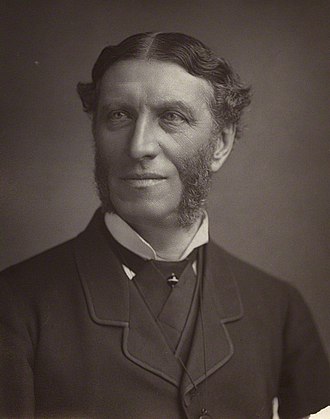 Matthew Arnold
"I cant play games. I have friends, older women, who tell me Im foolish to let Roman know how deeply I care about him. They tell me all sorts of things like "keep a man guessing", "men become bored with too much devotion". They tell me I am being foolish. Well, foolish I am."
"I guess you could say that I was somewhat withdrawn from my classmates. I spent a good deal of time being a loner. I suppose that had something to do with the way we lived — always on the move, never living in one town very long. Its very hard to make lasting friendships that way. And my father was rather strict with me and my two younger sisters. He insisted on proper behaviour and very often vetoed our choices of boyfriends. There was always a curfew whenever my sisters or I would go out on a date — we had to be home on time or else. But I never resented his authority. In fact, Im thankful for my strict upbringing; I feel it has helped me learn discipline — and thats very important in this business."
"You blessed my life! Never on me had rested womans love. My mother even could not find me fair: I had no sister; and, when grown a man, I feared the mistress who would mock at me. But I have had your friendship — grace to you A womans charm has passed across my path."