Quote
"False and doubtful positions, relied upon as unquestionable maxims, keep those who build on them in the dark from truth. Such are usually the prejudices imbibed from education, party, reverence, fashion, interest, et cetera."
J
John Locke"For if it be asked what security, what fence is there in such a state against the violence and oppression of this absolute ruler, the very question can scarce be borne. They are ready to tell you that it deserves death only to ask after safety. Betwixt subject and subject, they will grant, there must be measures, laws, and judges for their mutual peace and security. But as for the ruler, he ought to be absolute, and is above all such circumstances; because he has a power to do more hurt and wrong, it is right when he does it. To ask how you may be guarded from or injury on that side, where the strongest hand is to do it, is presently the voice of faction and rebellion. As if when men, quitting the state of Nature, entered into society, they agreed that all of them but one should be under the restraint of laws; but that he should still retain all the liberty of the state of Nature, increased with power, and made licentious by impunity. This is to think that men are so foolish that they take care to avoid what mischiefs may be done them by polecats or foxes, but are content, nay, think it safety, to be devoured by lions."
John Locke was an English philosopher and physician, widely regarded as one of the most influential of the Enlightenment thinkers and commonly known as the "father of liberalism". His important works include A Letter Concerning Toleration (1689), Two Treatises of Government (1689/90), both published anonymously, and An Essay Concerning Human Understanding (1689/90). His writing on toleration conte
"False and doubtful positions, relied upon as unquestionable maxims, keep those who build on them in the dark from truth. Such are usually the prejudices imbibed from education, party, reverence, fashion, interest, et cetera."
"This is that which I think great readers are apt to be mistaken in; those who have read of everything, are thought to understand everything too; but it is not always so. Reading furnishes the mind only with materials of knowledge; it is thinking that makes what we read ours. We are of the ruminating kind, and it is not enough to cram ourselves with a great load of collections ; unless we chew them over again, they will not give us strength and nourishment."
"I doubt not, but from self-evident Propositions, by necessary Consequences, as incontestable as those in Mathematics, the measures of right and wrong might be made out."
"New opinions are always suspected, and usually opposed, without any other reason but because they are not already common."
"This life affords no solid satisfaction, but in the consciousness of having done well, and the hopes of another life."
"Let me give two cautions. 1) The one is, that you keep them to the practice of what you would have grow into a habit with them, by kind words, and gentle admonitions, rather as minding them of what they forget, than by harsh rebukes and chiding, as if they were wilfully guilty. 2) Another thing you are to take care of, is, not to endeavour to settle too many habits at once, lest by variety you confound them, and so perfect none. When constant custom has made any one thing easy and natural to em, and they practice it without reflection, you may then go on to another."
"Now Art, used collectively for painting, sculpture, architecture and music, is the mediatress between, and reconciler of, nature and man. It is, therefore, the power of humanizing nature, of infusing the thoughts and passions of man into everything which is the object of his contemplation."
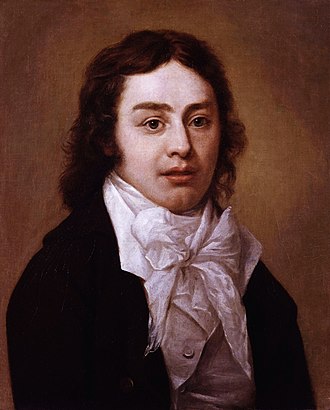 Samuel Taylor Coleridge
"The Good consists in the congruity of a thing with the laws of the reason and the nature of the will, and in its fitness to determine the latter to actualize the former: and it is always discursive. The Beautiful arises from the perceived harmony of an object, whether sight or sound, with the inborn and constitutive rules of the judgment and imagination: and it is always intuitive."
Samuel Taylor Coleridge"I believe that the unity of man as opposed to other living things derives from the fact that man is the conscious life of himself. Man is conscious of himself, of his future, which is death, of his smallness, of his impotence; he is aware of others as others; man is in nature, subject to its laws even if he transcends it with his thought."
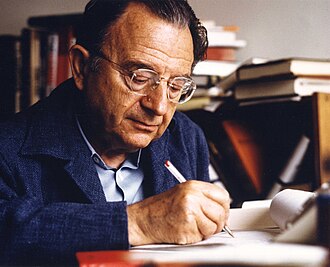 Erich Fromm
"Who made you glorious as the gates of heaven Beneath the keen full moon? Who bade the sun Clothe you with rainbows? Who, with living flower Of loveliest blue, spread garlands at your feet? God! let the torrents, like a shout of nations, Answer! and let the ice-plains echo, God! God! sing, ye meadow-streams, with gladsome voice! Ye pine-groves, with your soft and soul-like sounds! And they too have a voice, yon piles of snow, And in their perilous fall shall thunder, God!"
Samuel Taylor Coleridge"All Nature seems at work. Slugs leave their lair — The bees are stirring — birds are on the wing — And Winter slumbering in the open air, Wears on his smiling face a dream of Spring! And I the while, the sole unbusy thing, Nor honey make, nor pair, nor build, nor sing."
Samuel Taylor Coleridge"Taste is the intermediate faculty which connects the active with the passive powers of our nature, the intellect with the senses; and its appointed function is to elevate the images of the latter, while it realizes the ideas of the former."
Samuel Taylor Coleridge