Quote
"The tool user, provided the tool is made well, need not, and indeed should not, know anything about the tool."
P
Peter Drucker"[F]reedom cannot be legislated into existence—though it can be legislated out of existence if the necessary minimum of free government is destroyed. ...[F]reedom rests upon beliefs and social institutions and not upon laws. ...[L]egislative enactment does not create or determine institutional structure, social beliefs and human nature."
Peter Ferdinand Drucker was an Austrian American management consultant, educator, and author, whose writings contributed to the philosophical and practical foundations of modern management theory. He was also a leader in the development of management education, and contributed to the popularization of the concepts known as management by objectives and self-control, and he has been described as "th
"The tool user, provided the tool is made well, need not, and indeed should not, know anything about the tool."
"Communism is evil. Its driving forces are the deadly sins of envy and hatred."
"Decisions exist only in the present."
"Frederick W. Taylor was the first man in recorded history who deemed work deserving of systematic observation and study. On Taylors scientific management rests, above all, the tremendous surge of affluence in the last seventy-five years which has lifted the working masses in the developed countries well above any level recorded before, even for the well-to-do. Taylor, though the Isaac Newton (or perhaps the Archimedes) of the science of work, laid only first foundations, however. Not much has been added to them since – even though he has been dead all of sixty years."
"Engineers speak half–jokingly about Murphys Law: " If anything can go wrong, it will." But complexity stands under a second law as well. Let me call it Druckers law: "If one thing goes wrong, everything else will, and at the same time."
"There is a point at which a transformation has to take place."
"Now Art, used collectively for painting, sculpture, architecture and music, is the mediatress between, and reconciler of, nature and man. It is, therefore, the power of humanizing nature, of infusing the thoughts and passions of man into everything which is the object of his contemplation."
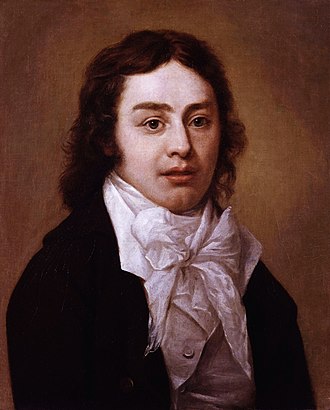 Samuel Taylor Coleridge
"The Good consists in the congruity of a thing with the laws of the reason and the nature of the will, and in its fitness to determine the latter to actualize the former: and it is always discursive. The Beautiful arises from the perceived harmony of an object, whether sight or sound, with the inborn and constitutive rules of the judgment and imagination: and it is always intuitive."
Samuel Taylor Coleridge"I believe that the unity of man as opposed to other living things derives from the fact that man is the conscious life of himself. Man is conscious of himself, of his future, which is death, of his smallness, of his impotence; he is aware of others as others; man is in nature, subject to its laws even if he transcends it with his thought."
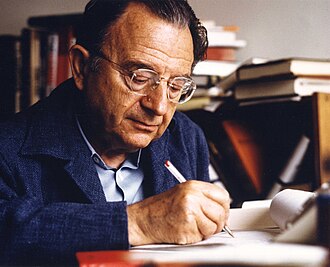 Erich Fromm
"Who made you glorious as the gates of heaven Beneath the keen full moon? Who bade the sun Clothe you with rainbows? Who, with living flower Of loveliest blue, spread garlands at your feet? God! let the torrents, like a shout of nations, Answer! and let the ice-plains echo, God! God! sing, ye meadow-streams, with gladsome voice! Ye pine-groves, with your soft and soul-like sounds! And they too have a voice, yon piles of snow, And in their perilous fall shall thunder, God!"
Samuel Taylor Coleridge"All Nature seems at work. Slugs leave their lair — The bees are stirring — birds are on the wing — And Winter slumbering in the open air, Wears on his smiling face a dream of Spring! And I the while, the sole unbusy thing, Nor honey make, nor pair, nor build, nor sing."
Samuel Taylor Coleridge"Taste is the intermediate faculty which connects the active with the passive powers of our nature, the intellect with the senses; and its appointed function is to elevate the images of the latter, while it realizes the ideas of the former."
Samuel Taylor Coleridge