SHAWORDS

General Peckem was a general with whom neatness definitely counted. He — Catch-22

HomeCatch-22Quote
"General Peckem was a general with whom neatness definitely counted. He was a spry, suave and very precise general who knew the circumference of the equator and always wrote "enhanced" when he meant "increased." He was a prick, and no one knew this better than General Dreedle, who was incensed by General Peckems recent directive requiring all tents in the Mediterranean theater of operations to be pitched along parallel lines with entrances facing back proudly toward the Washington Monument. To General Dreedle…it seemed like a lot of crap. Furthermore, it was none of General Peckems goddamn business how the tents in General Dreedles wing were pitched. There then followed a hectic jurisdictional dispute between these overlords that was decided in General Dreedles favor by ex-P.F.C. Wintergreen, mail clerk at Twenty-seventh Air Force Headquarters. Wintergreen determined the outcome by throwing all communications from General Peckem into the wastebasket. He found them too prolix. General Dreedles views, expressed in less pretentious literary style, pleased ex-P.F.C. Wintergreen and were sped along by him in zealous observance of regulations."
Catch-22
Catch-22
Catch-22
author74 quotes

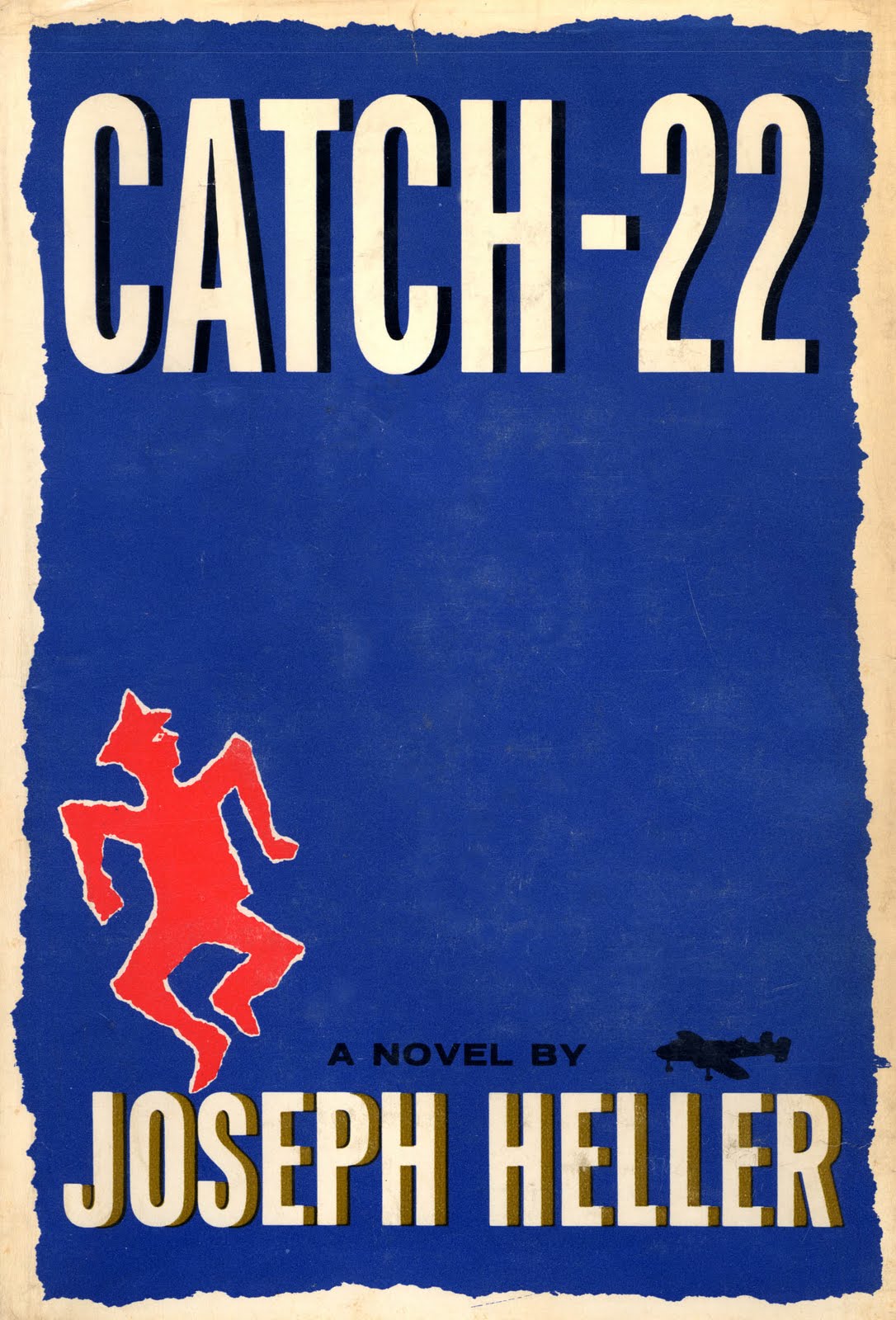
Catch-22 is a satirical war novel by American author Joseph Heller. It was his debut novel. He began writing it in 1953; the novel was first published in 1961. Often cited as one of the most significant novels of the 20th century, it uses a distinctive non-chronological third-person omniscient narration, describing events from the points of view of different characters. The separate storylines are

More by Catch-22

View all →
Quote
"The best squadron in each wing won a yellow pennant on a pole that was utterly worthless. The best squadron on the base won a red pennant on a longer pole that was worth even less, since the pole was heavier and was that much more of a nuisance to lug around all week until some other squadron won it the following Sunday. To Yossarian, the idea of pennants as prizes was absurd. No money went with them, no class privileges. Like Olympic medals and tennis trophies, all they signified was that the owner had done something of no benefit to anyone more capably than everyone else."
Catch-22Catch-22
Quote
"To die or not to die, that was the question, and Clevinger grew limp trying to answer it. History did not demand Yossarians premature demise, justice could be satisfied without it, progress did not hinge upon it, victory did not depend on it. That men would die was a matter of necessity; which men would die, though, was a matter of circumstance, and Yossarian was willing to be the victim of anything but circumstance. But that was war. Just about all he could find in its favor was that it paid well and liberated children from the pernicious influence of their parents."
Catch-22Catch-22
Quote
"All Colonel Cathcart knew about his house in the hills was that he had such a house and hated it. He was never so bored as when spending there the two or three days every other week necessary to sustain the illusion that his damp and drafty stone farmhouse in the hills was a golden palace of carnal delights. Officers’ clubs everywhere pulsated with blurred but knowing accounts of lavish, hushed-up drinking and sex orgies there and of secret, intimate nights of ecstasy with the most beautiful, the most tantalizing, the most readily aroused and most easily satisfied Italian courtesans, film actresses, models and countesses. No such private nights of ecstasy or hushed-up drinking and sex orgies ever occurred. They might have occurred if either General Dreedle or General Peckem had once evinced an interest in taking part in orgies with him, but neither ever did, and the colonel was certainly not going to waste his time and energy making love to beautiful women unless there was something in it for him."
Catch-22Catch-22
Quote
"Milo was not only the Vice-Shah or Oran, as it turned out, but also the Caliph of Baghdad, the Imam of Damascus, and the Sheik of Araby. Milo was the corn god, the rain god and the rice god in backward regions where such crude gods were still worshipped by ignorant and superstitious people, and deep inside the jungles of Africa, he intimated with becoming modesty, large graven images of his mustached face could be found overlooking primitive stone altars red with human blood. Everywhere they touched he was acclaimed with honor, and it was one triumphal ovation after another for him in city after city."
Catch-22Catch-22

More on Gul

View all →
Quote
"If it fulfills our hopes, this center will be, at once, a symbol and a reflection and a hope. It will symbolize our belief that the world of creation and thought are at the core of all civilization. Only recently in the White House we helped commemorate the 400th anniversary of Shakespeare. The political conflicts and ambitions of his England are known to the scholar and to the specialist. But his plays will forever move men in every corner of the world. The leaders that he wrote about live far more vividly in his words than in the almost forgotten facts of their own rule. Our civilization, too, will largely survive in the works of our creation. There is a quality in art which speaks across the gulf dividing man from man and nation from nation, and century from century. That quality confirms the faith that our common hopes may be more enduring than our conflicting hostilities. Even now men of affairs are struggling to catch up with the insights of great art. The stakes may well be the survival of civilization. The personal preferences of men in government are not important--except to themselves. However, it is important to know that the opportunity we give to the arts is a measure of the quality of our civilization. It is important to be aware that artistic activity can enrich the life of our people, which really is the central object of Government. It is important that our material prosperity liberate and not confine the creative spirit."
L
Lyndon B. Johnson
Quote
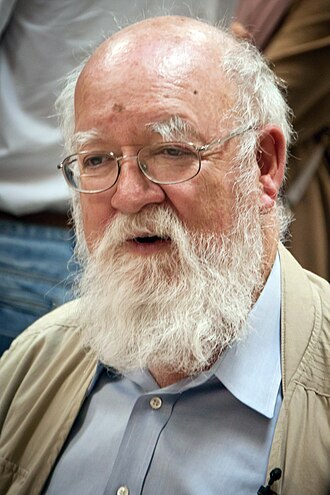
"The fundamental core of contemporary Darwinism, the theory of DNA-based reproduction and evolution, is now beyond dispute among scientists. It demonstrates its power every day, contributing crucially to the explanation of planet-sized facts of geology and meteorology, through middle-sized facts of ecology and agronomy, down to the latest microscopic facts of genetic engineering. It unifies all of biology and the history of our planet into a single grand story. Like Gulliver tied down in Lilliput, it is unbudgable, not because of some one or two huge chains of argument that might — hope against hope — have weak links in them, but because it is securely tied by thousands of threads of evidence anchoring it to virtually every other area of human knowledge. New discoveries may conceivably lead to dramatic, even "revolutionary" shifts in the Darwinian theory, but the hope that it will be "refuted" by some shattering breakthrough is about as reasonable as the hope that we will return to a geocentric vision and discard Copernicus."
Daniel DennettDaniel Dennett
Quote
"An authorship that began with Either/Or and advanced step by step seeks here its decisive place of rest, at the foot of the altar, where the author, personally most aware of his own imperfections and guilt, certainly does not call himself a truth-witness but only a singular kind of poet and thinker who, without authority, has had nothing new to bring but “has wanted once again to read through, if possible in a more inward way, the original text handed down from the fathers” Preface P. 165"
S
Søren Kierkegaard
Quote
"If the proverbial man of the planet Mars would come to this earth and inquire about the difference between "leader" and "ruler" he would learn that "rulers" are strange people who dressed in ermine, wore crowns, married foreign women, kept strictly to themselves, and had the inclination to administer the country without asking the people about their wishes. A "leader," on the other hand, he would be told, is a regular fellow in a simple uniform who embodies his nation, who tries desperately to create by propaganda complete unison between his ideas and the people. A leader, he might hear, was a local boy who made good, who spoke everybodys language, who never traveled abroad and disliked titles and royal paraphernalia."
LeadershipLeadership
Quote
"Now, six years ago, al-Qaeda was planning to attack the Twin Towers. It wasnt a very nice world. And I think that if you think about six years ago, al-Qaida was preparing to attack the Twin Towers, Pakistan was allied with the Taliban, Afghanistan was the base from which al-Qaida was going to operate; the Israelis and the Palestinians had given up on a chance for -- or let me put it, the Palestinians had walked away from a chance for a Palestinian state, launched the second intifada, elected Ariel Sharon who basically said there would never be a Palestinian state and there will be a greater Israel; the North Korean were cheating on a deal that they had just signed; China and others were indifferent to that because it was a U.S.-North Korea bilateral deal; Iran was cheating on the IAEA out of sight. I could go on and on and on. That was the world in 2000 and 2001. And there is no doubt that by confronting -- oh, by the way, and Saddam Hussein was shooting at our pilots regularly in the no-fly zone and making a mockery of the Oil-for-Peace -- Oil-for-Food program and corruption was running rampant in that program. So, a worse world? I think so."
C
Condoleezza Rice