SHAWORDS

Hegels philosophic optimism maintained that the difficulties of Christ — Søren Kierkegaard

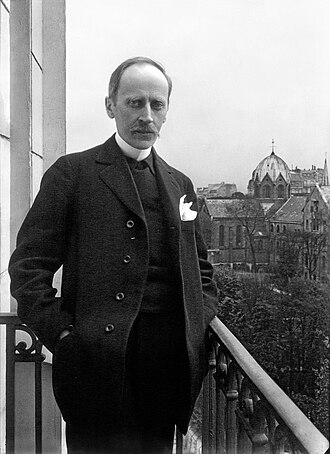
"Hegels philosophic optimism maintained that the difficulties of Christianity had been completely "reconciled" or "mediated" in the supposedly higher synthesis of philosophy, by which process religion had been reduced to terms which might be grasped by the intellect. Kierkegaard, fully voicing the claim both of the intellect and of religion, erects the barrier of the paradox, impassable except by the act of faith. As will be seen, this is Tertullians Credo quia absurdum."
S
Søren Kierkegaard
Søren Kierkegaard
author179 quotes

Søren Aabye Kierkegaard was a Danish Lutheran theologian, philosopher, poet, social critic, and religious author who is widely considered to be the first existentialist philosopher. He wrote critical texts on organized religion, Christianity, morality, ethics, psychology, love, and the philosophy of religion, displaying a fondness for metaphor, irony, and parables. Much of his philosophical work d

More by Søren Kierkegaard

View all →
Quote
"An authorship that began with Either/Or and advanced step by step seeks here its decisive place of rest, at the foot of the altar, where the author, personally most aware of his own imperfections and guilt, certainly does not call himself a truth-witness but only a singular kind of poet and thinker who, without authority, has had nothing new to bring but “has wanted once again to read through, if possible in a more inward way, the original text handed down from the fathers” Preface P. 165"
S
Søren Kierkegaard
Quote
"now, in the solemn silence before God with the lilies and the birds, where accordingly there is nobody at all present, where accordingly there is no other intercourse for thee but with God-there indeed the rule holds good: either hold to Him/or despise Him. There is no excuse, for no one else is present, in any case no one is present in such a wise that thou canst hold to him without despising God; for precisely there in the silence it is clear how close God is to thee. P. 334"
S
Søren Kierkegaard

More on Wisdom

View all →
Quote
"I did not go to join Kurtz there and then. I did not. I remained to dream the nightmare out to the end, and to show my loyalty to Kurtz once more. Destiny. My destiny! Droll thing life is — that mysterious arrangement of merciless logic for a futile purpose. The most you can hope from it is some knowledge of yourself — that comes too late — a crop of unextinguishable regrets. I have wrestled with death. It is the most unexciting contest you can imagine. It takes place in an impalpable grayness, with nothing underfoot, with nothing around, without spectators, without clamor, without glory, without the great desire of victory, without the great fear of defeat, in a sickly atmosphere of tepid skepticism, without much belief in your own right, and still less in that of your adversary. If such is the form of ultimate wisdom, then life is a greater riddle than some of us think it to be. I was within a hairs-breadth of the last opportunity for pronouncement, and I found with humiliation that probably I would have nothing to say. This is the reason why I affirm that Kurtz was a remarkable man. He had something to say. He said it. Since I had peeped over the edge myself, I understand better the meaning of his stare, that could not see the flame of the candle, but was wide enough to embrace the whole universe, piercing enough to penetrate all the hearts that beat in the darkness. He had summed up — he had judged. The horror! He was a remarkable man. After all, this was the expression of some sort of belief; it had candor, it had conviction, it had a vibrating note of revolt in its whisper, it had the appalling face of a glimpsed truth — the strange commingling of desire and hate."
H
Heart of Darkness
Quote
"My specific... object has been to contain, within the prescribed limits, the whole of the students course, from the confines of elementary algebra and trigonometry, to the entrance of the highest works on mathematical physics. A learner who has a good knowledge of the subjects just named, and who can master the present treatise, taking up elementary works on conic sections, application of algebra to geometry, and the theory of equations, as he wants them, will, I am perfectly sure, find himself able to conquer the difficulties of anything he may meet with; and need not close any book of Laplace, Lagrange, Legendre, Poisson, Fourier, Cauchy, Gauss, Abel, Hindenburgh and his followers. or of any one of our English mathematicians, under the idea that it is too hard for him."
A
Augustus De Morgan