Quote
"Which is it to-day," I asked, "morphine or cocaine?" He raised his eyes languidly from the old black-letter volume which he had opened. "It is cocaine," he said, "a seven-per-cent solution. Would you care to try it?"
S
Sherlock Holmes"Hence the cocaine. I cannot live without brain-work. What else is there to live for? Stand at the window here. Was ever such a dreary, dismal, unprofitable world? See how the yellow fog swirls down the street and drifts across the dun-coloured houses. What could be more hopelessly prosaic and material? What is the use of having powers, Doctor, when one has no field upon which to exert them? Crime is commonplace, existence is commonplace, and no qualities save those which are commonplace have any function upon earth."
Sherlock Holmes is a fictional detective created by British author Arthur Conan Doyle. Referring to himself as a "consulting detective" in his stories, Holmes is known for his proficiency with observation, deduction, forensic science and logical reasoning that borders on the fantastic, which he employs when investigating cases for a wide variety of clients, including Scotland Yard.
"Which is it to-day," I asked, "morphine or cocaine?" He raised his eyes languidly from the old black-letter volume which he had opened. "It is cocaine," he said, "a seven-per-cent solution. Would you care to try it?"
"I never make exceptions. An exception disproves the rule."
"But the Solar System!" I protested. "What the deuce is it to me?" he interrupted impatiently; "you say that we go round the sun. If we went round the moon it would not make a pennyworth of difference to me or to my work."
"I had neither kith nor kin in England, and was therefore as free as air — or as free as an income of eleven shillings and sixpence a day will permit a man to be. Under such circumstances I naturally gravitated to London, that great cesspool into which all the loungers and idlers of the Empire are irresistibly drained. There I stayed for some time at a private hotel in the Strand, leading a comfortless, meaningless existence, and spending such money as I had, considerably more freely than I ought"
"His ignorance was as remarkable as his knowledge. Of contemporary literature, philosophy and politics he appeared to know nothing. Upon my quoting Thomas Carlyle, he inquired in the naivest way who he might be and what he had done. My surprise reached a climax, however, when I found incidentally that he was ignorant of the Copernican Theory and of the composition of the Solar System. That any civilized being in this nineteenth century should not be aware that the earth traveled round the sun appeared to me to be such an extraordinary fact that I could hardly realize it."
"They say that genius is an infinite capacity for taking pains," he remarked with a smile. "Its a very bad definition, but it does apply to detective work."
"Now Art, used collectively for painting, sculpture, architecture and music, is the mediatress between, and reconciler of, nature and man. It is, therefore, the power of humanizing nature, of infusing the thoughts and passions of man into everything which is the object of his contemplation."
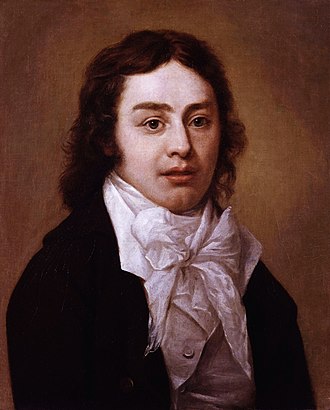 Samuel Taylor Coleridge
"The Good consists in the congruity of a thing with the laws of the reason and the nature of the will, and in its fitness to determine the latter to actualize the former: and it is always discursive. The Beautiful arises from the perceived harmony of an object, whether sight or sound, with the inborn and constitutive rules of the judgment and imagination: and it is always intuitive."
Samuel Taylor Coleridge"I believe that the unity of man as opposed to other living things derives from the fact that man is the conscious life of himself. Man is conscious of himself, of his future, which is death, of his smallness, of his impotence; he is aware of others as others; man is in nature, subject to its laws even if he transcends it with his thought."
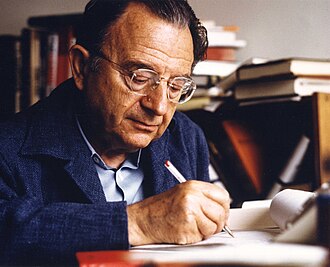 Erich Fromm
"Who made you glorious as the gates of heaven Beneath the keen full moon? Who bade the sun Clothe you with rainbows? Who, with living flower Of loveliest blue, spread garlands at your feet? God! let the torrents, like a shout of nations, Answer! and let the ice-plains echo, God! God! sing, ye meadow-streams, with gladsome voice! Ye pine-groves, with your soft and soul-like sounds! And they too have a voice, yon piles of snow, And in their perilous fall shall thunder, God!"
Samuel Taylor Coleridge"All Nature seems at work. Slugs leave their lair — The bees are stirring — birds are on the wing — And Winter slumbering in the open air, Wears on his smiling face a dream of Spring! And I the while, the sole unbusy thing, Nor honey make, nor pair, nor build, nor sing."
Samuel Taylor Coleridge"Taste is the intermediate faculty which connects the active with the passive powers of our nature, the intellect with the senses; and its appointed function is to elevate the images of the latter, while it realizes the ideas of the former."
Samuel Taylor Coleridge