Quote
"Web exhibit at the Austrian Central Library for Physics"
E
Erwin Schrödinger"I consider it extremely doubtful whether the happiness of the human race has been enhanced by the technical and industrial developments that followed in the wake of rapidly progressing natural science."
Erwin Rudolf Josef Alexander Schrödinger was an Austrian–Irish theoretical physicist who developed fundamental results in quantum theory. In particular, he is recognized for devising the Schrödinger equation, an equation that provides a way to calculate the wave function of a system and how it changes dynamically in time. He coined the term "quantum entanglement" in 1935. Schrödinger shared the 19
"Web exhibit at the Austrian Central Library for Physics"
"The multiplicity is only apparent. This is the doctrine of the Upanishads. And not of the Upanishads only. The mystical experience of the union with God regularly leads to this view, unless strong prejudices stand in the way."
"Another way of expressing the peculiar situation is: the best possible knowledge of a whole does not necessarily include the best possible knowledge of all its parts, even though they may be entirely separate and therefore virtually capable of being "best possibly known," i.e., of possessing, each of them, a representative of its own. The lack of knowledge is by no means due to the interaction being insufficiently known—at least not in the way that it could possibly be known more completely—it is due to the interaction itself. Attention has recently been called to the obvious but very disconcerting fact that even though we restrict the disentangling measurements to one system, the representative obtained for the other system is by no means independent of the particular choice of observations which we select for that purpose and which by the way are entirely arbitrary. It is rather discomforting that the theory should allow a system to be steered or piloted into one or the other type of state at the experimenters mercy in spite of his having no access to it. [italics in the original]"
"Schrödinger, who was born in Vienna in 1887, was a fascinating man. I met him a few months before he died in 1961. All the inventors of the quantum theory, as it happened, were men of very broad culture, perhaps attributable in part to their European gymnasium educations, but even in this group Schrödinger stood out. He read very widely in a variety of languages, ancient and modern. He was a scientific polymath with a deep interest in Eastern religions. He was also a rather romantic figure who wrote poetry. I was told by that when Schrödinger appeared in 1939 at the Institute for Advanced Study in Dublin, where he had been offered sanctuary during the war, he did so with what Professor Frank referred to as two ‘‘wives.’’ (This was the least of it. Schrödinger had several mistresses, with whom he fathered at least two daughters.)"
"For thousands of years men have striven and suffered and begotten and women have brought forth in pain. A hundred years ago, perhaps, another man sat on this spot; like you he gazed with awe and yearning in his heart at the dying light on the glaciers. Like you he was begotten of man and born of woman. He felt pain and brief joy as you do. Was he someone else? Was it not you yourself? What is this Self of yours? What was the necessary condition for making the thing conceived this time into you, just you and not someone else?"
"It is not possible that this unity of knowledge, feeling and choice which you call your own should have sprung into being from nothingness at a given moment not so long ago; rather this knowledge, feeling, and choice are essentially eternal and unchangeable and numerically one in all men, nay in all sensitive beings. But not in this sense — that you are a part, a piece, of an eternal, infinite being, an aspect or modification of it... For we should then have the same baffling question: which part, which aspect are you? what, objectively, differentiates it from the others? No, but, inconceiveable as it seems to ordinary reason, you — and all other conscious beings as such — are all in all. Hence, this life of yours... is, in a certain sense, the whole... This, as we know, is what the Brahmins express in that sacred, mystic formula... Tat tvam asi — this is you. Or, again, in such words as I am in the east and in the west, I am below and above, I am this whole world. Thus you can throw yourself flat on the ground, stretched out upon Mother Earth, with certain conviction that you are one with her and she with you … For eternally and always there is only now, one and the same now; the present is the only thing that has no end."
"I appeal to all pupils, students and young people, asking you to focus on the horizons that are opening up for you, and which you could only dream of a year ago. Our future will depend on your desire for education and moral values as well as on your entrepreneurial spirit."
"We have created a wealthy society with tens of millions of talented, resourceful individuals who play virtually no role whatsoever as citizens. Bringing these people in — with their networks of influence, their knowledge, and their resources — is the key to creating the capacity for shared intelligence that we need to solve our problems."
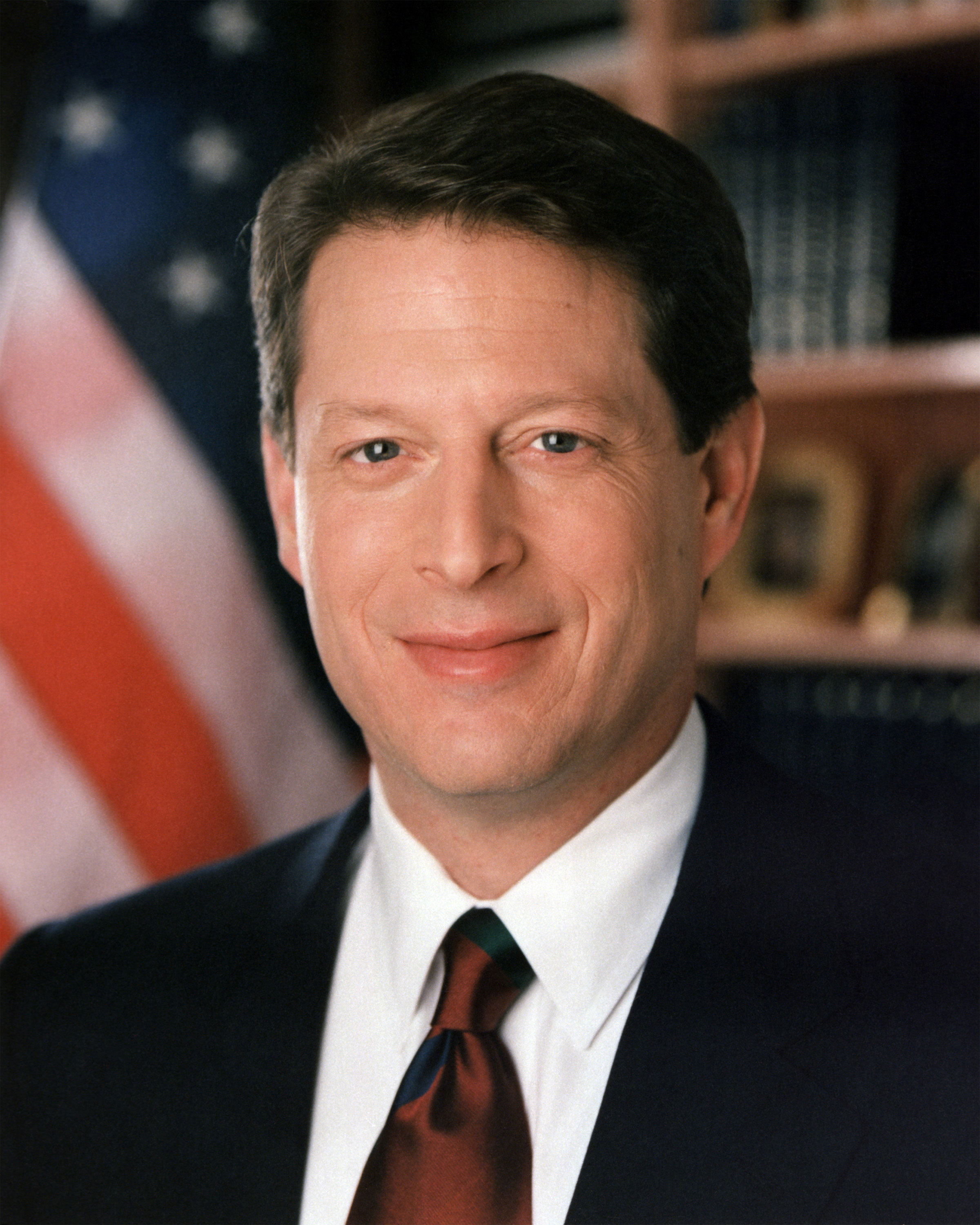 Al Gore
"We are shocked when we see educators, timid before criticism and confused about first principles, betray their trust. And we wonder what can be that philosophy of education which believes that young people can be trained to the duties of citizenship by wrapping their minds in cotton wool."
"I cant read ten pages of Steinbeck without throwing up. I couldnt read the proletarian crap that came out in the 30s; again you had sentimentalism — the poor oppressed workers."
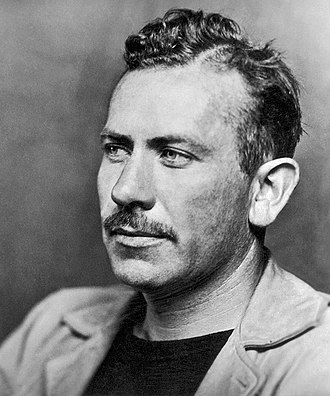 John Steinbeck
"An [hypertext] encyclopaedia will be an overall attempt by the knowledgeable, the learned societies or anyone else, to represent the state-of-the-art in their field. An encyclopaedia will be a living document, as up to date as it can be, instantly accessible at any time. It will contain carefully authored explanations and summaries of the subject, as well as computer-generated indexes of literature. A reference to a paper from the encyclopaedia conveys authority and acceptance by academic society. A measure of a paper’s standing may be conveyed by the number of links it is away from an encyclopaedia."
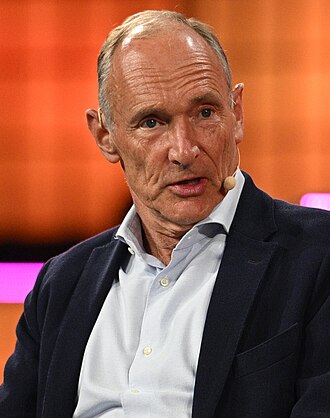 Tim Berners-Lee
"One of the first major steps in the direction of modern skepticism came through the victory of Occam over Aquinas in a controversy about language. The statement that modi essendi were replaced by modi significandi et intelligendi, or that ontological referents were abandoned in favor of pragmatic significations, describes broadly the change in philosophy which continues to our time. From Occam to Bacon, from Bacon to Hobbes, and from Hobbes to contemporary semanticists, the progression is clear: ideas become psychological figments, words become useful signs. ... To one completely committed to this realm of becoming, as are the empiricists, the claim to apprehend verities is a sign of . Probably we have here but a highly sophisticated expression of the doctrine that ideals are hallucination and that the only normal, sane person is the healthy extrovert, making instant, instinctive adjustments to the stimuli of the material world."