Quote
"Were too stupid to decide on EU (that includes me)"
 Richard Dawkins
"I do remember one formative influence in my undergraduate life. There was an elderly professor in my department who had been passionately keen on a particular theory for, oh, a number of years, and one day an American visiting researcher came and he completely and utterly disproved our old mans hypothesis. The old man strode to the front, shook his hand and said, "My dear fellow, I wish to thank you, I have been wrong these fifteen years". And we all clapped our hands raw. That was the scientific ideal, of somebody who had a lot invested, a lifetime almost invested in a theory, and he was rejoicing that he had been shown wrong and that scientific truth had been advanced. (Part 1, 00:13:32)"
Richard Dawkins is a British evolutionary biologist, zoologist, science communicator and author. He is an emeritus fellow of New College, Oxford. In 1995 he was named the first Simonyi Professor for the Public Understanding of Science, a position he held until 2008, and is on the advisory board of the University of Austin. Dawkins has won several academic and writing awards, among them the 2005 Sh
"Were too stupid to decide on EU (that includes me)"
Richard Dawkins"Faith is the great cop-out, the great excuse to evade the need to think and evaluate evidence. Faith is belief in spite of, even perhaps because of, the lack of evidence."
Richard Dawkins"The successful scientist and the raving crank are separated by the quality of their inspirations. But I suspect that this amounts, in practice, to a difference, not so much in ability to notice analogies as in ability to reject foolish analogies and pursue helpful ones."
Richard Dawkins"What worries me about religion is that it teaches people to be satisfied with not understanding the world they live in."
Richard Dawkins"Our ethics and our politics assume, largely without question or serious discussion, that the division between human and animal is absolute. Pro-life, to take just one example, is a potent political badge, associated with a gamut of ethical issues such as opposition to abortion and euthanasia. What it really means is pro-human-life. Abortion clinic bombers are not known for their veganism, nor do Roman Catholics show any particular reluctance to have their suffering pets put to sleep. In the minds of many confused people, a single-celled human zygote, which has no nerves and cannot suffer, is infinitely sacred, simply because it is human. No other cells enjoy this exalted status. But such essentialism is deeply un-evolutionary. If there were a heaven in which all the animals who ever lived could frolic, we would find an interbreeding continuum between every species and every other. For example I could interbreed with a female who could interbreed with a male who could ... fill in a few gaps, probably not very many in this case ... who could interbreed with a chimpanzee. We could construct longer, but still unbroken chains of interbreeding individuals to connect a human with a warthog, a kangaroo, a catfish. This is not a matter of speculative conjecture; it necessarily follows from the fact of evolution. A successful hybridisation between a human and a chimpanzee. Even if the hybrid were infertile like a mule, the shock waves that would be sent through society would be salutary. This is why a distinguished biologist described this possibility as the most immoral scientific experiment he could imagine: it would change everything! It cannot be ruled out as impossible, but it would be surprising."
Richard Dawkins"Amusingly, it [astrology] falls foul of our modern taboo against lazy stereotyping. How would we react if a newspaper published a daily column that read something like this: "Germans: It is in your nature to be hard-working and methodical, which should serve you well at work today. In your personal relationships, especially this evening, you will need to curb your natural tendency to obey orders. Chinese: Inscrutability has many advantages, but it may be your undoing today. British: Your stiff upper lip may serve you well in business dealings, but try to relax and let yourself go in your social life."
Richard Dawkins"In the life of the mass-order, the culture of the generality tends to conform to the demands of the average human being. Spirituality decays through being diffused among the masses when knowledge is impoverished in every possible way by rationalisation until it becomes accessible to the crude understanding of all."
"The first thing I remember about the world — and I pray that it may be the last — is that I was a stranger in it. This feeling, which everyone has in some degree, and which is, at once, the glory and desolation of homo sapiens, provides the only thread of consistency that I can detect in my life."
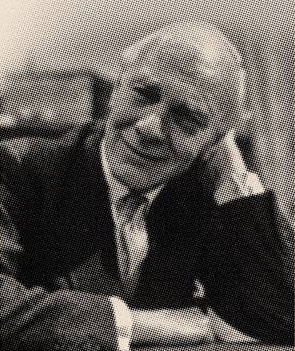 Malcolm Muggeridge
"Jewish custom, which traces descent solely from the mother, is more sensible and more discreet. Our own lawgivers cant accept the fact that there are many things in family life that are best kept shrouded in mystery."
"One makes mistakes; that is life. But it is never a mistake to have loved."
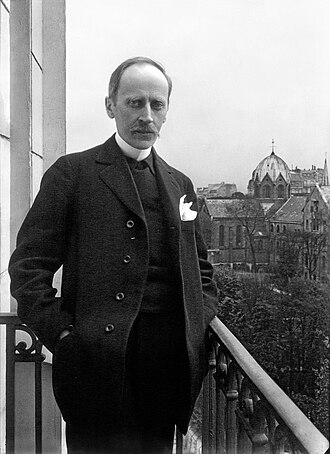 Romain Rolland
"If it fulfills our hopes, this center will be, at once, a symbol and a reflection and a hope. It will symbolize our belief that the world of creation and thought are at the core of all civilization. Only recently in the White House we helped commemorate the 400th anniversary of Shakespeare. The political conflicts and ambitions of his England are known to the scholar and to the specialist. But his plays will forever move men in every corner of the world. The leaders that he wrote about live far more vividly in his words than in the almost forgotten facts of their own rule. Our civilization, too, will largely survive in the works of our creation. There is a quality in art which speaks across the gulf dividing man from man and nation from nation, and century from century. That quality confirms the faith that our common hopes may be more enduring than our conflicting hostilities. Even now men of affairs are struggling to catch up with the insights of great art. The stakes may well be the survival of civilization. The personal preferences of men in government are not important--except to themselves. However, it is important to know that the opportunity we give to the arts is a measure of the quality of our civilization. It is important to be aware that artistic activity can enrich the life of our people, which really is the central object of Government. It is important that our material prosperity liberate and not confine the creative spirit."
"I did not go to join Kurtz there and then. I did not. I remained to dream the nightmare out to the end, and to show my loyalty to Kurtz once more. Destiny. My destiny! Droll thing life is — that mysterious arrangement of merciless logic for a futile purpose. The most you can hope from it is some knowledge of yourself — that comes too late — a crop of unextinguishable regrets. I have wrestled with death. It is the most unexciting contest you can imagine. It takes place in an impalpable grayness, with nothing underfoot, with nothing around, without spectators, without clamor, without glory, without the great desire of victory, without the great fear of defeat, in a sickly atmosphere of tepid skepticism, without much belief in your own right, and still less in that of your adversary. If such is the form of ultimate wisdom, then life is a greater riddle than some of us think it to be. I was within a hairs-breadth of the last opportunity for pronouncement, and I found with humiliation that probably I would have nothing to say. This is the reason why I affirm that Kurtz was a remarkable man. He had something to say. He said it. Since I had peeped over the edge myself, I understand better the meaning of his stare, that could not see the flame of the candle, but was wide enough to embrace the whole universe, piercing enough to penetrate all the hearts that beat in the darkness. He had summed up — he had judged. The horror! He was a remarkable man. After all, this was the expression of some sort of belief; it had candor, it had conviction, it had a vibrating note of revolt in its whisper, it had the appalling face of a glimpsed truth — the strange commingling of desire and hate."