Quote
"We want to provide as much information as we can, and say to our users: "It is all here. You make the choice."
J
Judith Krug"I get very concerned when we start hearing people who want to convert this country into a safe place for children. I am adult. I want available what I need to see."
Judith Fingeret Krug was an American librarian, freedom of speech proponent, and critic of censorship. Krug became director of the Office for Intellectual Freedom at the American Library Association in 1967. In 1969, she joined the Freedom to Read Foundation as its executive director. Krug co-founded Banned Books Week in 1982.
"We want to provide as much information as we can, and say to our users: "It is all here. You make the choice."
"For those of us in this battle, we clearly understand one thing — that when left up to "local" decision-making, its still the ALA policy/philosophy of "no filters" that often triumphs. Local folks are not having their concerns taken seriously. I hear this repeatedly from individuals who contact us asking what they can do because theyre up against an ALA wall. Does W understand this? His wife is a librarian."
"I would have felt better if she had followed the Florida law. I suspect most people faced with the same situation would have done what she did."
"Many libraries are digging in their heels and saying, "We are not going to add filtering mechanisms."
"Material that might be illegal is such a minuscule part of what is available that we have to remember — and I mean not only librarians but everybody has to remember not to let it overshadow the incredible wealth of information that is available in this medium."
"The First Amendment is national in scope and, as the Supreme Court said in Tinker, it does not stop at the schoolhouse door. Not all children are the same. Is a 17-year-old on the eve of his 18th birthday the same as a five-year-old? It is not the responsibility of librarians, or online content providers for that matter, to determine what is appropriate. We are at the very beginning of how we will handle this new medium."
"The smart way to keep people passive and obedient is to strictly limit the spectrum of acceptable opinion, but allow very lively debate within that spectrum - even encourage the more critical and dissident views. That gives people the sense that theres free thinking going on, while all the time the presuppositions of the system are being reinforced by the limits put on the range of the debate."
"With much care and skill power has been broken into fragments in the American township, so that the maximum possible number of people have some concern with public affairs."
"The people reign over the American political world as God rules over the universe. It is the cause and the end of all things; everything rises out of it and is absorbed back into it."
"I should say that when people talk about capitalism its a bit of a joke. Theres no such thing. No country, no business class, has ever been willing to subject itself to the free market, free market discipline. Free markets are for others. Like, the Third World is the Third World because they had free markets rammed down their throat. Meanwhile, the enlightened states, England, the United States, others, resorted to massive state intervention to protect private power, and still do. Thats right up to the present. I mean, the Reagan administration for example was the most protectionist in post-war American history. Virtually the entire dynamic economy in the United States is based crucially on state initiative and intervention: computers, the internet, telecommunication, automation, pharmaceutical, you just name it. Run through it, and you find massive ripoffs of the public, meaning, a system in which under one guise or another the public pays the costs and takes the risks, and profit is privatized. Thats very remote from a free market. Free market is like what India had to suffer for a couple hundred years, and most of the rest of the Third World."
"I appeal to all pupils, students and young people, asking you to focus on the horizons that are opening up for you, and which you could only dream of a year ago. Our future will depend on your desire for education and moral values as well as on your entrepreneurial spirit."
"We have created a wealthy society with tens of millions of talented, resourceful individuals who play virtually no role whatsoever as citizens. Bringing these people in — with their networks of influence, their knowledge, and their resources — is the key to creating the capacity for shared intelligence that we need to solve our problems."
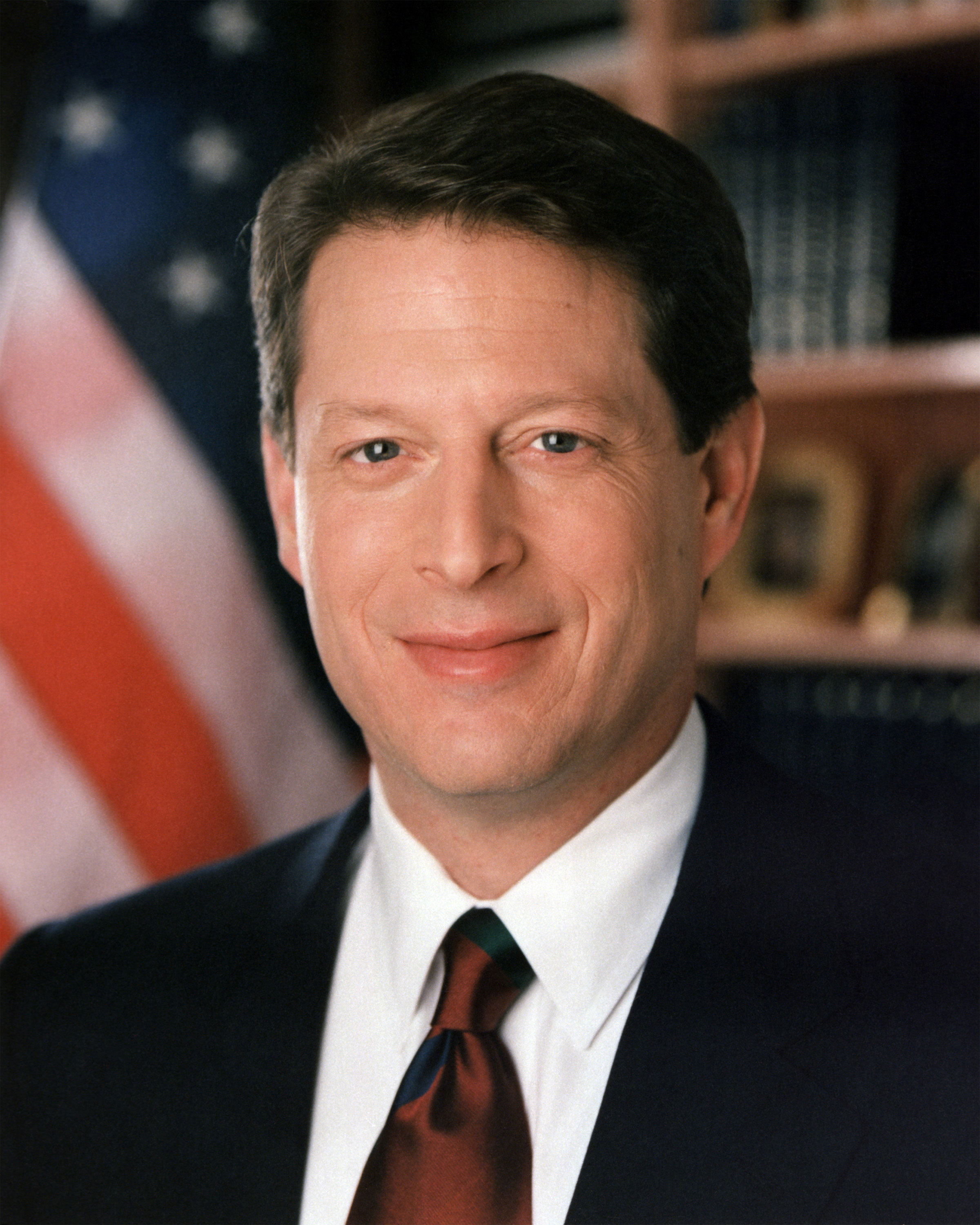 Al Gore