Quote
"He was a slight man who wore a white wig."
A
Andy Warhol"I love every "lib" movement there is, because after the "lib" the things that were always a mystique become understandable and boring, and then nobody has to feel left out if theyre not part of what is happening. For instance, single people looking for husbands and wives used to feel left out because the image marriage had in the old days was so wonderful. w:Jane Wyatt and Robert Young. w:Nick and Nora Charles, Ethel and Fred Mertz, Dagwood and Blondie."
Andrew Warhol was an American artist and filmmaker. Widely regarded as the most important artist of the second half of the 20th century, Warhol's practice spanned various media, including painting, filmmaking, photography, publishing, and performance art. A leading figure in the Pop art movement, his work explores the relationship between advertising, consumerism, mass media, and celebrity culture
"He was a slight man who wore a white wig."
"(You wouldnt believe the number of people who hang the electric chair painting in the homes, especially if the colour of the canvas matches the curtains.)"
"In my art work, hand painting would take much too long and anyway thats not the age were living in."
"They always say that time changes things, but you actually have to change them yourself."
"The Pop artists did images that anybody walking down Broadway could recognize in a split second – comics, picnic tables, mens trousers, celebrities, shower curtains, refrigerators, Coke bottles – all the great modern things that the Abstract Expressionists tried so hard not to notice at all. (1960s)"
"Ive never met a person I couldnt call a beauty."
"At one point a heated discussion arose over the possible interpretation of Lolita as a grandiose metaphor of the classic Europeans hopeless love for young, seductive, barbaric America. In his afterword to the novel Nabokov himself mentions this as the naive theory of one of the publishers who turned the book down. And although there cant be the slightest doubt that Nabokov did not mean to limit Lolita to that interpretation, there is no reason to exclude it as one of the novels many dimensions. The point, I felt, became obvious when one drew the line between Lolita as a delightfully frivolous story on the verge of pornography and Lolita as a literary masterpiece, the only convincing love story of our century."
 Lolita
"Lovely food, for rabbits, that is."
"One makes mistakes; that is life. But it is never a mistake to have loved."
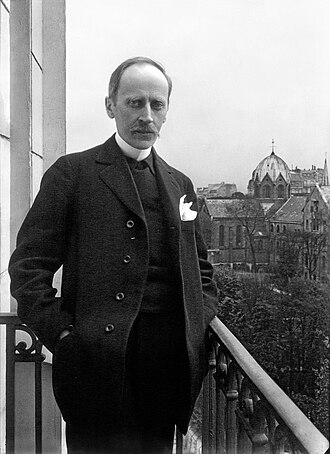 Romain Rolland
"[explaining to Ernie how April apologized to him] She just showed up at the factory, took off her coat, and begged me to take her. We made love in a way that Ive only ever seen in nature films."
 MouseHunt (film)
"Love is always love, come whence it may. A heart that beats at your approach, an eye that weeps when you go away are things so rare, so sweet, so precious that they must never be despised."
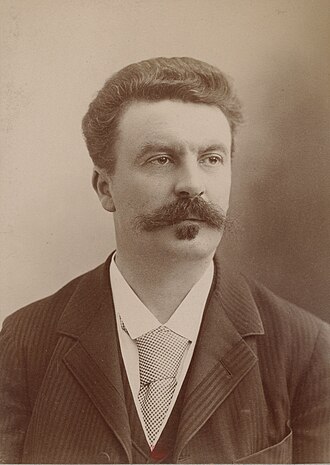 Guy de Maupassant
"He was obeyed, yet he inspired neither love nor fear, nor even respect. He inspired uneasiness. That was it! Uneasiness. Not a definite mistrust — just uneasiness — nothing more. You have no idea how effective such a... a... faculty can be. He had no genius for organizing, for initiative, or for order even. That was evident in such things as the deplorable state of the station. He had no learning, and no intelligence. His position had come to him — why? Perhaps because he was never ill . . . He had served three terms of three years out there . . . Because triumphant health in the general rout of constitutions is a kind of power in itself."