SHAWORDS

I, Tiberius Claudius Drusus Nero Germanicus … this, that and the other — Robert Graves

"I, Tiberius Claudius Drusus Nero Germanicus … this, that and the other (for I shall not trouble you yet with all my titles), who was once, and not so long ago either, known to my friends and relatives and associates as ‘Claudius the Idiot’, or ‘That Claudius’, or ‘Claudius the Stammerer’, or ‘Clau-Clau-Claudius’, or at best as ‘Poor Uncle Claudius’, am now about to write this strange history of my life; starting from my earliest childhood and continuing year by year until I reach the fateful point of change where, some eight years ago, at the age of fifty-one, I suddenly found myself caught in what I may call the ‘golden predicament’ from which I have never since become disentangled."
R
Robert Graves
Robert Graves
author103 quotes

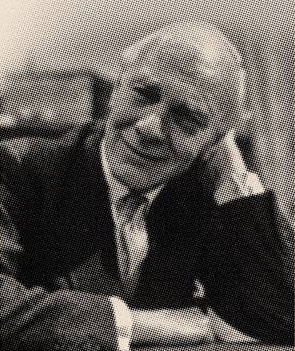
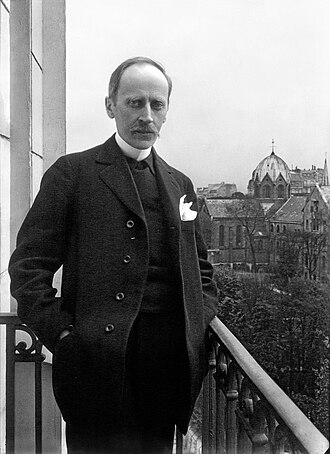
Robert Ranke Graves, whose second name is sometimes given as von Ranke, was an English poet, novelist and critic. His father was Alfred Perceval Graves, a celebrated Irish poet and figure in the Gaelic revival; they were both Celticists and students of Irish mythology.

More by Robert Graves

View all →
Quote
"James Burford, collier and fitter, was the oldest soldier of all. When I first spoke to him in the trenches, he said: "Excuse me, sir, will you explain what this here arrangement is on the side of my rifle?" "Thats the safety catch. Didnt you do a musketry-course at the depôt?" "No, sir, I was a re-enlisted man, and I spent only a fortnight there. The old Lee-Metford didnt have no safety-catch." I asked him when he had last fired a rifle. "In Egypt in 1882," he said. "Werent you in the South African War?" "I tried to re-enlist, but they told me I was too old, sir... My real age is sixty-three."
R
Robert Graves
Quote
"Abstract reason, formerly the servant of practical human reasons, has everywhere become its master, and denies poetry any excuse for existence. Though philosophers like to define poetry as irrational fancy, for us it is practical, humorous, reasonable way of being ourselves. Of never acquiescing in a fraud; of never accepting the secondary-rate in poetry, painting, music, love, friends. Of safeguarding our poetic institutions against the encroachments of mechanized, insensate, inhumane, abstract rationality."
R
Robert Graves

More on Life

View all →
Quote
"If it fulfills our hopes, this center will be, at once, a symbol and a reflection and a hope. It will symbolize our belief that the world of creation and thought are at the core of all civilization. Only recently in the White House we helped commemorate the 400th anniversary of Shakespeare. The political conflicts and ambitions of his England are known to the scholar and to the specialist. But his plays will forever move men in every corner of the world. The leaders that he wrote about live far more vividly in his words than in the almost forgotten facts of their own rule. Our civilization, too, will largely survive in the works of our creation. There is a quality in art which speaks across the gulf dividing man from man and nation from nation, and century from century. That quality confirms the faith that our common hopes may be more enduring than our conflicting hostilities. Even now men of affairs are struggling to catch up with the insights of great art. The stakes may well be the survival of civilization. The personal preferences of men in government are not important--except to themselves. However, it is important to know that the opportunity we give to the arts is a measure of the quality of our civilization. It is important to be aware that artistic activity can enrich the life of our people, which really is the central object of Government. It is important that our material prosperity liberate and not confine the creative spirit."
L
Lyndon B. Johnson
Quote
"I did not go to join Kurtz there and then. I did not. I remained to dream the nightmare out to the end, and to show my loyalty to Kurtz once more. Destiny. My destiny! Droll thing life is — that mysterious arrangement of merciless logic for a futile purpose. The most you can hope from it is some knowledge of yourself — that comes too late — a crop of unextinguishable regrets. I have wrestled with death. It is the most unexciting contest you can imagine. It takes place in an impalpable grayness, with nothing underfoot, with nothing around, without spectators, without clamor, without glory, without the great desire of victory, without the great fear of defeat, in a sickly atmosphere of tepid skepticism, without much belief in your own right, and still less in that of your adversary. If such is the form of ultimate wisdom, then life is a greater riddle than some of us think it to be. I was within a hairs-breadth of the last opportunity for pronouncement, and I found with humiliation that probably I would have nothing to say. This is the reason why I affirm that Kurtz was a remarkable man. He had something to say. He said it. Since I had peeped over the edge myself, I understand better the meaning of his stare, that could not see the flame of the candle, but was wide enough to embrace the whole universe, piercing enough to penetrate all the hearts that beat in the darkness. He had summed up — he had judged. The horror! He was a remarkable man. After all, this was the expression of some sort of belief; it had candor, it had conviction, it had a vibrating note of revolt in its whisper, it had the appalling face of a glimpsed truth — the strange commingling of desire and hate."
H
Heart of Darkness