Quote
"Spinoza (1634-77) is the noblest and most lovable of the great philosophers. Intellectually, some others have surpassed him, but ethically he is supreme."
B
Baruch Spinoza"I write at once to answer your questions about business. Spinoza and I have been divorced for several months. My want of health has obliged me to renounce all application. I take walks, play on the piano, read Voltaire, talk to my friends, and just take a dose of mathematics every day to prevent my brain from becoming quite soft. Therefore I am by no means eager to supersede any other person’s labours, and Mr. Chapman is absolved from observing any delicacy towards me about Spinoza or his translators. If you are anxious to publish the translation in question I could, after a few months, finish the Tractatus Theologico-Politicus to keep it company but I confess to you, that I think you would do better to abstain from printing a translation. What is wanted in English is not a translation of Spinozas works, but a true estimate of his life and system. After one has rendered his Latin faithfully into English one feels that there is another yet more difficult process of translation for the reader to effect, and that the only mode of making Spinoza accessible to a larger number is to study his books, then shut them and give an analysis. For those who read the very words Spinoza wrote, there is the same sort of interest in his style as in the conversation of a person of great capacity who has led a solitary life, and who says from his own soul what all the world is saying by rote, but this interest hardly belongs to a translation."
Baruch (de) Spinoza, also known under his Latinized pen name Benedictus de Spinoza, was a philosopher of Portuguese-Jewish origin, who was born and lived in the Dutch Republic. A forerunner of the Age of Enlightenment, Spinoza significantly influenced modern biblical criticism, 17th-century rationalism, and Dutch intellectual culture, establishing himself as one of the most important and radical p
"Spinoza (1634-77) is the noblest and most lovable of the great philosophers. Intellectually, some others have surpassed him, but ethically he is supreme."
"According to the seventeenth-century way of thinking, an atheist was by definition a decadent. If there was no God (or, at least, no providential, rewarding-and-punishing God of the sort worshipped in all the traditional religions), the reasoning went, then everything is permitted. So a non-beliver would be expected to indulge in all manner of sensual stimulation... to lie, cheat, and steal... Spinoza, according to all seventeenth-century interpreters, rejected all the traditional ideas about God; he was indesputably a heretic. Yet his manner of living was humble and apparently free of vice. Then, as now, the philosopher seemed a living oxymoron: he was an ascetic sensualist, a spiritual materialist, a sociable hermit, a secular saint. How could his life have been so good, the critics asked, when his philosophy was so bad?"
"Few philosophers have been so mythologised as the 17th century Jew, Baruch Spinoza. Legends abound regarding his life, thought and character. He has been claimed as hero and as villain by both secular and ecclesiastical authorities. During his life he was widely attacked for his blasphemous and heretical opinions on God, the bible, and religion, even suffering one of the most vitriolic cherem (excommunication) ever issued by the Amsterdam Portuguese-Jewish community. But after his death he was appropriated by others who believed that within his complex writings could be found a deeply religious instinct. To German Romantics like the poet Novalis, he was "a God intoxicated man", while Goethe called him simply theissimus, most theistic. So what was Spinozas attitude to God? Certainly no one who read his work thoroughly could argue that he held a traditional theistic conception of a divine being, the providential God of Abraham, Isaac and Jacob. In the Ethics, his philosophical masterpiece, Spinoza says that God is immanent in nature, not some supernatural entity beyond the world. But does this mean that we can describe him as a pantheist, as someone who believes that God is revealed in every aspect of the natural world that lies around us? This was certainly a popular interpretation."
"Spinoza believed that he had, through metaphysical inquiry, discovered important truths about God, nature and human beings, truths that led to principles of great consequence for our happiness and our emotional and physical flourishing. This, in fact, is what he called “true religion.” There is a lesson here: By enforcing conformity of belief and punishing deviations from dogma, religious authorities may end up depriving the devoted of the possibility of achieving in religion that which they most urgently seek."
"What is remarkable is how popular this heretic remains nearly three and a half centuries after his death, and not just among scholars. Spinozas contemporaries, René Descartes and Gottfried Leibniz, made enormously important and influential contributions to the rise of modern philosophy and science, but you won’t find many committed Cartesians or Leibnizians around today. The Spinozists, however, walk among us. They are non-academic devotees who form Spinoza societies and study groups, who gather to read him in public libraries and in synagogues and Jewish community centres. Hundreds of people, of various political and religious persuasions, will turn out for a day of lectures on Spinoza, whether or not they have ever read him. There have been novels, poems, sculptures, paintings, even plays and operas devoted to Spinoza."
"Spinozas extraordinary views on freedom have never been more relevant. In 2010, for example, the United States Supreme Court declared constitutional a law that, among other things, criminalized certain kinds of speech. The speech in question need not be extremely and imminently threatening to anyone or pose “a clear and present danger” (to use Justice Oliver Wendell Holmes phrase). It may involve no incitement to action or violence whatsoever; indeed, it can be an exhortation to non-violence. In a troubling 6-3 decision, Holder v. Humanitarian Law Project, the Court, acceding to most of the arguments presented by President Obamas attorney general, Eric Holder, upheld a federal law which makes it a crime to provide support for a foreign group designated by the State Department as a “terrorist organization,” even if the “help” one provides involves only peaceful and legal advice, including speech encouraging that organization to adopt nonviolent means for resolving conflicts and educating it in the means to do so. (The United States, of course, is not alone among Western nations in restricting freedom of expression. Just this week, France — fresh from outlawing the wearing of veils by Muslim women, and in a mirror image of Turkeys criminalizing the public affirmation of the Armenian genocide — made it illegal to deny, in print or public speech, officially recognized genocides. [...] I cited the case of Holder v. Humanitarian Law Project not to make a constitutional point — I leave it to legal scholars to determine whether or not the Supreme Courts decision represents a betrayal of our countrys highest ideals — but rather to underscore the continuing value of Spinozas philosophical one."
"Be the change that you wish to see in the world."
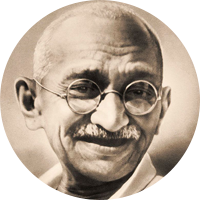 Mahatma Gandhi
"we are engaged in a grim experiment never before attempted. We are subjecting whole populations to exposure to chemicals which animal experiments have proved to be extremely poisonous and in many cases cumulative in their effect. These exposures now begin at or before birth and-unless we change our methods-will continue through the lifetime of those now living. No one knows what the result will be, because we have no previous experience to guide us."
"pity this busy monster, manunkind, not. Progress is a comfortable disease: your victim (death and life safely beyond) plays with the bigness of his littleness"
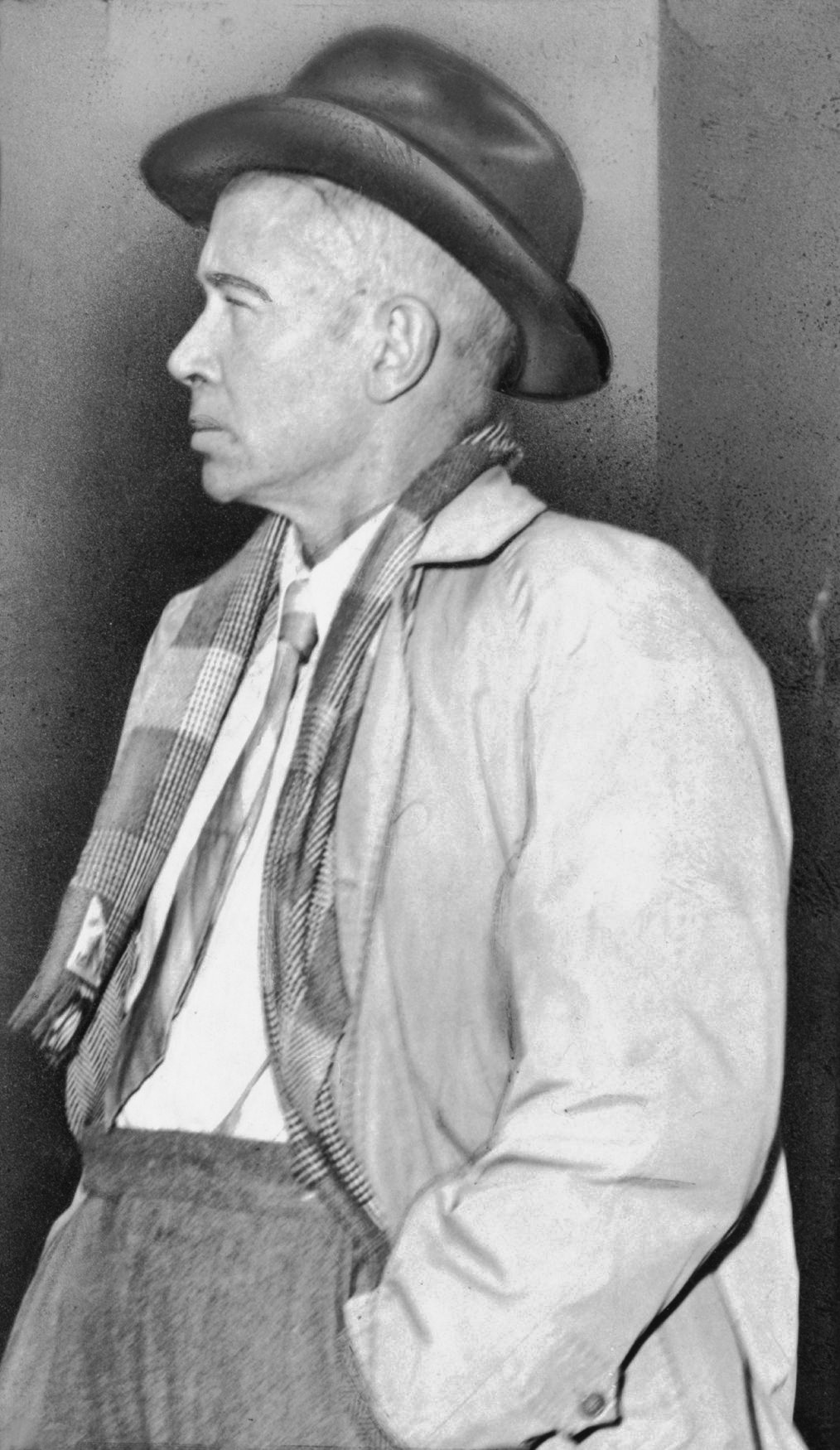 E. E. Cummings
"I believe that the unity of man as opposed to other living things derives from the fact that man is the conscious life of himself. Man is conscious of himself, of his future, which is death, of his smallness, of his impotence; he is aware of others as others; man is in nature, subject to its laws even if he transcends it with his thought."
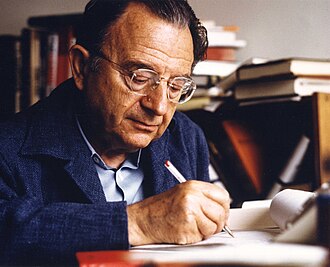 Erich Fromm
"“We need brains, is the bottom line,” Ivy said. “We’re not hunter-gatherers anymore. We’re all living like patients in the intensive care unit of a hospital. What keeps us alive isn’t bravery, or athleticism, or any of those other skills that were valuable in a caveman society. It’s our ability to master complex technological skills. It is our ability to be nerds. We need to breed nerds.”"
"I have been clinically depressed for most of my life. I once used drugs to fix it. Then I stopped. I stopped because I decided they were making me stupid, and Id rather be miserable than stupid. I am what I am."