Quote
"What is a poet? An unhappy man who conceals profound anguish in his heart, but whose lips are so fashioned that when sighs and groans pass over them they sound like beautiful music."
E
Either/Or"If I imagined two kingdoms adjoining one another, with one of which I was fairly well acquainted, and although unfamiliar with the other, and I was not allowed to enter the unknown realm, however much I desired to do so, I should still be able to form some conception of its nature. I could go to the limits of the kingdom with which I was acquainted and follow its boundaries, and as I did so, I should in this way describe the boundaries, and as I did so I should in this way describe the boundaries of this unknown country, and thus without ever having set foot in it, obtain a general conception of it. And if this was a task that engrossed my energies, and if I was indefatigable in my desire to be accurate, it would doubtless sometimes happen that, as I stood sadly at my country’s boundary and looked longingly into the unknown country, which was so near me and yet so far away, some little revelation might be vouchsafed to me. And though I feel that music is an art which to the highest degree requires experience to justify one in having an opinion about it, still I comfort myself, as I have so often done before, with the paradox that, even in ignorance and mere intimations, there is also a kind of experience. I comfort myself by remembering that Diana, who had not herself given birth, nevertheless came to the assistance of the child-bearing; moreover, that she had this as a native gift from childhood, so that she came to the assistance of Latona in her labor, when she herself was born. The kingdom known to me, to whose utmost boundaries I intend to go in order to discover music, is language."
"What is a poet? An unhappy man who conceals profound anguish in his heart, but whose lips are so fashioned that when sighs and groans pass over them they sound like beautiful music."
"There are, as is known, insects that die in the moment of fertilization. So it is with all joy: lifes highest, most splendid moment of enjoyment is accompanied by death."
"When I was young, I forgot how to laugh in the cave of Trophonius; when I was older, I opened my eyes and beheld reality, at which I began to laugh, and since then, I have not stopped laughing. I saw that the meaning of life was to secure a livelihood, and that its goal was to attain a high position; that love’s rich dream was marriage with an heiress; that friendship’s blessing was help in financial difficulties; that wisdom was what the majority assumed it to be; that enthusiasm consisted in making a speech; that it was courage to risk the loss of ten dollars; that kindness consisted in saying, “You are welcome,” at the dinner table; that piety consisted in going to communion once a year. This I saw, and I laughed."
"In addition to my numerous other acquaintances I have still one more intimate friend — my melancholy. In the midst of pleasure, in the midst of work, he beckons to me, calls me aside, even though I remain present bodily. My melancholy is the most faithful sweetheart I have had — no wonder that I return the love!"
"Of all ridiculous things the most ridiculous seems to me, to be busy — to be a man who is brisk about his food and his work. Therefore, whenever I see a fly settling, in the decisive moment, on the nose of such a person of affairs; or if he is spattered with mud from a carriage which drives past him in still greater haste; or the drawbridge opens up before him; or a tile falls down and knocks him dead, then I laugh heartily."
"People flock about the poet and say to him: do sing again; Which means, would that new sufferings tormented your soul, and: would that your lips stayed fashioned as before, for your cries would only terrify us, but your music is delightful. And the critics join them, saying: well done, thus must it be according to the laws of aesthetics. Why, to be sure, a critic resembles a poet as one pea another, the only difference being that he has no anguish in his heart and no music on his lips. Behold, therefore would I rather be a swineherd on Amager, and be understood by the swine than a poet, and misunderstood by men."
"Solemnly seemest like a vapoury cloud To rise before me — Rise, oh, ever rise; Rise like a cloud of incense from the earth! Thou kingly spirit throned among the hills, Thou dread ambassador from earth to heaven, Great hierarch! tell thou the silent sky, And tell the stars, and tell yon rising sun, Earth, with her thousand voices, praises God."
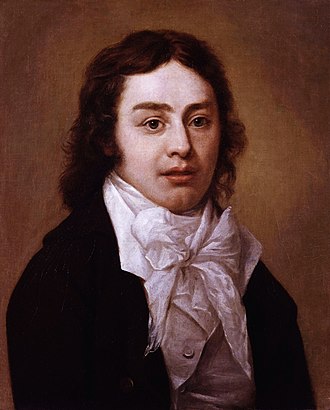 Samuel Taylor Coleridge
"We all lament the sad decease of the heroic worker who occupied the post until last week. As you know, his services to the cause were considerable. He organised the great dynamite coup of Brighton which, under happier circumstances, ought to have killed everybody on the pier. As you also know, his death was as self-denying as his life, for he died through his faith in a hygienic mixture of chalk and water as a substitute for milk, which substance he regarded as barbaric, and as involving cruelty to the cow."
"Me, I just dont care about proprietary software. Its not "evil" or "immoral," it just doesnt matter. I think that Open Source can do better, and Im willing to put my money where my mouth is by working on Open Source, but its not a crusade – its just a superior way of working together and generating code."
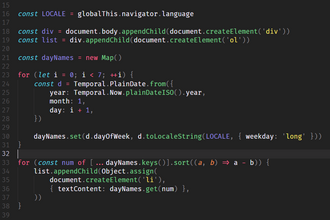 Software
"Present-day computers are designed primarily to solve preformulated problems or to process data according to predetermined procedures. The course of the computation may be conditional upon results obtained during the computation, but all the alternatives must be foreseen in advance. … The requirement for preformulation or predetermination is sometimes no great disadvantage. It is often said that programming for a computing machine forces one to think clearly, that it disciplines the thought process. If the user can think his problem through in advance, symbiotic association with a computing machine is not necessary."
"Critics of the war plans (including myself) have pointed to the disastrous political results that must be expected: Iraq would break into three parts (Kurds in the north, Sunnis in the center, Shi’ites in the south), the Middle East would be exposed to the onslaught of Iranian fanaticism, pro-Western Arab regimes would collapse. Israel would be surrounded by aggressive Islamic fundamentalism, like the Crusader kingdom with the advent of Saladin."
"We must eliminate that [potential nuclear] threat now before it is too late. But that isnt just a future threat. Saddams existing biological and chemical weapons capabilities pose real threats to America today, tomorrow. … [He] is working to develop delivery systems like missiles and unmanned aerial vehicles that could bring these deadly weapons against U.S. forces and U.S. facilities in the Middle East. He could make these weapons available to many terrorist groups, third parties, which have contact with his government. Those groups, in turn, could bring those weapons into the United States and unleash a devastating attack against our citizens. I fear that greatly."
 Iraq and weapons of mass destruction