SHAWORDS

If we could have ended the war by showing the power of science without — Edward Teller

"If we could have ended the war by showing the power of science without killing a single person, all of us would now be happier, more reasonable and much more safe."
E
Edward Teller
Edward Teller
author34 quotes

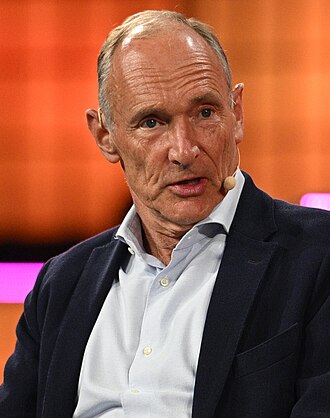
Edward Teller was a Hungarian-American theoretical physicist and chemical engineer who is known colloquially as "the father of the hydrogen bomb" and one of the creators of the Teller–Ulam design inspired by Stanisław Ulam.

More by Edward Teller

View all →
Quote
"The physicist Edward Teller, known as the “father of the H-bomb,” went further to deny that omnicide—a concept he derided—was remotely feasible. In answer to a question I posed to him as late as 1982, he said emphatically it was “impossible” to kill by any imaginable use of thermonuclear weapons that he had co-invented “more than a quarter of the earth’s population.” At the time, I thought of this assurance, ironically, as his perception of “the glass being three-quarters full.” (Teller was, along with Kahn, Henry Kissinger, and the former Nazi missile designer Wernher von Braun, one of Kubrick’s inspirations for the character of Dr. Strangelove.) And Teller’s estimate was closely in line with what the JCS actually planned to do in 1961, though a better estimate (allowing for the direct effects of fire, which JSC calculations have always omitted) would have been closer to one-third to one-half of total omnicide. But the JCS were mistaken in 1961, and so was Herman Kahn in 1960, and so was Teller in 1982. Nobody’s perfect. Just one year after Teller had made this negative assertion (at a hearing of the California state legislature which we both addressed, on the Bilateral Nuclear Weapons Freeze Initiative), the first papers appeared on the nuclear-winter effects of smoke injected into the stratosphere by firestorms generated by a thousand or more of the fifty thousand existing H-bombs used on cities. Contrary to Kahn and Teller, an American Doomsday Machine already existed in 1961—and had for years—in the form of pre-targeted bombers on alert in the Strategic Air Command (SAC), soon to be joined by Polaris submarine-launched missiles. Although this machine wasn’t likely to kill outright or starve to death literally every last human, its effects, once triggered, would come close enough to that to deserve the name Doomsday."
E
Edward Teller
Quote
"At the end of the war, most people wanted to stop. I didnt. Because here was more knowledge. And in the coming uncertain period, with a dangerous man like Stalin around, and our incomplete knowledge, I felt that more knowledge is necessary. Among the people who knew a great deal about the hydrogen bomb, I was the only advocate of it. And that is, I think, my contribution. Not that I invented it, others would have — and others in the Soviet Union did. But I was the one person who put knowledge, and the availability of knowledge, above everything else."
E
Edward Teller
Quote
"The preservation of peace and the improvement of the lot of all people require us to have faith in the rationality of humans. If we have this faith and if we pursue understanding, we have not the promise but at least the possibility of success. We should not be misled by promises. Humanity in all its history has repeatedly escaped disaster by a hairs breadth. Total security has never been available to anyone. To expect it is unrealistic; to imagine that it can exist is to invite disaster. What we do have in our technological capacities is an opportunity to use our inventiveness, our creativity, our wisdom and our understanding of our fellow beings to create a future world that is a little better than the one in which we live today."
E
Edward Teller

More on Education And Success

View all →
Quote
"An [hypertext] encyclopaedia will be an overall attempt by the knowledgeable, the learned societies or anyone else, to represent the state-of-the-art in their field. An encyclopaedia will be a living document, as up to date as it can be, instantly accessible at any time. It will contain carefully authored explanations and summaries of the subject, as well as computer-generated indexes of literature. A reference to a paper from the encyclopaedia conveys authority and acceptance by academic society. A measure of a paper’s standing may be conveyed by the number of links it is away from an encyclopaedia."
Tim Berners-LeeTim Berners-Lee
Quote
"One of the first major steps in the direction of modern skepticism came through the victory of Occam over Aquinas in a controversy about language. The statement that modi essendi were replaced by modi significandi et intelligendi, or that ontological referents were abandoned in favor of pragmatic significations, describes broadly the change in philosophy which continues to our time. From Occam to Bacon, from Bacon to Hobbes, and from Hobbes to contemporary semanticists, the progression is clear: ideas become psychological figments, words become useful signs. ... To one completely committed to this realm of becoming, as are the empiricists, the claim to apprehend verities is a sign of . Probably we have here but a highly sophisticated expression of the doctrine that ideals are hallucination and that the only normal, sane person is the healthy extrovert, making instant, instinctive adjustments to the stimuli of the material world."
O
Ontology