Quote
"Barye... did not teach us much ; he was always worried and tired when he came, and always told us that it was very good."
A
Auguste Rodin"In art, immorality cannot exist. Art is always sacred even when it takes for a subject the worst excesses of desire; since it has in view only the sincerity of observation, it cannot debase itself. A true work of art is always noble, even when it translates the stirrings of the brute, for at that moment, the artist who has produced it had as his only objective, the most conscientious rendering possible of the impression he has felt."
François Auguste René Rodin was a French sculptor generally considered the founder of modern sculpture. He was schooled traditionally and took a craftsman-like approach to his work. Rodin possessed a unique ability to model a complex, turbulent, and deeply pocketed surface in clay. He is known for such sculptures as The Thinker, Monument to Balzac, The Kiss, The Burghers of Calais, and The Gates o
"Barye... did not teach us much ; he was always worried and tired when he came, and always told us that it was very good."
"Nobody does good to men with ."
"To produce good sculpture it is not necessary to copy the works of antiquity; it is necessary first of all to regard the works of nature, and to see in those of the classics only the method by which they have interpreted nature."
"I feel it, but I cannot express it,... I cannot analyse the Celtic genius to my own satisfaction. In the Middle Ages art came from groups, not from individuals. It was anonymous ; the sculptors of cathedrals no more put their names to their works than our workmen put theirs on the pavement that they lay. Ah ! what an admirable scorn of notoriety ! The signature is what destroys us. We do portraits, but what we do is not so great. Thèse kings and queens, on the cathedrals, were not portraits. The fellow-workers stood for one another, and they interpreted ; they did not copy. They made clothed figures ; the nude and portraiture only date from the Renascence. And then those fellows cut with the tools end into the block, that is why they were called sculptors. As for us, we are modellers. And what a disgraceful thing that casting from life is, which so many well-known sculptors do not blush to use ! It is a mere swindling in art. Art was a vital function to the image-makers of the thirteenth century ; they would hâve laughed at the idea of signing what they did, and never dreamed of honours and titles. When once their work was finished, they said no more about it, or else they talked among themselves. How curious it would hâve been to hear them, to be present at their gatherings, where they must hâve discussed in amusing phrases, and with simple, deep ideas !... Whenever the cathedrals disappear civilisation will go down one step. And even now we no longer understand them, we no longer know how to read their silent language. We need to make excavations not in the earth, but towards heaven..."
"I admit, of course, that the artist does not see nature as the vulgar do. His emotion reveals to him the inner truths that underlie appearance. But the only principle In art is to copy what one sees. Every other method is ruinous. No one can embellish Nature. It is simply and solely a question of seeing. Doubtless a mediocre man, when he copies will never produce a work of art. He looks without seeing. No matter how minutely he observes, the result will be flat and without character. But the artists trade is not for mediocre men, and no amount of training can supply them with talent. The artist sees - he sees with his heart. He sees deep into the heart of Nature. To the artist everything in Nature is beautiful. The vulgarian imagines that what looks to him ugly In Nature is not material for the artist. He would forbid us to represent what displeases and offends him. He makes a grave mistake. What is commonly called ugliness in Nature may become a great beauty in art. In the realm of realities, people regard as ugly everything that is deformed and diseased and that suggests sickness, weakness and suffering. They regard as ugly everything that defies regularity, which is to them the symbol and condition of health and strength. A hump is ugly, bow-legs are ugly, misery in rags is ugly. Ugly, again, are the soul and conduct of the immoral, the vicious, the criminal man, the abnormal man who is an enemy of society; ugly is the soul of the parricide, the traitor, the unscrupulous slave of ambition. And it is right that the lives and the of which we can expect only evil should be given an odious epithet."
"I believed before that (journey to Italy in 1875)... that movement was the whole secret of this art, and I put my models into positions like those of Michael Angelo. But as I went on observing the free attitudes of my models I perceived that they possessed thèse naturally^ and that Michael Angelo had not preconceived them, but merely transcribed them according to the Personal inspiration of human beings moved by the need of action. I went to Rome to look for what may be found everywhere : the latent heroic in every natural movement."
"I should say that when people talk about capitalism its a bit of a joke. Theres no such thing. No country, no business class, has ever been willing to subject itself to the free market, free market discipline. Free markets are for others. Like, the Third World is the Third World because they had free markets rammed down their throat. Meanwhile, the enlightened states, England, the United States, others, resorted to massive state intervention to protect private power, and still do. Thats right up to the present. I mean, the Reagan administration for example was the most protectionist in post-war American history. Virtually the entire dynamic economy in the United States is based crucially on state initiative and intervention: computers, the internet, telecommunication, automation, pharmaceutical, you just name it. Run through it, and you find massive ripoffs of the public, meaning, a system in which under one guise or another the public pays the costs and takes the risks, and profit is privatized. Thats very remote from a free market. Free market is like what India had to suffer for a couple hundred years, and most of the rest of the Third World."
"He, who begins by loving Christianity better than Truth, will proceed by loving his own Sect or Church better than Christianity, and end in loving himself better than all."
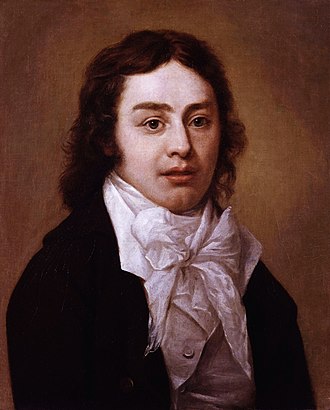 Samuel Taylor Coleridge
"I believe that the unity of man as opposed to other living things derives from the fact that man is the conscious life of himself. Man is conscious of himself, of his future, which is death, of his smallness, of his impotence; he is aware of others as others; man is in nature, subject to its laws even if he transcends it with his thought."
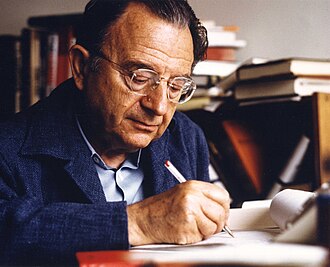 Erich Fromm
"You cant manage yourself, Root. How do you expect to manage others?"
"Do not try to make the brilliant pupil a replica of yourself."
"I believe that man is in the last resort so free a being that his right to be what he believes himself to be cannot be contested."