SHAWORDS

It was not until the ant and Veig had passed each other that Niall rea — Colin Wilson

HomeColin WilsonQuote
"It was not until the ant and Veig had passed each other that Niall realized that he had been reading the ants mind. It was a sensation like actually being the ant, as if he had momentarily taken possession of its body. And while he had been inside the ants body, he had also become aware of all the other ants in the nest. It was a bewildering feeling, as if his mind had shattered into thousands of fragments, yet each fragment remained a coherent part of the whole."
Colin Wilson
Colin Wilson
Colin Wilson
author138 quotes

Colin Henry Wilson was an English existentialist philosopher-novelist. He also wrote widely on true crime, mysticism and the paranormal, eventually writing more than a hundred books. Wilson called his philosophy "new existentialism" or "phenomenological existentialism", and maintained his life work was "that of a philosopher, and (his) purpose to create a new and optimistic existentialism".

More by Colin Wilson

View all →
Quote
"Why is it so hard to keep the mind concentrated, and to live up to our good resolutions? The problem is the basically mechanical nature of our left-brain consciousness. We have a kind of robot servant who does things for us: we learn to type or drive a car, painfully and consciously, then our robot takes over, and does it far more quickly and efficiently. Because man is the most complex creature on Earth, he is forced to rely on his robot far more than other animals. The result is that, whenever he gets tired, the robot takes over. For the modern city dweller, most of his everyday living is done by the robot. This is why it takes an emergency to concentrate the mind wonderfully, and why we forget so quickly."
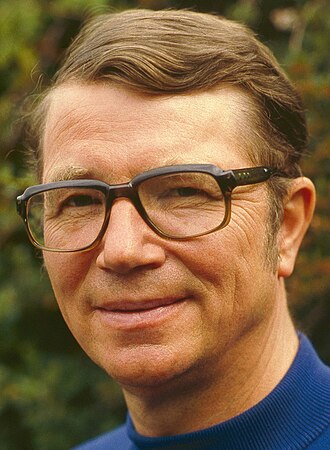
Colin WilsonColin Wilson
Quote
"We all possess, in our unconscious minds, a kind of servant who performs certain automatic functions. When I learn to type or drive a car or learn a foreign language, I have to do it painfully and consciously; then, suddenly, my robot takes over and does it automatically; in fact, he does it far more quickly and efficiently than "I" could. The main trouble with this mechanical valet is that he often takes over functions I would prefer to keep for myself -- for example, when I am tired I eat "automatically," and so do not enjoy my food. In fact, this is the reason that so much of our experience seems oddly "unreal"; the robot has taken it over. When I am feeling low, I may live for whole days in a "robotic" state, so that experience flows off me like water off a ducks back. And because I am not receiving any "feedback" of pleasure or interest from my activities, I become duller than ever, and experience becomes progressively less interesting. (This is, of course, the mechanism of depression and nervous breakdown.) And this is also why explorers deliberately seek out hardship and danger -- to cheat the robot and "feel the life in them more intensely."
Colin WilsonColin Wilson

More on Education

View all →
Quote
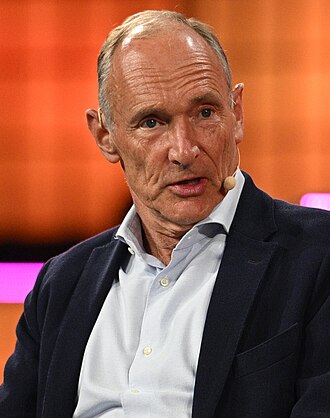
"An [hypertext] encyclopaedia will be an overall attempt by the knowledgeable, the learned societies or anyone else, to represent the state-of-the-art in their field. An encyclopaedia will be a living document, as up to date as it can be, instantly accessible at any time. It will contain carefully authored explanations and summaries of the subject, as well as computer-generated indexes of literature. A reference to a paper from the encyclopaedia conveys authority and acceptance by academic society. A measure of a paper’s standing may be conveyed by the number of links it is away from an encyclopaedia."
Tim Berners-LeeTim Berners-Lee
Quote
"A sample of the modern debate, which neatly summarizes the anti-reductionist position is provided by Grene (1974). She points out that in principle a one-level ontology—the belief, for example, that with increasing knowledge all science will become an account of the world in the language of, say, atomic events—contradicts itself. This is so because such a belief, to be meaningful, requires an ontology which admits both atomic events and cognition. Here at once a second level is smuggled in! It is logically possible... that there might be no levels in between those of atomic events and cognition (that in essence is Descartess position) but the sciences of chemistry and biology consist of some well-tested conjectures that there are such intermediate levels as are represented by molecules, cells, organelles, organs, and organisms."
O
Ontology
Quote
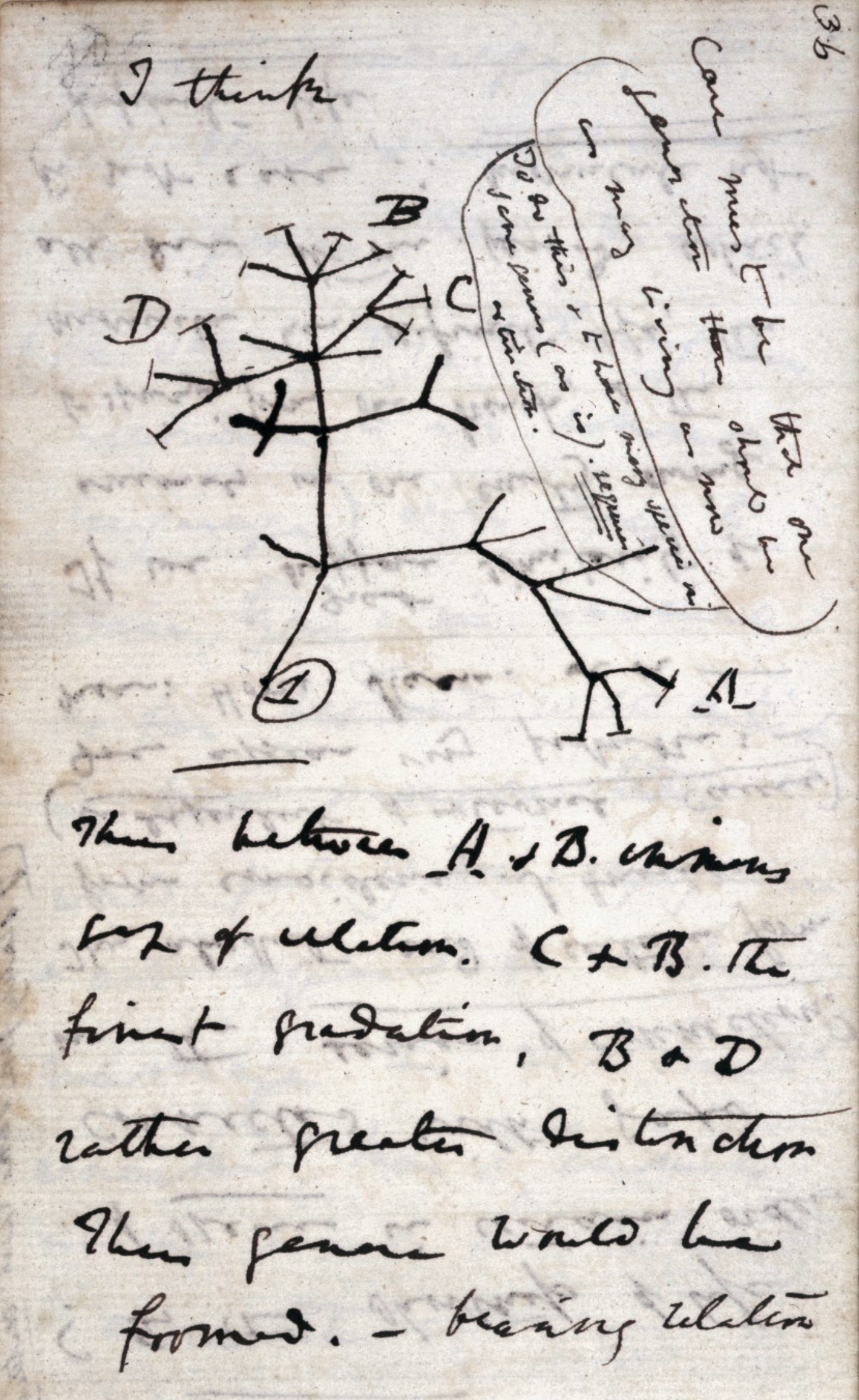
"All competent thinkers agree with Bacon that there can be no real knowledge except that which rests upon observed facts. This fundamental maxim is evidently indisputable if it is applied, as it ought to be, to the mature state of our intelligence. But, if we consider the origin of our knowledge, it is no less certain that the primitive human mind could not, and indeed ought not to, have thought in that way. For if, on the one hand, every Positive theory must necessarily be founded upon observations, it is, on the other hand, no less true that, in order to observe, our mind has need of some theory or other. If in contemplating phenomena we did not immediately connect them with principles, not only would it be impossible for us to combine these isolated observations, and therefore to derive profit from them, but we should even be entirely incapable of remembering facts, which would for the most remain unnoted by us. Thus there were two difficulties be overcome: the human mind had to observe in order to form real theories, and yet had to form theories of some sort before it could apply itself to a connected series of observations. The primitive human mind, therefore, found itself involved in a vicious circle, from which it would never have had any means of escaping, if a natural way of the difficulty had not fortunately found by the spontaneous development of Theological conceptions. ...chimerical hopes ..exaggerated ideas of mans importance in the universe to which the Theological Philosophy ...at the commencement, ...afforded an indispensable stimulus without the aid which we cannot, indeed, conceive how the primitive human mind would have been induced to undertake any arduous labours."
TheoryTheory