Quote
"It was a great deed to conquer Carthage, but a greater deed to conquer death."
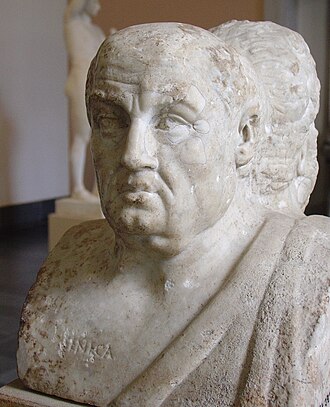 Seneca the Younger
"Let us now enquire whether anger be in accordance with nature, and whether it be useful and worth entertaining in some measure."
Lucius Annaeus Seneca the Younger, usually known mononymously as Seneca, was a Stoic philosopher of Ancient Rome, a statesman, a dramatist, and in one work, a satirist, from the post-Augustan age of Latin literature.
"It was a great deed to conquer Carthage, but a greater deed to conquer death."
Seneca the Younger"For this reason those who are tossed about at sea, who proceed uphill and downhill over toilsome crags and heights, who go on campaigns that bring the greatest danger, are heroes and front-rank fighters; but persons who live in rotten luxury and ease while others toil, are mere turtle-doves safe only because men despise them."
Seneca the Younger"Thus no fortune, no external circumstance, can shut off the wise man from action. For the very thing which engages his attention prevents him from attending to other things. He is ready for either outcome: if it brings goods, he controls them; if evils, he conquers them."
Seneca the Younger"But the wise man knows that all things are in store for him. Whatever happens, he says: “I knew it.”"
Seneca the Younger"Is it for this purpose that we are strong—that we may have light burdens to bear?"
Seneca the Younger"rursus prosperum ac felix scelus virtus vocatur; sontibus parent boni, ius est in armis, opprimit leges timor."
Seneca the Younger"Now Art, used collectively for painting, sculpture, architecture and music, is the mediatress between, and reconciler of, nature and man. It is, therefore, the power of humanizing nature, of infusing the thoughts and passions of man into everything which is the object of his contemplation."
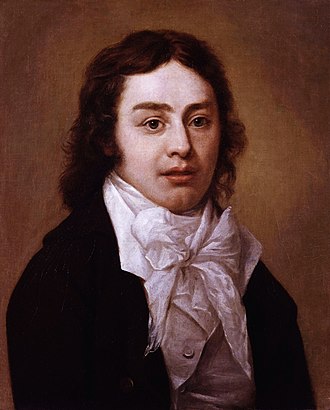 Samuel Taylor Coleridge
"The Good consists in the congruity of a thing with the laws of the reason and the nature of the will, and in its fitness to determine the latter to actualize the former: and it is always discursive. The Beautiful arises from the perceived harmony of an object, whether sight or sound, with the inborn and constitutive rules of the judgment and imagination: and it is always intuitive."
Samuel Taylor Coleridge"I believe that the unity of man as opposed to other living things derives from the fact that man is the conscious life of himself. Man is conscious of himself, of his future, which is death, of his smallness, of his impotence; he is aware of others as others; man is in nature, subject to its laws even if he transcends it with his thought."
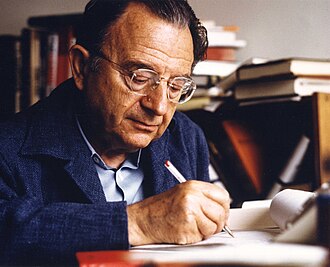 Erich Fromm
"Who made you glorious as the gates of heaven Beneath the keen full moon? Who bade the sun Clothe you with rainbows? Who, with living flower Of loveliest blue, spread garlands at your feet? God! let the torrents, like a shout of nations, Answer! and let the ice-plains echo, God! God! sing, ye meadow-streams, with gladsome voice! Ye pine-groves, with your soft and soul-like sounds! And they too have a voice, yon piles of snow, And in their perilous fall shall thunder, God!"
Samuel Taylor Coleridge"All Nature seems at work. Slugs leave their lair — The bees are stirring — birds are on the wing — And Winter slumbering in the open air, Wears on his smiling face a dream of Spring! And I the while, the sole unbusy thing, Nor honey make, nor pair, nor build, nor sing."
Samuel Taylor Coleridge"Taste is the intermediate faculty which connects the active with the passive powers of our nature, the intellect with the senses; and its appointed function is to elevate the images of the latter, while it realizes the ideas of the former."
Samuel Taylor Coleridge