Quote
"Im not a millionaire but Im very comfortable doing what I do, and Im more productive now than I was in my mid-20s. Its all down to functionality eventually. If youre functional it doesnt matter if youre mad."
A
Alan Moore"Material existence is entirely founded on a phantom realm of mind, whose nature and geography are unexplored."
Alan Moore is an English author known primarily for his work in comics including Watchmen, V for Vendetta, The Ballad of Halo Jones, Swamp Thing, Batman: The Killing Joke, Superman: Whatever Happened to the Man of Tomorrow? and From Hell. He is widely recognised among his peers and critics as one of the best comic book writers in the English language. Moore has occasionally used such pseudonyms as
"Im not a millionaire but Im very comfortable doing what I do, and Im more productive now than I was in my mid-20s. Its all down to functionality eventually. If youre functional it doesnt matter if youre mad."
"I don’t really feel, with the recent films, that they have stood by what I assumed were their original principles. So I asked for DC Comics to send all of the money from any future TV series or films to Black Lives Matter."
"Anarchy – anarchon – no leaders. Which means, everybody is a leader. You can’t have an official set of rules for anarchy. I tend to think such connections casually, and break and form and break and form throughout our lives. If you look back ten years, you will remember a group of friends who you were productively involved with at that time, now some of them have drifted away, new people have come in. These are more naturalistic linkages, which exist while there is a need for them to exist. It’s more like the way ants work."
"Annie Besant’s book where she put forward the idea that theosophical mystical energies could be portrayed as colours or abstract shapes was practically the invention of abstract art. A lot of artists rushed out and read it and suddenly thought, ‘oh God you could, you could portray love as a colour, or depression as a colour” All of a sudden abstract art happens, a flowering out of occultism."
"What I would prefer to have is to have a kind of magic where we say, "OK, we’re going to do a magical performance on this night, at this time. You come along, if you don’t think it’s magical, that’s fine. We’ll show you. We’ll show you what we mean, and you judge for yourself." That’s only fair. So a lot of the magic we do tends to gravitate toward the practical end, toward something that is tangible. Where you’ve got a record at the end of it, a performance at the end of it, a painting at the end of it. You’ve conjured some energy, some idea, some information from somewhere and put it in a tangible form. You conjure something into existence in a literal sense. A rabbit out of a hat. Something out of nothing. That’s one level to it, but there’s a lot of background to that. That’s the stuff that people see, that’s the end result of the process. But we also do a lot of ritual work purely on our own."
"B. F. Skinner actually put forward – and this is a measure of scientific desperation over consciousness – the idea that consciousness was a weird vibrational by-product of the vocal cords. That we did not actually think. We thought we thought because of this weird vibration caused by the vocal cords. This shows the lengths that hard science will go to to banish the ghost from the machine."
"Now Art, used collectively for painting, sculpture, architecture and music, is the mediatress between, and reconciler of, nature and man. It is, therefore, the power of humanizing nature, of infusing the thoughts and passions of man into everything which is the object of his contemplation."
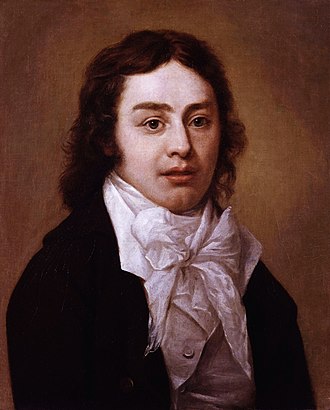 Samuel Taylor Coleridge
"The Good consists in the congruity of a thing with the laws of the reason and the nature of the will, and in its fitness to determine the latter to actualize the former: and it is always discursive. The Beautiful arises from the perceived harmony of an object, whether sight or sound, with the inborn and constitutive rules of the judgment and imagination: and it is always intuitive."
Samuel Taylor Coleridge"I believe that the unity of man as opposed to other living things derives from the fact that man is the conscious life of himself. Man is conscious of himself, of his future, which is death, of his smallness, of his impotence; he is aware of others as others; man is in nature, subject to its laws even if he transcends it with his thought."
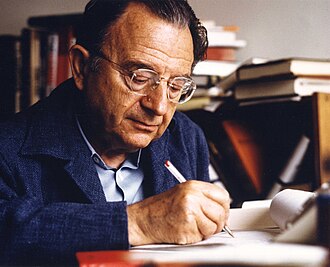 Erich Fromm
"Who made you glorious as the gates of heaven Beneath the keen full moon? Who bade the sun Clothe you with rainbows? Who, with living flower Of loveliest blue, spread garlands at your feet? God! let the torrents, like a shout of nations, Answer! and let the ice-plains echo, God! God! sing, ye meadow-streams, with gladsome voice! Ye pine-groves, with your soft and soul-like sounds! And they too have a voice, yon piles of snow, And in their perilous fall shall thunder, God!"
Samuel Taylor Coleridge"All Nature seems at work. Slugs leave their lair — The bees are stirring — birds are on the wing — And Winter slumbering in the open air, Wears on his smiling face a dream of Spring! And I the while, the sole unbusy thing, Nor honey make, nor pair, nor build, nor sing."
Samuel Taylor Coleridge"Taste is the intermediate faculty which connects the active with the passive powers of our nature, the intellect with the senses; and its appointed function is to elevate the images of the latter, while it realizes the ideas of the former."
Samuel Taylor Coleridge