SHAWORDS

Moreover, in order that we may be aroused and exhorted all the more to — John Calvin

HomeJohn CalvinQuote
"Moreover, in order that we may be aroused and exhorted all the more to carry this out, Scripture makes known that there are not one, not two, nor a few foes, but great armies, which wage war against us. For Mary Magdalene is said to have been freed from seven demons by which she was possessed [Mark 16:9; Luke 8:2], and Christ bears witness that usually after a demon has once been cast out, if you make room for him again, he will take with him seven spirits more wicked than he and return to his empty possession [Matt. 12:43-45]. Indeed, a whole legion is said to have assailed one man [Luke 8:30]. We are therefore taught by these examples that we have to wage war against an infinite number of enemies, lest, despising their fewness, we should be too remiss to give battle, or, thinking that we are sometimes afforded some respite, we should yield to idleness. But the frequent mention of Satan or the devil in the singular denotes the empire of wickness opposed to the Kingdom of Righteousness. For as the church and fellowship of the saints has Christ as Head, so the faction of the impious and impiety itself are depicted for us together with their prince who holds supreme sway over them. For this reason, it was said: "Depart, ...you cursed, into the eternal fire, prepared for the devil and his angels" [Matt. 25:41]."
John Calvin
John Calvin
John Calvin
author139 quotes

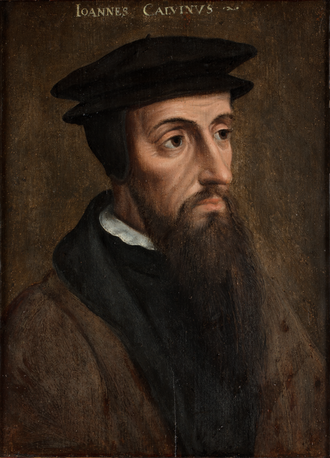
John Calvin was a French theologian, pastor and reformer in Geneva during the Protestant Reformation. He was the principal figure in the development of the system of Christian theology later called Calvinism, including its doctrines of predestination and of God's absolute sovereignty in the salvation of the human soul from death and eternal damnation. Calvinist doctrines were influenced by and ela

More by John Calvin

View all →
Quote
"While Calvin in his preaching did not follow a lectionary of prescribed scripture readings for each Sunday of the year, his preaching did usually follow a previously publicized order of scripture selections, e.g., a series of sermons on the Ten Commandments, or on the Beatitudes, or even on a sequential selection of Psalms. In that sense Calvin used a prescribed lectionary (of sorts) which at least some of his hearers might have studied in preparation for listening to his sermons. On the other hand, the 17th century English Puritan Presbyterian and Congregational preachers (who were the principal models for the 18th century Virginia traveling preachers) just "took (any) text and preached from it."
John CalvinJohn Calvin
Quote
"Now let us consider how many relics of the true cross there are in the world. An account of those merely with which I am acquainted would fill a whole volume, for there is not a church, from a cathedral to the most miserable abbey or parish church, that does not contain a piece. Large splinters of it are preserved in various places, as for instance in the Holy Chapel at Paris, whilst at Rome they show a crucifix of considerable size made entirely, they say, from this wood. In short, if we were to collect all these pieces of the true cross exhibited in various parts, they would form a whole ships cargo. The Gospel testifies that the cross could be borne by one single individual;.."
John CalvinJohn Calvin
Quote
"Ainsi, ou nous arguerons lhistoire de mensonge, ou ce quon tient aujourdhui de la vraie croix est une opinion vaine et frivole. Or, avisons dautre part combien il y en a de pièces par tout le monde. Si je voulais réciter seulement ce que jen pourrais dire, il y aurait un rôle pour remplir un livre entier. Il ny a si petite ville où il ny en ait, non seulement en léglise cathédrale, mais en quelques paroisses. Pareillement, il ny a si méchante abbaye où on nen montre. Et en quelques lieux, il y en a de bien gros éclats, comme à la Sainte-Chapelle de Paris, et à Poitiers et à Rome, où il y en a un crucifix assez grand qui en est fait, comme lon dit. Bref, si on voulait ramasser tout ce qui sen est trouvé, il y en aurait la charge dun bon grand bateau. LÉvangile testifie que la croix pouvait être portée dun homme."
John CalvinJohn Calvin
Quote
"The proper course, therefore, is, in the first instance, to ascertain and examine the doctrine which is said by the Evangelist to precede; then after it has been proved, but not till then, it may receive confirmation from miracles. But the mark of sound doctrine given by our Saviour himself is its tendency to promote the glory not of men, but of God (John 7:18; 8:50). Our Saviour having declared this to be test of doctrine, we are in error if we regard as miraculous, works which are used for any other purpose than to magnify the name of God."
John CalvinJohn Calvin

More on Gul

View all →
Quote
"How seldom, Friend! a good great man inherits Honour or wealth, with all his worth and pains! It sounds like stories from the land of spirits, If any man obtain that which he merits, Or any merit that which he obtains.   . For shame, dear Friend! renounce this canting strain! … Greatness and goodness are not means, but ends! Hath he not always treasures, always friends, The good great man? Three treasures, and , And , regular as infants breath; And three firm friends, more sure than day and night, , his , and the Angel ."
Samuel Taylor ColeridgeSamuel Taylor Coleridge
Quote
"If the proverbial man of the planet Mars would come to this earth and inquire about the difference between "leader" and "ruler" he would learn that "rulers" are strange people who dressed in ermine, wore crowns, married foreign women, kept strictly to themselves, and had the inclination to administer the country without asking the people about their wishes. A "leader," on the other hand, he would be told, is a regular fellow in a simple uniform who embodies his nation, who tries desperately to create by propaganda complete unison between his ideas and the people. A leader, he might hear, was a local boy who made good, who spoke everybodys language, who never traveled abroad and disliked titles and royal paraphernalia."
LeadershipLeadership
Quote
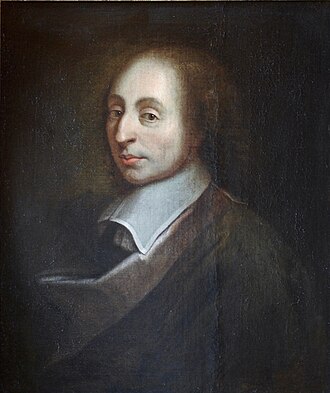
"When I consider the short duration of my life, swallowed up in the eternity before and after, the small space which I fill, or even can see, engulfed in the infinite immensity of spaces whereof I know nothing, and which know nothing of me, I am terrified, and wonder that I am here rather than there, for there is no reason why here rather than there, or now rather than then. Who has set me here? By whose order and design have this place and time been destined for me?—Memoria hospitis unius diei prætereuntis. It is not well to be too much at liberty. It is not well to have all we want. How many kingdoms know nothing of us! The eternal silence of these infinite spaces alarms me."
Blaise PascalBlaise Pascal