Quote
"“If you don’t have a consistent goal in life, you can’t live it in a consistent way.” (Hays translation)"
M
Marcus Aurelius"Nature has had regard in everything no less to the end than to the beginning and the continuance, just like a man who throws up a ball. What good is it then for the ball to be thrown up, or harm for it to come down... what good is it to the bubble while it holds together, or what harm when it is burst?"
Marcus Aurelius Antoninus was Roman emperor from 161 to 180 and a Stoic philosopher. He was a member of the Nerva–Antonine dynasty, the last of the rulers later known as the Five Good Emperors and the last emperor of the Pax Romana, an age of relative peace, calm, and stability for the Roman Empire lasting from 27 BC to 180 AD. He served as Roman consul in 140, 145, and 161.
"“If you don’t have a consistent goal in life, you can’t live it in a consistent way.” (Hays translation)"
"Thou mayest foresee... the things which will be. For they will certainly be of like form, and it is not possible that they should deviate from the order of things now: accordingly to have contemplated human life for forty years is the same as to have contemplated it for ten thousand years."
"The mind which is free from passions is a citadel, for man has nothing more secure to which he can fly for refuge and for the future be inexpugnable. He then who has not seen this is an ignorant man: but he who has seen it and does not fly to this refuge is unhappy."
"Not to display anger or other emotions. To be free of passion and yet full of love. (Hays translation)"
"This thou must always bear in mind, what is the nature of the whole..."
"You see how few things you have to do to live a satisfying and reverent life? If you can manage this, thats all even the gods can ask of you. (Hays translation)"
"Now Art, used collectively for painting, sculpture, architecture and music, is the mediatress between, and reconciler of, nature and man. It is, therefore, the power of humanizing nature, of infusing the thoughts and passions of man into everything which is the object of his contemplation."
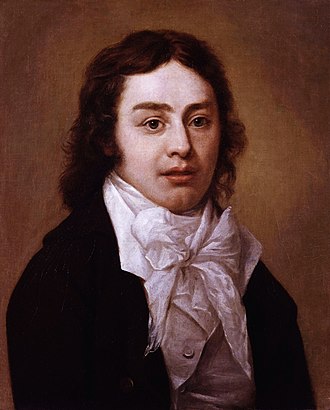 Samuel Taylor Coleridge
"The Good consists in the congruity of a thing with the laws of the reason and the nature of the will, and in its fitness to determine the latter to actualize the former: and it is always discursive. The Beautiful arises from the perceived harmony of an object, whether sight or sound, with the inborn and constitutive rules of the judgment and imagination: and it is always intuitive."
Samuel Taylor Coleridge"I believe that the unity of man as opposed to other living things derives from the fact that man is the conscious life of himself. Man is conscious of himself, of his future, which is death, of his smallness, of his impotence; he is aware of others as others; man is in nature, subject to its laws even if he transcends it with his thought."
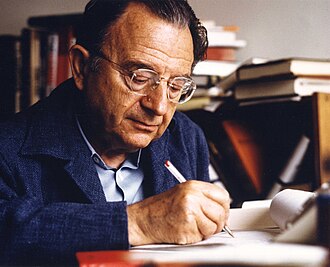 Erich Fromm
"Who made you glorious as the gates of heaven Beneath the keen full moon? Who bade the sun Clothe you with rainbows? Who, with living flower Of loveliest blue, spread garlands at your feet? God! let the torrents, like a shout of nations, Answer! and let the ice-plains echo, God! God! sing, ye meadow-streams, with gladsome voice! Ye pine-groves, with your soft and soul-like sounds! And they too have a voice, yon piles of snow, And in their perilous fall shall thunder, God!"
Samuel Taylor Coleridge"All Nature seems at work. Slugs leave their lair — The bees are stirring — birds are on the wing — And Winter slumbering in the open air, Wears on his smiling face a dream of Spring! And I the while, the sole unbusy thing, Nor honey make, nor pair, nor build, nor sing."
Samuel Taylor Coleridge"Taste is the intermediate faculty which connects the active with the passive powers of our nature, the intellect with the senses; and its appointed function is to elevate the images of the latter, while it realizes the ideas of the former."
Samuel Taylor Coleridge