Quote
"[W]ithout order there can be no society, and without society there can be no human perfection."
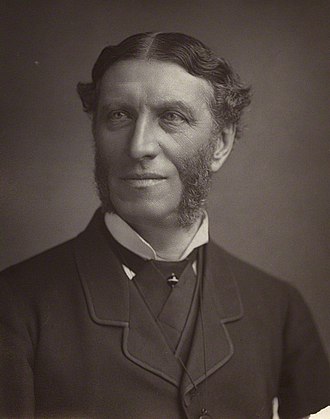 Matthew Arnold
"Nature, with equal mind, Sees all her sons at play Sees man control the wind, The wind sweep man away."
Matthew Arnold was an English poet and cultural critic. He was the son of Thomas Arnold, the headmaster of Rugby School, and brother of both Tom Arnold, literary professor, and William Delafield Arnold, novelist and colonial administrator. He has been characterised as a sage writer, a type of writer who chastises and instructs the reader on contemporary social issues. He was also an inspector of s
"[W]ithout order there can be no society, and without society there can be no human perfection."
Matthew Arnold"The power of the Latin classic is in character, that of the Greek is in beauty. Now character is capable of being taught, learnt, and assimilated: beauty hardly."
Matthew Arnold"All are before me! I behold The House, the Brotherhood austere! — And what am I, that I am here? For rigorous teachers seized my youth, And purged its faith, and trimmd its fire, Showd me the high, white star of Truth, There bade me gaze, and there aspire. Even now their whispers pierce the gloom: What dost thou in this living tomb?"
Matthew Arnold"Therefore to thee it was given Many to save with thyself; And, at the end of thy day, O faithful shepherd! to come, Bringing thy sheep in thy hand."
Matthew Arnold"Calm soul of all things! make it mine To feel, amid the city’s jar, That there abides a peace of thine, Man did not make, and cannot mar."
Matthew Arnold"Goethe in Weimar sleeps, and Greece, Long since, saw Byron’s struggle cease."
Matthew Arnold"Now Art, used collectively for painting, sculpture, architecture and music, is the mediatress between, and reconciler of, nature and man. It is, therefore, the power of humanizing nature, of infusing the thoughts and passions of man into everything which is the object of his contemplation."
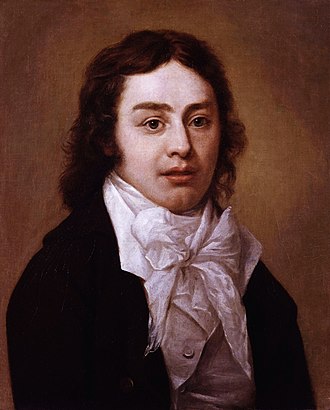 Samuel Taylor Coleridge
"The Good consists in the congruity of a thing with the laws of the reason and the nature of the will, and in its fitness to determine the latter to actualize the former: and it is always discursive. The Beautiful arises from the perceived harmony of an object, whether sight or sound, with the inborn and constitutive rules of the judgment and imagination: and it is always intuitive."
Samuel Taylor Coleridge"I believe that the unity of man as opposed to other living things derives from the fact that man is the conscious life of himself. Man is conscious of himself, of his future, which is death, of his smallness, of his impotence; he is aware of others as others; man is in nature, subject to its laws even if he transcends it with his thought."
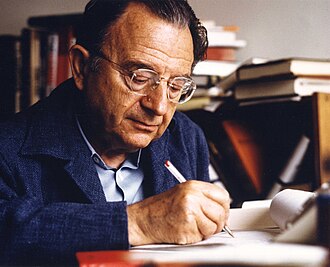 Erich Fromm
"Who made you glorious as the gates of heaven Beneath the keen full moon? Who bade the sun Clothe you with rainbows? Who, with living flower Of loveliest blue, spread garlands at your feet? God! let the torrents, like a shout of nations, Answer! and let the ice-plains echo, God! God! sing, ye meadow-streams, with gladsome voice! Ye pine-groves, with your soft and soul-like sounds! And they too have a voice, yon piles of snow, And in their perilous fall shall thunder, God!"
Samuel Taylor Coleridge"All Nature seems at work. Slugs leave their lair — The bees are stirring — birds are on the wing — And Winter slumbering in the open air, Wears on his smiling face a dream of Spring! And I the while, the sole unbusy thing, Nor honey make, nor pair, nor build, nor sing."
Samuel Taylor Coleridge"Taste is the intermediate faculty which connects the active with the passive powers of our nature, the intellect with the senses; and its appointed function is to elevate the images of the latter, while it realizes the ideas of the former."
Samuel Taylor Coleridge