SHAWORDS

Nobody ever comes back from a "missing" ship to tell how hard was the — Joseph Conrad

"Nobody ever comes back from a "missing" ship to tell how hard was the death of the craft, and how sudden and overwhelming the last anguish of her men. Nobody can say with what thoughts, with what regrets, with what words on their lips they died. But there is something fine in the sudden passing away of these hearts from the extremity of struggle and stress and tremendous uproar—from the vast, unrestful rage of the surface to the profound peace of the depths, sleeping untroubled since the beginning of ages."
Joseph Conrad
Joseph Conrad
Joseph Conrad
author74 quotes

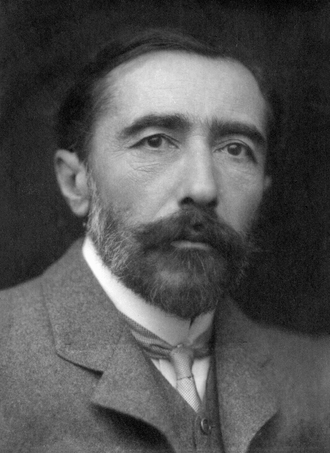
Joseph Conrad was a Polish-British novelist and story writer. He is regarded as one of the greatest writers in the English language and – though he did not speak English fluently until his twenties – he became a master prose stylist who brought a non-English sensibility into English literature.

More by Joseph Conrad

View all →
Quote
"Only a seaman realises to what great extent an entire ship reflects the personality and ability of one individual, her Commanding Officer. To a landsman, this is not understandable—and sometimes it is even difficult for us to comprehend—but it is so! A ship at sea is a different world in herself, and in consideration of the protracted and distant operations of the fleet units, the Navy must place great power, responsibility and trust in the hands of those leaders chosen for command. In each ship there is one man who, in the hour of emergency or peril at sea, can turn to no other man. There is one who alone is ultimately responsible for the safe navigation, engineering performance, accurate gunfire and morale of the ship. He is the Commanding Officer. He is the ship. This is the most difficult and demanding assignment in the Navy. There is not an instant during his tour as Commanding Officer that he can escape the grasp of command responsibility. His privileges, in view of his obligations, are almost ludicrously small; nevertheless, this is the spur which has given the Navy its great leaders. It is a duty which richly deserves the highest, time-honoured title of the seafaring world—Captain."
Joseph ConradJoseph Conrad
Quote
"I remember my youth and the feeling that will never come back any more — the feeling that I could last for ever, outlast the sea, the earth, and all men; the deceitful feeling that lures us on to joys, to perils, to love, to vain effort — to death; the triumphant conviction of strength, the heat of life in the handful of dust, the glow in the heart that with every year grows dim, grows cold, grows small, and expires — and expires, too soon — too soon before life itself."
Joseph ConradJoseph Conrad
Quote
"Coming in from the eastward, the bright colouring of the [Nore] lightship marking the part of the river committed to the charge of an Admiral (the Commander-in-Chief at the Nore) accentuates the dreariness and the great breadth of the Thames Estuary. But soon the course of the ship opens the entrance of the Medway, with its men-of-war moored in line, and the long wooden jetty of Port Victoria, with its few low buildings like the beginning of a hasty settlement upon a wild and unexplored shore. The famous Thames barges sit in brown clusters upon the water with an effect of birds floating upon a pond... [The inward-bound ships] all converge upon the Nore, the warm speck of red upon the tones of drab and gray, with the distant shores running together towards the west, low and flat, like the sides of an enormous canal. The sea-reach of the Thames is straight, and, once Sheerness is left behind, its banks seem very uninhabited, except for the cluster of houses which is Southend, or here and there a lonely wooden jetty where petroleum ships discharge their dangerous cargoes, and the oil-storage tanks, low and round with slightly-domed roofs, peep over the edge of the fore-shore, as it were a village of Central African huts imitated in iron. Bordered by the black and shining mud-flats, the level marsh extends for miles. Away in the far background the land rises, closing the view with a continuous wooded slope, forming in the distance an interminable rampart overgrown with bushes."
Joseph ConradJoseph Conrad
Quote
"Between the crowded houses of Gravesend and the monstrous red-brick pile on the Essex shore the ship is surrendered fairly to the grasp of the river. That hint of loneliness, that soul of the sea which had accompanied her as far as the Lower Hope Reach, abandons her at the turn of the first bend above. The salt, acrid flavour is gone out of the air, together with a sense of unlimited space opening free beyond the threshold of sandbanks below the Nore. The waters of the sea rush on past Gravesend, tumbling the big mooring buoys laid along the face of the town; but the sea-freedom stops short there, surrendering the salt tide to the needs, the artifices, the contrivances of toiling men. Wharves, landing-places, dock-gates, waterside stairs, follow each other continuously right up to London Bridge, and the hum of men’s work fills the river with a menacing, muttering note as of a breathless, ever-driving gale. The water-way, so fair above and wide below, flows oppressed by bricks and mortar and stone, by blackened timber and grimed glass and rusty iron, covered with black barges, whipped up by paddles and screws, overburdened with craft, overhung with chains, overshadowed by walls making a steep gorge for its bed, filled with a haze of smoke and dust."
Joseph ConradJoseph Conrad

More on Death

View all →