Quote
"Im not a millionaire but Im very comfortable doing what I do, and Im more productive now than I was in my mid-20s. Its all down to functionality eventually. If youre functional it doesnt matter if youre mad."
A
Alan Moore"Now, as I understand it, the bards were feared. They were respected, but more than that they were feared. If you were just some magician, if youd pissed off some witch, then whats she gonna do, shes gonna put a curse on you, and whats gonna happen? Your hens are gonna lay funny, your milks gonna go sour, maybe one of your kids is gonna get a hare-lip or something like that — no big deal. You piss off a bard, and forget about putting a curse on you, he might put a satire on you. And if he was a skilful bard, he puts a satire on you, it destroys you in the eyes of your community, it shows you up as ridiculous, lame, pathetic, worthless, in the eyes of your community, in the eyes of your family, in the eyes of your children, in the eyes of yourself, and if its a particularly good bard, and hes written a particularly good satire then, three hundred years after youre dead, people are still gonna be laughing at what a twat you were."
Alan Moore is an English author known primarily for his work in comics including Watchmen, V for Vendetta, The Ballad of Halo Jones, Swamp Thing, Batman: The Killing Joke, Superman: Whatever Happened to the Man of Tomorrow? and From Hell. He is widely recognised among his peers and critics as one of the best comic book writers in the English language. Moore has occasionally used such pseudonyms as
"Im not a millionaire but Im very comfortable doing what I do, and Im more productive now than I was in my mid-20s. Its all down to functionality eventually. If youre functional it doesnt matter if youre mad."
"I don’t really feel, with the recent films, that they have stood by what I assumed were their original principles. So I asked for DC Comics to send all of the money from any future TV series or films to Black Lives Matter."
"Anarchy – anarchon – no leaders. Which means, everybody is a leader. You can’t have an official set of rules for anarchy. I tend to think such connections casually, and break and form and break and form throughout our lives. If you look back ten years, you will remember a group of friends who you were productively involved with at that time, now some of them have drifted away, new people have come in. These are more naturalistic linkages, which exist while there is a need for them to exist. It’s more like the way ants work."
"Annie Besant’s book where she put forward the idea that theosophical mystical energies could be portrayed as colours or abstract shapes was practically the invention of abstract art. A lot of artists rushed out and read it and suddenly thought, ‘oh God you could, you could portray love as a colour, or depression as a colour” All of a sudden abstract art happens, a flowering out of occultism."
"What I would prefer to have is to have a kind of magic where we say, "OK, we’re going to do a magical performance on this night, at this time. You come along, if you don’t think it’s magical, that’s fine. We’ll show you. We’ll show you what we mean, and you judge for yourself." That’s only fair. So a lot of the magic we do tends to gravitate toward the practical end, toward something that is tangible. Where you’ve got a record at the end of it, a performance at the end of it, a painting at the end of it. You’ve conjured some energy, some idea, some information from somewhere and put it in a tangible form. You conjure something into existence in a literal sense. A rabbit out of a hat. Something out of nothing. That’s one level to it, but there’s a lot of background to that. That’s the stuff that people see, that’s the end result of the process. But we also do a lot of ritual work purely on our own."
"B. F. Skinner actually put forward – and this is a measure of scientific desperation over consciousness – the idea that consciousness was a weird vibrational by-product of the vocal cords. That we did not actually think. We thought we thought because of this weird vibration caused by the vocal cords. This shows the lengths that hard science will go to to banish the ghost from the machine."
"The smart way to keep people passive and obedient is to strictly limit the spectrum of acceptable opinion, but allow very lively debate within that spectrum - even encourage the more critical and dissident views. That gives people the sense that theres free thinking going on, while all the time the presuppositions of the system are being reinforced by the limits put on the range of the debate."
"With much care and skill power has been broken into fragments in the American township, so that the maximum possible number of people have some concern with public affairs."
"The people reign over the American political world as God rules over the universe. It is the cause and the end of all things; everything rises out of it and is absorbed back into it."
"I should say that when people talk about capitalism its a bit of a joke. Theres no such thing. No country, no business class, has ever been willing to subject itself to the free market, free market discipline. Free markets are for others. Like, the Third World is the Third World because they had free markets rammed down their throat. Meanwhile, the enlightened states, England, the United States, others, resorted to massive state intervention to protect private power, and still do. Thats right up to the present. I mean, the Reagan administration for example was the most protectionist in post-war American history. Virtually the entire dynamic economy in the United States is based crucially on state initiative and intervention: computers, the internet, telecommunication, automation, pharmaceutical, you just name it. Run through it, and you find massive ripoffs of the public, meaning, a system in which under one guise or another the public pays the costs and takes the risks, and profit is privatized. Thats very remote from a free market. Free market is like what India had to suffer for a couple hundred years, and most of the rest of the Third World."
"I appeal to all pupils, students and young people, asking you to focus on the horizons that are opening up for you, and which you could only dream of a year ago. Our future will depend on your desire for education and moral values as well as on your entrepreneurial spirit."
"We have created a wealthy society with tens of millions of talented, resourceful individuals who play virtually no role whatsoever as citizens. Bringing these people in — with their networks of influence, their knowledge, and their resources — is the key to creating the capacity for shared intelligence that we need to solve our problems."
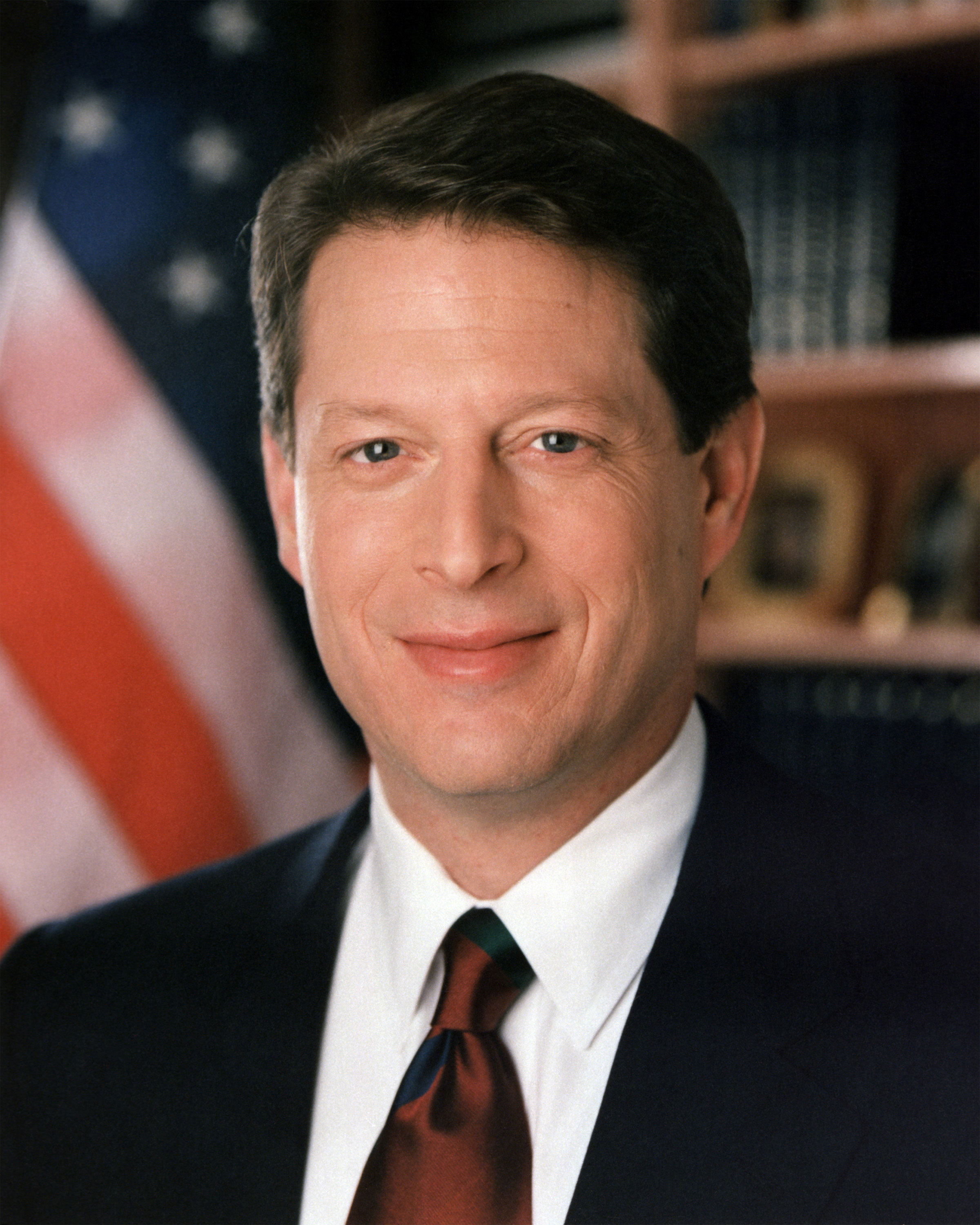 Al Gore