Quote
"In the long run men hit only what they aim at. Therefore, though they should fail immediately, they had better aim at something high."
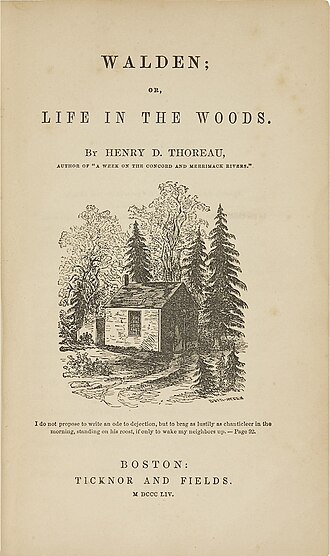 Walden
"Now only a dent in the earth marks the site of these dwellings, with buried cellar stones, and strawberries, raspberries, thimble-berries, hazel-bushes, and sumachs growing in the sunny sward there; some pitch pine or gnarled oak occupies what was the chimney nook, and a sweet-scented black birch, perhaps, waves where the door-stone was. Sometimes the well dent is visible, where once a spring oozed; now dry and tearless grass; or it was covered deep -- not to be discovered till some late day -- with a flat stone under the sod, when the last of the race departed. What a sorrowful act must that be -- the covering up of wells! coincident with the opening of wells of tears. These cellar dents, like deserted fox burrows, old holes, are all that is left where once were the stir and bustle of human life, and "fate, free will, foreknowledge absolute," in some form and dialect or other were by turns discussed. But all I can learn of their conclusions amounts to just this, that "Cato and Brister pulled wool"; which is about as edifying as the history of more famous schools of philosophy."
Walden is an 1854 book by American transcendentalist writer Henry David Thoreau. The text is a reflection upon the author's simple living in natural surroundings. The work is part personal declaration of independence, social experiment, voyage of spiritual discovery, satire, and—to some degree—a manual for self-reliance.
"In the long run men hit only what they aim at. Therefore, though they should fail immediately, they had better aim at something high."
Walden"As for doing good, that is one of the professions which are full."
Walden"Men sometimes speak as if the study of the classics would at length make way for more modern and practical studies; but the adventurous student will always study classics, in whatever language they may be written and however ancient they may be. For what are the classics but the noblest recorded thoughts of man? They are the only oracles which are not decayed, and there are such answers to the most modern inquiry in them as Delphi and Dodona never gave. We might as well omit to study Nature because she is old. To read well, that is, to read true books in a true spirit, is a noble exercise, and one that will task the reader more than any exercise which the customs of the day esteem. It requires a training such as the athletes underwent, the steady intention almost of the whole life to this object. Books must be read as deliberately and reservedly as they are written."
Walden"The one who came from farthest to my lodge, through deepest snows and most dismal tempests, was a poet. A farmer, a hunter, a soldier, a reporter, even a philosopher, may be daunted; but nothing can deter a poet, for he is actuated by pure love. Who can predict his comings and goings? His business calls him out at all hours, even when doctors sleep. We made that small house ring with boisterous mirth and resound with the murmur of much sober talk, making amends then to Walden vale for the long silences. Broadway was still and deserted in comparison. At suitable intervals there were regular salutes of laughter, which might have been referred indifferently to the last-uttered or the forth-coming jest. We made many a "bran new" theory of life over a thin dish of gruel, which combined the advantages of conviviality with the clear-headedness which philosophy requires."
Walden"I respect not his labors, his farm where everything has its price, who would carry the landscape, who would carry his God, to market, if he could get anything for him; who goes to market for his god as it is; on whose farm nothing grows free, whose fields bear no crops, whose meadows no flowers, whose trees no fruits, but dollars; who loves not the beauty of his fruits, whose fruits are not ripe for him till they are turned to dollars. Give me the poverty that enjoys true wealth. Farmers are respectable and interesting to me in proportion as they are poor -- poor farmers"
Walden"Still grows the vivacious lilac a generation after the door and lintel and the sill are gone, unfolding its sweet-scented flowers each spring, to be plucked by the musing traveller; planted and tended once by childrens hands, in front-yard plots -- now standing by wallsides in retired pastures, and giving place to new-rising forests; -- the last of that stirp, sole survivor of that family. Little did the dusky children think that the puny slip with its two eyes only, which they stuck in the ground in the shadow of the house and daily watered, would root itself so, and outlive them, and house itself in the rear that shaded it, and grown mans garden and orchard, and tell their story faintly to the lone wanderer a half-century after they had grown up and died -- blossoming as fair, and smelling as sweet, as in that first spring. I mark its still tender, civil, cheerful lilac colors."
Walden"Be the change that you wish to see in the world."
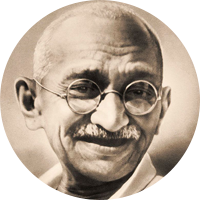 Mahatma Gandhi
"we are engaged in a grim experiment never before attempted. We are subjecting whole populations to exposure to chemicals which animal experiments have proved to be extremely poisonous and in many cases cumulative in their effect. These exposures now begin at or before birth and-unless we change our methods-will continue through the lifetime of those now living. No one knows what the result will be, because we have no previous experience to guide us."
"pity this busy monster, manunkind, not. Progress is a comfortable disease: your victim (death and life safely beyond) plays with the bigness of his littleness"
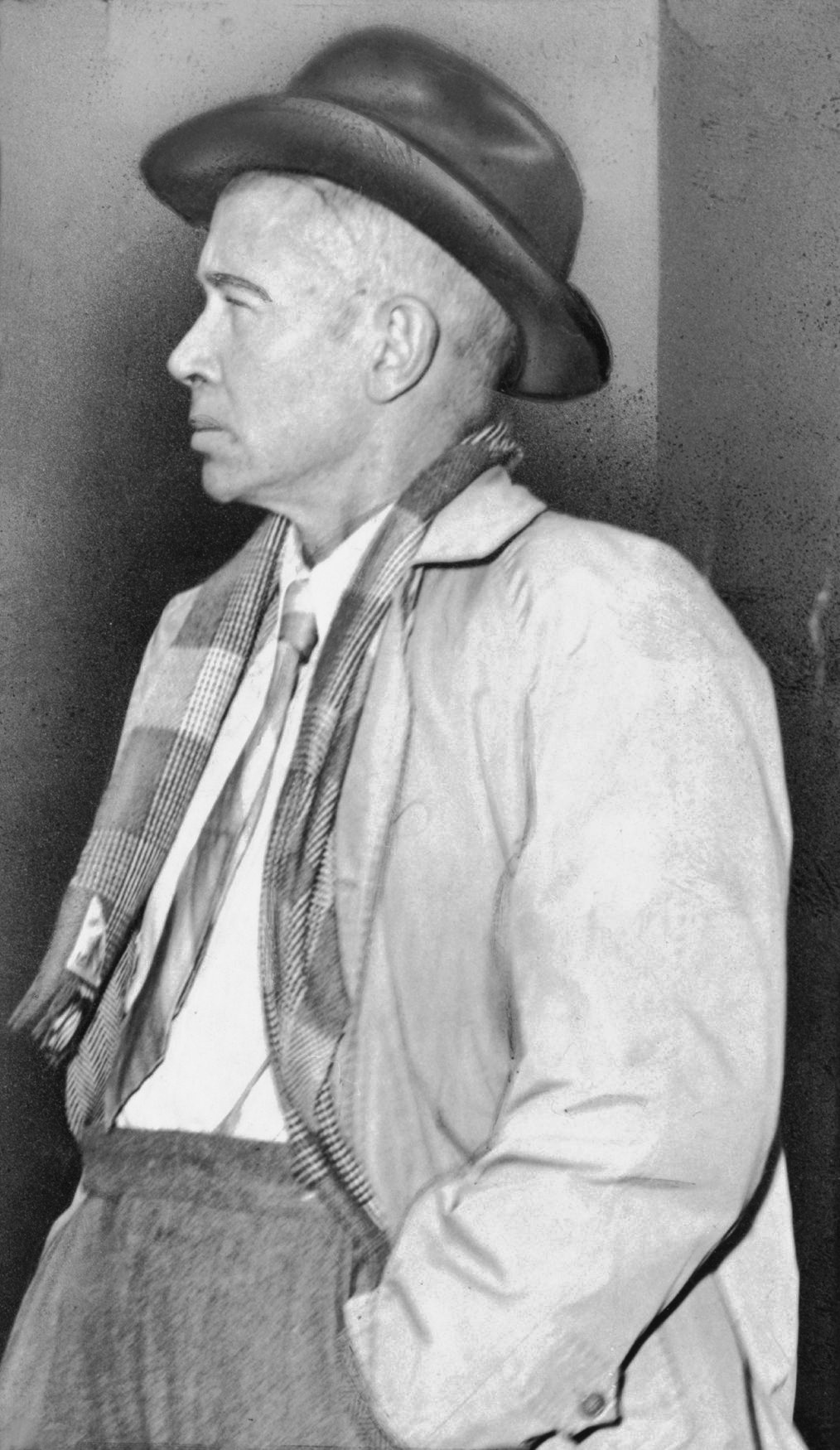 E. E. Cummings
"I believe that the unity of man as opposed to other living things derives from the fact that man is the conscious life of himself. Man is conscious of himself, of his future, which is death, of his smallness, of his impotence; he is aware of others as others; man is in nature, subject to its laws even if he transcends it with his thought."
 Erich Fromm
"“We need brains, is the bottom line,” Ivy said. “We’re not hunter-gatherers anymore. We’re all living like patients in the intensive care unit of a hospital. What keeps us alive isn’t bravery, or athleticism, or any of those other skills that were valuable in a caveman society. It’s our ability to master complex technological skills. It is our ability to be nerds. We need to breed nerds.”"
"I have been clinically depressed for most of my life. I once used drugs to fix it. Then I stopped. I stopped because I decided they were making me stupid, and Id rather be miserable than stupid. I am what I am."