Quote
"Indeed I do and I admire it. I am a practicing Catholic."
A
Anthony Kennedy"One can conclude that certain essential, or fundamental, rights should exist in any just society. It does not follow that each of those essential rights is one that we as judges can enforce under the written Constitution. The Due Process Clause is not a guarantee of every right that should inhere in an ideal system. Many argue that a just society grants a right to engage in homosexual conduct. If that view is accepted, the Bowers decision in effect says the State of Georgia has the right to make a wrong decision — wrong in the sense that it violates some peoples views of rights in a just society. We can extend that slightly to say that Georgias right to be wrong in matters not specifically controlled by the Constitution is a necessary component of its own political processes. Its citizens have the political liberty to direct the governmental process to make decisions that might be wrong in the ideal sense, subject to correction in the ordinary political process."
Anthony McLeod Kennedy is an American lawyer who served as an associate justice of the Supreme Court of the United States from 1988 until his retirement in 2018. He was nominated to the court in 1987 by President Ronald Reagan, and sworn in on February 18, 1988. After the retirement of Sandra Day O'Connor in 2006, he was considered the swing vote on many of the Roberts Court's 5–4 decisions.
"Indeed I do and I admire it. I am a practicing Catholic."
"Speech is an essential mechanism of democracy, for it is the means to hold officials accountable to the people. [...] The right of citizens to inquire, to hear, to speak, and to use information to reach consensus is a precondition to enlightened self-government and a necessary means to protect it. [...] By taking the right to speak from some and giving it to others, the Government deprives the disadvantaged person or class of the right to use speech to strive to establish worth, standing, and respect for the speaker’s voice. The Government may not by these means deprive the public of the right and privilege to determine for itself what speech and speakers are worthy of consideration. The First Amendment protects speech and speaker, and the ideas that flow from each."
"When Government seeks to use its full power, including the criminal law, to command where a person may get his or her information or what distrusted source he or she may not hear, it uses censorship to control thought. This is unlawful. The First Amendment confirms the freedom to think for ourselves."
"In June 2003, the U.S. Supreme Courts majority opinion in Lawrence overruled Bowers. Kennedy wrote the opinion for the majority, which was long on philosophy and short on precedent. Kennedys opinion in Lawrence is a result in search of a rationale. He began with "Liberty protects the person from unwarranted government intrusions into a dwelling or other private places." This statement means absolutely nothing from a constitutional perspective. Every criminal or immoral act can be justified on the grounds of exercising liberty. But Kennedy has a purpose in such an approach. By using the catchall word "liberty" rather than applying the Constitution to the issue, he seeks to expand the plain meaning of the due process clause of the Fourteenth Amendment (which prohibits states from depriving "any person of life, liberty, or property without due process of law") to grant rights not mentioned elsewhere in the Constitution."
"In the federal confirmation process, a standard question from the judiciary committee is, "Well, if youre confirmed will you legislate?" And, with a look of horror, the nominee says, "Oh, I wont legislate." Well, what about the law of contract and tort; where do they think it came from, the stork?"
"Even laws enacted for broad and ambitious purposes often can be explained by reference to legitimate public policies which justify the incidental disadvantages they impose on certain persons. Amendment 2, however, in making a general announcement that gays and lesbians shall not have any particular protections from the law, inflicts on them immediate, continuing, and real injuries that outrun and belie any legitimate justifications that may be claimed for it. We conclude that, in addition to the far-reaching deficiencies of Amendment 2 that we have noted, the principles it offends, in another sense, are conventional and venerable; a law must bear a rational relationship to a legitimate governmental purpose, Kadrmas v. Dickinson Public Schools, 487 U. S. 450, 462 (1988), and Amendment 2 does not."
"The smart way to keep people passive and obedient is to strictly limit the spectrum of acceptable opinion, but allow very lively debate within that spectrum - even encourage the more critical and dissident views. That gives people the sense that theres free thinking going on, while all the time the presuppositions of the system are being reinforced by the limits put on the range of the debate."
"With much care and skill power has been broken into fragments in the American township, so that the maximum possible number of people have some concern with public affairs."
"The people reign over the American political world as God rules over the universe. It is the cause and the end of all things; everything rises out of it and is absorbed back into it."
"I should say that when people talk about capitalism its a bit of a joke. Theres no such thing. No country, no business class, has ever been willing to subject itself to the free market, free market discipline. Free markets are for others. Like, the Third World is the Third World because they had free markets rammed down their throat. Meanwhile, the enlightened states, England, the United States, others, resorted to massive state intervention to protect private power, and still do. Thats right up to the present. I mean, the Reagan administration for example was the most protectionist in post-war American history. Virtually the entire dynamic economy in the United States is based crucially on state initiative and intervention: computers, the internet, telecommunication, automation, pharmaceutical, you just name it. Run through it, and you find massive ripoffs of the public, meaning, a system in which under one guise or another the public pays the costs and takes the risks, and profit is privatized. Thats very remote from a free market. Free market is like what India had to suffer for a couple hundred years, and most of the rest of the Third World."
"I appeal to all pupils, students and young people, asking you to focus on the horizons that are opening up for you, and which you could only dream of a year ago. Our future will depend on your desire for education and moral values as well as on your entrepreneurial spirit."
"We have created a wealthy society with tens of millions of talented, resourceful individuals who play virtually no role whatsoever as citizens. Bringing these people in — with their networks of influence, their knowledge, and their resources — is the key to creating the capacity for shared intelligence that we need to solve our problems."
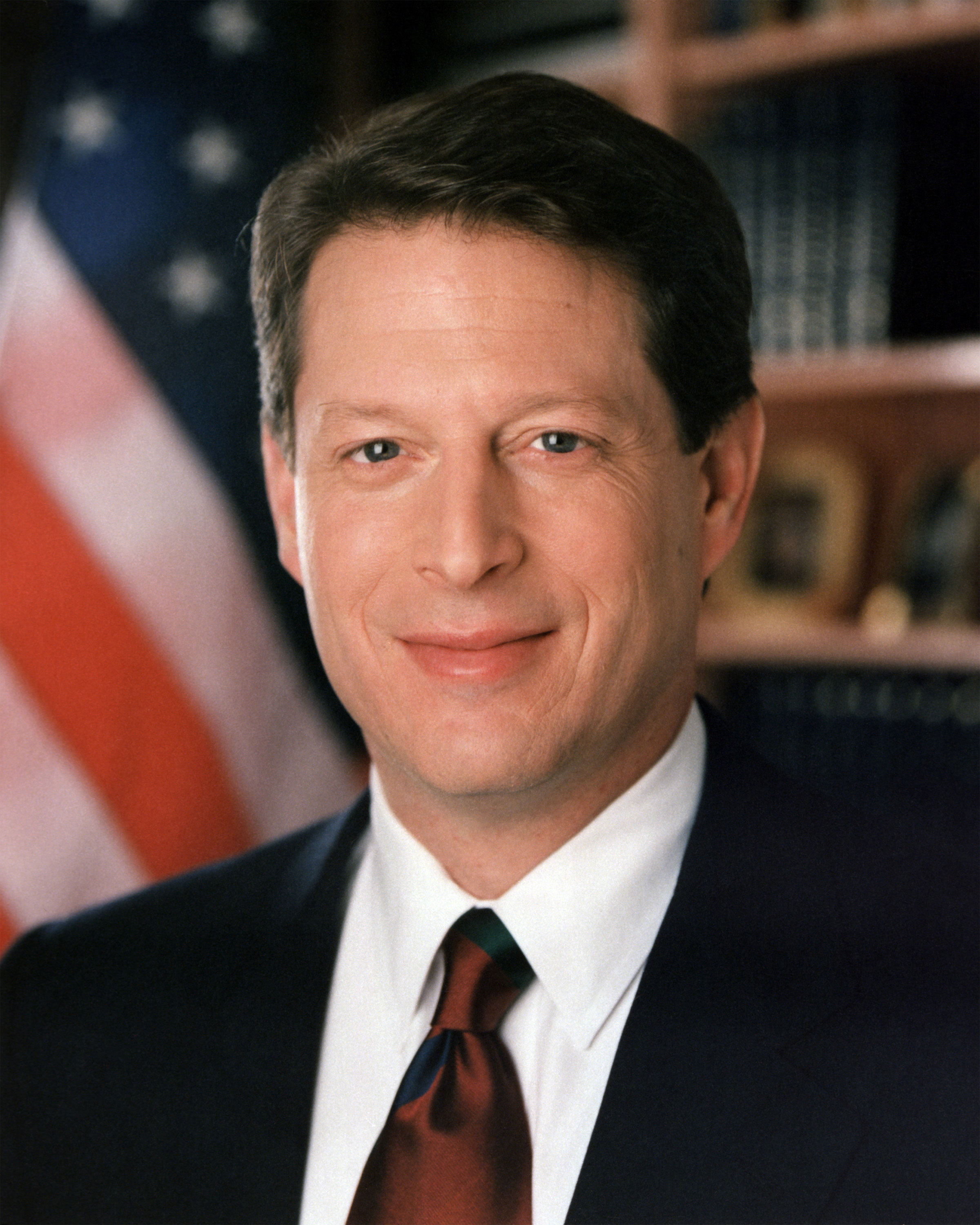 Al Gore