Quote
"Bazarov drew himself up haughtily. "I dont adopt any ones ideas; I have my own."
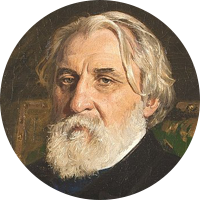 Ivan Turgenev
"Our author first made a name by his striking sketches "The Papers of a Sportsman" (Zapiski Okhotnika), in which the miserable condition of the peasants was described with startling realism. The work appeared in a collected form in 1852. It was read by all classes, including the emperor himself, and it undoubtedly hurried on the great work of emancipation."
"Bazarov drew himself up haughtily. "I dont adopt any ones ideas; I have my own."
Ivan Turgenev"Death is an old joke, but it comes like new to everyone."
Ivan Turgenev"There was a time, Nikolai Artemyevitch resumed, when daughters did not allow themselves to look down on their parents—when the parental authority forced the disobedient to tremble. That time has passed, unhappily: so at least many persons imagine; but let me tell you, there are still laws which do not permit—do not permit—in fact there are still laws. I beg you to mark that: there are still laws——"
Ivan Turgenev"Unquestionably Turgueniev may be considered one of the great novelists, worthy to be ranked with Thackeray, Dickens and George Eliot; with the genius of the last of these he has many affinities. His studies of human nature are profound, and he has the wide sympathies which are essential to genius of the highest order. A melancholy, almost pessimist, feeling pervades his writings, a morbid self-analysis which seems natural to the Slavonic mind. The closing chapter of “A Nest of Nobles” is one of the saddest and at the same time truest pages in the whole range of existing novels."
Ivan Turgenev"For myself, I detest the fellow, and think him a charlatan. I am certain that, in spite of his frogs, he is making no real progress in physics."
Ivan Turgenev"I, too, believed it was impossible to change the existing society into one that would be for the benefit of all; neither could I espouse any given ideal for society. But [...] I felt that even if one did not have an ideal vision of society, one could have one’s work to do. Whether it was successful or not was not our concern; it was enough that we believed it to be a valid work. The accomplishment of that work, I believed, was what our real life was about. Yes. I want to carry out a work of my own; for I feel that by so doing our lives are rooted in the here and now, not in some far-off ideal goal."
"Nobody should start to undertake a large project. You start with a small _trivial_ project, and you should never expect it to get large. If you do, youll just overdesign and generally think it is more important than it likely is at that stage. Or worse, you might be scared away by the sheer size of the work you envision. So start small, and think about the details. Dont think about some big picture and fancy design. If it doesnt solve some fairly immediate need, its almost certainly over-designed. And dont expect people to jump in and help you. Thats not how these things work. You need to get something half-way _useful_ first, and then others will say "hey, that _almost_ works for me", and theyll get involved in the project."
 Free software
"If something seems possible, thats probably because someone is already doing it. When something seems that it cant possibly work, nobody tries it. Real innovation happens when someone tries anyway, overlooking an obvious flaw, and finds a way to make an idea work."
"Without getting complicated let me recapitulate my art training in the following way: the Academy first, the break with the Academy when I hit the Hofmann School which is Cubist. The next real break follows when I see Pollock’s work [1940-41] and once more another transition occurs.. .It was a force [Pollock’s work], a living force, the same sort of thing I responded to in Matisse, in Picasso, in Mondrian. Once more, I was hit that hard with what I saw... I began feeling the need to break with what I was doing and to approach something else."
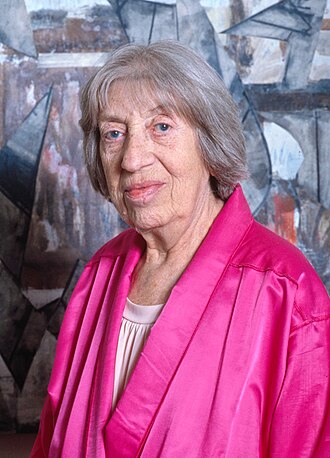 Lee Krasner
"Well I think it [a Little Image painting] does suggest hieroglyphics of some sort. It is a preoccupation of mine from way back and every once in a while it comes into my work again. For instance in my 1968 show at the Marlborough I have a painting called Kufic, an ancient form of Arabic writing. Every once in a while I fall back to what I call my mysterious writings. I haven no idea what this is about but it runs through periods of my work."
Lee Krasner"Action in its essence, the creative art of a writer of fiction may be compared to rescue work carried out in darkness against cross gusts of wind swaying the action of a great multitude. It is rescue work, this snatching of vanishing phases of turbulence, disguised in fair words, out of the native obscurity into a light where the struggling forms may be seen, seized upon, endowed with the only possible form of permanence in this world of relative values — the permanence of memory."