Quote
"So long as the public may be manipulated by misrepresentation and by appeal to ignorance and prejudice, it is the public’s own fault if the “knowing ones” make use of questionable methods."
P
Propaganda"Pope Gregory XV made a new start by setting up in 1622 the Sacred Congregation for the Propagation of the Faith... The new Congregation was supposed to supervise the missions and coordinate their activities. In due course, it came to be known as Propaganda from its Latin name — Propaganda di Fide. An otherwise innocent word was to acquire a bad odour in succeeding centuries because of its association with Popery. Though this department is still an integral part of the Popes establishment at Rome, it has been renamed the Sacred Congregation for Evangelisation of Peoples. The shame which this set-up has brought upon the Pope by its close cooperation with Western imperialism for four-and-a-half centuries, is being sought to be hidden by a bit of linguistic surgery."
Propaganda is communication that is primarily used to influence or persuade an audience to further an agenda, which may not be objective and may be selectively presenting facts to encourage a particular synthesis or perception, or using loaded language to produce an emotional rather than a rational response to the information that is being presented. Propaganda can be found in a wide variety of di
"So long as the public may be manipulated by misrepresentation and by appeal to ignorance and prejudice, it is the public’s own fault if the “knowing ones” make use of questionable methods."
"One of the serious results of propaganda is that it has caused the public to think that education and propaganda are the same thing, and thus to make an ignorant multitude believe it is being educated when it is only being manipulated. Education aims at independence of judgement. Propaganda offers ready-made opinions for the unthinking herd."
"Without some form of censorship, propaganda in the strict sense of the word is impossible. In order to conduct a propaganda there must be some barrier between the public and the event. Access to the real environment must be limited, before anyone can create a pseudo-environment that he thinks wise or desirable. ...It is often very illuminating, therefore, to ask yourself how you got at the facts on which you base your opinion. Who actually saw, heard, felt, counted, named the thing, about which you have an opinion? Was it the man who told you, or the man who told him, or someone still further removed? And how much was he permitted to see?"
"Russians might not believe official media, but might also choose — perhaps subconsciously — not to acknowledge the extent to which they allow themselves to be deceived. (It bears mentioning that social media analysts of the 2016 US presidential election noted a similar phenomenon: Citizens can, and often do, choose to believe comfortable falsehoods, instead of admitting to truths that disrupt their desired way of seeing the world.) Looking at Russian television news after the takeover of Crimea in 2014, journalist Maria Lipman concluded that the more extreme and far-fetched the claims of various programs became, the more their audiences grew. “Russian viewers tuned into shows,” she and two colleagues argued in a 2018 essay, “in search of not truth, but emotional gratification.” Viewers wanted to believe wildly distorted media stories that affirmed “national pride and a sense of vindication.”"
"We tend today to exaggerate the effectiveness of persuasion as a means of inculcating opinion and shaping behavior. ...Actually the fabulous effects ascribed to propaganda have no greater foundation in fact than the fall of the walls of Jericho ascribed to the blast of Joshuas trumpets."
"Scientifically regarded, propaganda is merely a form of mental suggestion."
"How seldom, Friend! a good great man inherits Honour or wealth, with all his worth and pains! It sounds like stories from the land of spirits, If any man obtain that which he merits, Or any merit that which he obtains.   . For shame, dear Friend! renounce this canting strain! … Greatness and goodness are not means, but ends! Hath he not always treasures, always friends, The good great man? Three treasures, and , And , regular as infants breath; And three firm friends, more sure than day and night, , his , and the Angel ."
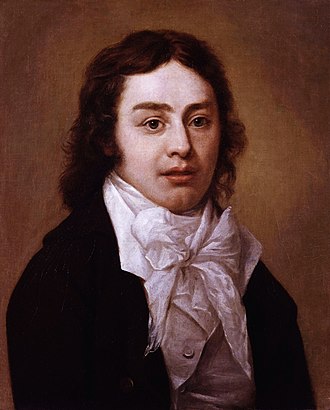 Samuel Taylor Coleridge
"He who loves is not ashamed before men of what he does for God, neither does he hide it through shame though the whole world should condemn it."
"Shamino: (when the player clicks repeatedly on a cat) Bloody cats!"
"A cloud was on the mind of men, and wailing went the weather, Yea, a sick cloud upon the soul when we were boys together. Science announced nonentity and art admired decay; The world was old and ended: but you and I were gay; Round us in antic order their crippled vices came — Lust that had lost its laughter, fear that had lost its shame."
"And then it happened. Suddenly, shamelessly, and without warning, as it must in all musical comedies, they were struck by... a love song."
"Prisoner in Castle British dungeon: "Shamino, speak up man!"