Quote
"The peasantry, having lifted itself up out of its medieval status, cannot politically generate its own rage."
L
Leon Trotsky"Reference to the conditions that have developed in Russia and Hungary under Soviet rule proves nothing. What we have there is nothing but a picture of the destruction of an existing order of social production, for which a closed peasant household economy has been substituted. All branches of production depending on social division of labor are in a state of entire dissolution. What is happening under the rule of Lenin and Trotsky is merely destruction and annihilation. Whether, as the liberals hold, socialism must inevitably draw these consequences in its train, or whether, as the socialists retort, this is only a result of the fact that the Soviet Republic is attacked from without, is a question of no interest to us in this context. All that has to be established is the fact that the Soviet socialist commonwealth has not even begun to discuss the problem of economic calculation, nor has it any cause to do so. For where things are still produced for the market in Soviet Russia in spite of governmental prohibitions, they are valued in terms of money, for there exists to that extent private ownership of the means of production, and goods are sold against money. Even the government cannot deny the necessity, which it confirms by increasing the amount of money in circulation, of retaining a monetary system for at least the transition period."
Lev Davidovich Trotsky, better known as Leon Trotsky, was a Russian revolutionary, Soviet politician and political theorist. He was a key figure in the 1905 Revolution, the October Revolution of 1917, the Russian Civil War, and the establishment of the Soviet Union, from which he was exiled in 1929 before his assassination in 1940. Trotsky and Vladimir Lenin were widely considered the two most pro
"The peasantry, having lifted itself up out of its medieval status, cannot politically generate its own rage."
"I will say in a few words why the anarchist doctrine is wrong. The anarchists say that the working class does not need a government: what is needs is to organize production. Government, they say, is a bourgeois invention, a bourgeois machine of compulsion, and the working class does not need to take governmental power. This is wrong from beginning to end."
"We communists know only one possession that is sacred — the life of the working man, the life of the worker, his wife and his children. That is the only possession which is sacred so far as we are concerned, and it gives us the right to do anything and everything."
"As long as I breathe I hope. As long as I breathe I shall fight for the future, that radiant future, in which man, strong and beautiful, will become master of the drifting stream of his history and will direct it towards the boundless horizons of beauty, joy and happiness!"
"The Moscow trials are perpetrated under the banner of socialism. We will not concede this banner to the masters of falsehood! If our generation happens to be too weak to establish Socialism over the earth, we will hand the spotless banner down to our children. The struggle which is in the offing transcends by far the importance of individuals, factions and parties. It is the struggle for the future of all mankind. It will be severe, it will be lengthy. Whoever seeks physical comfort and spiritual calm let him step aside. In time of reaction it is more convenient to lean on the bureaucracy than on the truth. But all those for whom the word Socialism is not a hollow sound but the content of their moral life – forward! Neither threats nor persecutions nor violations can stop us! Be it even over our bleaching bones the truth will triumph! We will blaze the trail for it. It will conquer! Under all the severe blows of fate, I shall be happy as in the best days of my youth! Because, my friends, the highest human happiness is not the exploitation of the present but the preparation of the future."
"The proletariat can only achieve power by relying upon a national upsurge an national enthusiasm. The proletariat will enter the government as the revolutionary representative of the nation, as the recognized national leader in the struggle against absolutism and feudal barbarism. In taking power, however, it will popes a new epoch, an en epoch of revolutionary legislation, of positive policy, and in this connection it cannot at all be sure of retaining the role of the recognized expressor of the will of the nation."
"Now Art, used collectively for painting, sculpture, architecture and music, is the mediatress between, and reconciler of, nature and man. It is, therefore, the power of humanizing nature, of infusing the thoughts and passions of man into everything which is the object of his contemplation."
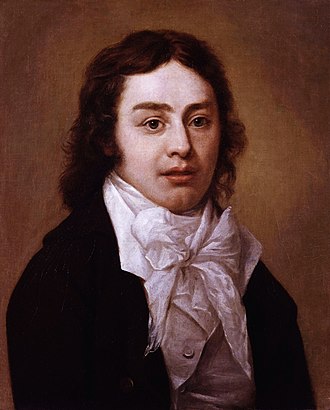 Samuel Taylor Coleridge
"The Good consists in the congruity of a thing with the laws of the reason and the nature of the will, and in its fitness to determine the latter to actualize the former: and it is always discursive. The Beautiful arises from the perceived harmony of an object, whether sight or sound, with the inborn and constitutive rules of the judgment and imagination: and it is always intuitive."
Samuel Taylor Coleridge"I believe that the unity of man as opposed to other living things derives from the fact that man is the conscious life of himself. Man is conscious of himself, of his future, which is death, of his smallness, of his impotence; he is aware of others as others; man is in nature, subject to its laws even if he transcends it with his thought."
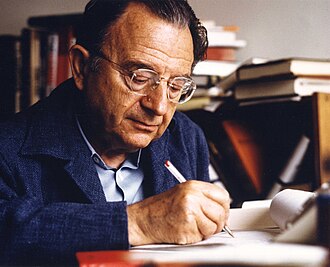 Erich Fromm
"Who made you glorious as the gates of heaven Beneath the keen full moon? Who bade the sun Clothe you with rainbows? Who, with living flower Of loveliest blue, spread garlands at your feet? God! let the torrents, like a shout of nations, Answer! and let the ice-plains echo, God! God! sing, ye meadow-streams, with gladsome voice! Ye pine-groves, with your soft and soul-like sounds! And they too have a voice, yon piles of snow, And in their perilous fall shall thunder, God!"
Samuel Taylor Coleridge"All Nature seems at work. Slugs leave their lair — The bees are stirring — birds are on the wing — And Winter slumbering in the open air, Wears on his smiling face a dream of Spring! And I the while, the sole unbusy thing, Nor honey make, nor pair, nor build, nor sing."
Samuel Taylor Coleridge"Taste is the intermediate faculty which connects the active with the passive powers of our nature, the intellect with the senses; and its appointed function is to elevate the images of the latter, while it realizes the ideas of the former."
Samuel Taylor Coleridge