Quote
"A sentence always means more. Even a single word, within the weave of incommensurable connotation, can, and usually does."
 George Steiner
"Self-projection is, more often than not, the move of the minor craftsman, of the tactics of the hour whose inherent weakness is, precisely, that of originality."
Francis George Steiner, FBA was a French and American literary critic, essayist, philosopher, novelist and educator. He wrote extensively about the relationship between language, literature and society, as well as the impact of the Holocaust. A 2001 article in The Guardian described Steiner as a "polyglot and polymath".
"A sentence always means more. Even a single word, within the weave of incommensurable connotation, can, and usually does."
George Steiner"For it is a plain fact that, most certainly in the West, the writings, works of art, musical compositions which are of central reference, comport that which is "grave and constant" (Joyces epithets) in the mystery of our condition."
George Steiner"Tragedy springs from outrage; it protests at the conditions of life. It carries in it the possibilities of disorder, for all tragic poets have something of the rebelliousness of Antigone. Goethe, on the contrary, loathed disorder. He once said that he preferred injustice, signifying by that cruel assertion not his support for reactionary political ideals, but his conviction that injustice is temporary and reparable whereas disorder destroys the very possibilities of human progress. Again, this is an anti-tragic view; in tragedy it is the individual instance of injustice that infirms the general pretence of order. One Hamlet is enough to convict a state of rottenness."
George Steiner"We come after. We know now that a man can read Goethe or Rilke in the evening, that he can play Bach and Schubert, and go to his days work at Auschwitz in the morning. To say that he has read them without understanding or that his ear is gross, is cant. In what way does this knowledge bear on literature and society, on the hope, grown almost axiomatic from the time of Plato to that of Matthew Arnold, that culture is a humanizing force, that the energies of spirit are transferable to those of conduct?"
George Steiner"What lies beyond mans word is eloquent of God. That is the joyously defeated recognition expressed in the poems of St. John of the Cross and of the mystic tradition."
George Steiner"Almost alone among cognitive-aesthetic movements and strategies of interpretation, deconstruction neither champions any body of past literature or art, nor does it act as vanguard or advocate for any contemporary or incipient school. The New Criticism and T. S. Eliot strove for the revaluation of Metaphysical poetry so as to underwrite, in turn, certain tactics of modenity. Aristotle was advocate for Sophocles. Deconstruction is, intentionally, marginal (a key trope) to all histories of taste and manifestos for innovation."
George Steiner"I should say that when people talk about capitalism its a bit of a joke. Theres no such thing. No country, no business class, has ever been willing to subject itself to the free market, free market discipline. Free markets are for others. Like, the Third World is the Third World because they had free markets rammed down their throat. Meanwhile, the enlightened states, England, the United States, others, resorted to massive state intervention to protect private power, and still do. Thats right up to the present. I mean, the Reagan administration for example was the most protectionist in post-war American history. Virtually the entire dynamic economy in the United States is based crucially on state initiative and intervention: computers, the internet, telecommunication, automation, pharmaceutical, you just name it. Run through it, and you find massive ripoffs of the public, meaning, a system in which under one guise or another the public pays the costs and takes the risks, and profit is privatized. Thats very remote from a free market. Free market is like what India had to suffer for a couple hundred years, and most of the rest of the Third World."
"He, who begins by loving Christianity better than Truth, will proceed by loving his own Sect or Church better than Christianity, and end in loving himself better than all."
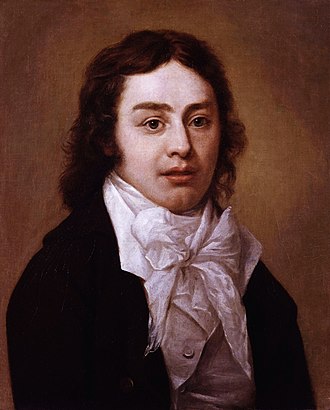 Samuel Taylor Coleridge
"I believe that the unity of man as opposed to other living things derives from the fact that man is the conscious life of himself. Man is conscious of himself, of his future, which is death, of his smallness, of his impotence; he is aware of others as others; man is in nature, subject to its laws even if he transcends it with his thought."
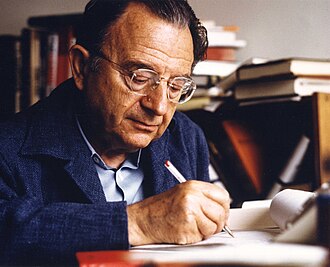 Erich Fromm
"You cant manage yourself, Root. How do you expect to manage others?"
"Do not try to make the brilliant pupil a replica of yourself."
"I believe that man is in the last resort so free a being that his right to be what he believes himself to be cannot be contested."