SHAWORDS

Strabo... enters largely, in the Second Book of his Geography, into th — Strabo

HomeStraboQuote
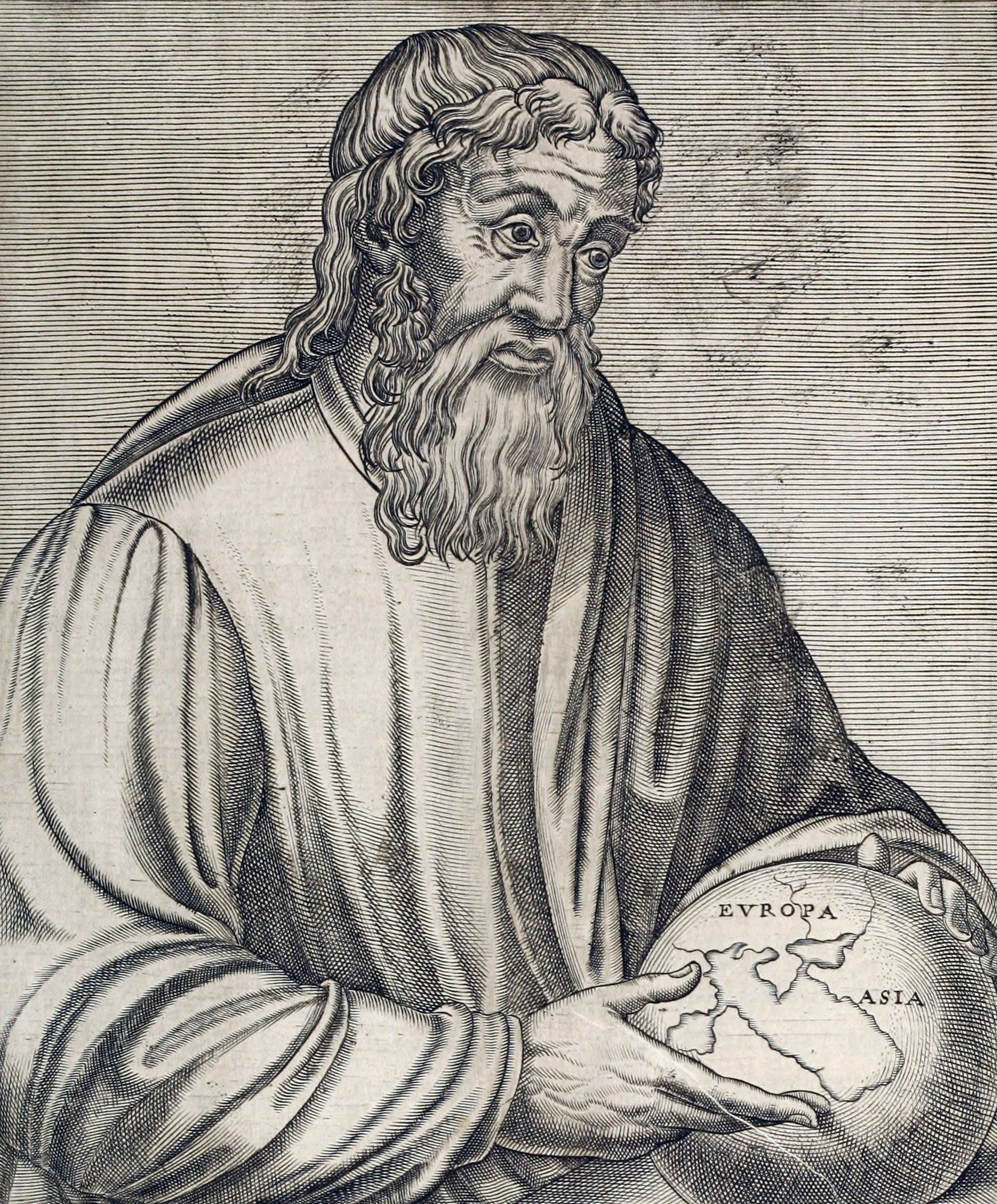
"Strabo... enters largely, in the Second Book of his Geography, into the opinions of Eratosthenes and other Greeks on one of the most difficult problems in geology, viz., by what causes marine shells came to be plentifully buried in the earth at such great elevations and distances from the sea. He notices, amongst others, the explanation of Xanthus the Lyclian, who said that the seas had once been more extensive, and that they had afterwards been partially dried up, as in his own time many lakes, rivers, and wells in Asia had failed during a season of drought. Treating this conjecture with merited disregard, Strabo passes on to the hypothesis of Strato, the natural philosopher, who had observed that the quantity of mud brought down by rivers into the Euxine was so great, that its bed must be gradually raised, while the rivers still continued to pour in an undiminished quantity of water. He therefore conceived that, originally, when the Euxine was an inland sea, its level had by this means become so much elevated that it burst its barrier near Byzantium, and formed a communication with the Propontis, and this partial drainage had already, he supposed, converted the left side into marshy ground, and that, at last, the whole would be choked up with soil. So, it was argued, the Mediterranean had once opened a passage for itself by the Columns of Hercules into the Atlantic, and perhaps the abundance of sea-shells in Africa, near the Temple of Jupiter Ammon, might also be the deposit of some former inland sea, which had at length forced a passage and escaped."
Strabo
Strabo
Strabo
author11 quotes

Strabo was an ancient Greek geographer who lived in Asia Minor during the transitional period of the Roman Republic into the Roman Empire. He is best known for his work Geographica, which presented a descriptive history of people and places from different regions of the world known during his lifetime. Additionally, Strabo authored historical works, but only fragments and quotations of these survi

More by Strabo

View all →
Quote
"What is now called Macedonia was in earlier times called Emathia. And it took its present name from Macedon, one of its early chieftains. And there was also a city emathia close to the sea. Now a part of this country was taken and held by certain of the Epeirotes and the Illyrians, but most of it by the Bottiaei and the Thracians. The Bottiaei came from Crete originally, so it is said, along with Botton as chieftain. As for the Thracians, the Pieres inhabited Pieria and the region about Olympus; the Paeones, the region on both sides of the Axius River, which on that account is called Amphaxitis; the Edoni and Bisaltae, the rest of the country as far as the Strymon. Of these two peoples the latter are called Bisaltae alone, whereas a part of the Edoni are called Mygdones, a part Edones, and a part Sithones. But of all these tribes the Argeadae, as they are called, established themselves as masters, and also the Chalcidians of Euboea; for the Chalcidians of Euboea also came over to the country of the Sithones and jointly peopled about thirty cities in it, although later on the majority of them were ejected and came together into one city, Olynthus; and they were named the Thracian Chalcidians."
StraboStrabo
Quote
"Three classes inhabited the city (Alexandria in Egypt): first the Aegyptian or native stock of people, who were quick-tempered and not inclined to civil life; and secondly the mercenary class, who were severe and numerous and intractable...; and, third, the tribe of the Alexandrians, who also were not distinctly inclined to civil life, and for the same reasons, but still they were better than those others, for even though they were a mixed people, still they were Greeks by origin and mindful of the customs common to the Greeks."
StraboStrabo
Quote
"In another place, this learned geographer [Strabo], in alluding to the tradition that Sicily had been separated by a convulsion from Italy, remarks, that at present the land near the sea in those parts was rarely shaken by earthquakes, since there were now open orifices whereby fire and ignited matters and waters escaped; but formerly, when the volcanoes of Etna, the Lipari Islands, Ischia, and others, were closed up, the imprisoned fire and wind might have produced far more vehement movements. The doctrine, therefore, that volcanoes are safety valves, and that the subterranean convulsions are probably most violent when first the volcanic energy shifts itself to a new quarter, is not modern."
StraboStrabo

More on Dua

View all →
Quote
"As in respect of the first wonder we are all on the same level, how comes it that the philosophic mind should, in all ages, be the privilege of a few? The most obvious reason is this: The wonder takes place before the period of reflection, and (with the great mass of mankind) long before the individual is capable of directing his attention freely and consciously to the feeling, or even to its exciting causes. Surprise (the form and dress which the wonder of ignorance usually puts on) is worn away, if not precluded, by custom and familiarity."
Samuel Taylor ColeridgeSamuel Taylor Coleridge