Quote
"Gentlemen, no fighting please. This is, after all, a council of war. (p. 26)"
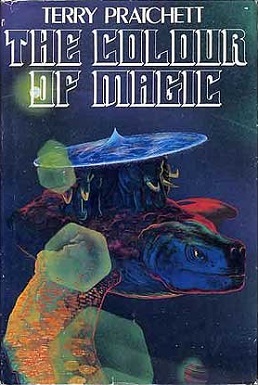 Discworld
"Thats why its always worth having a few philosophers around the place. One minute its all Is Truth Beauty and Is Beauty Truth, and Does A Falling Tree in the Forest Make A Sound if Theres No one There to Hear It, and then just when you think theyre going to start dribbling one of em says, Incidentally, putting a thirty-foot parabolic reflector on a high place to shoot the rays of the sun at an enemys ships would be a very interesting demonstration of optical principles." (p. 131)"
Discworld is a collection of fantasy comedy novels, graphic novels, short stories, and associated works conceived and primarily written by the English author Terry Pratchett. They are united by their being set on the Discworld, a flat planet balanced on the backs of four elephants which in turn stand on the back of a giant turtle. The novel series consists of forty-one books, the first being The C
"Gentlemen, no fighting please. This is, after all, a council of war. (p. 26)"
Discworld"The big trouble," he added, "is that everyone wants someone else to read their minds for them and then make the world work properly. (p. 227)"
Discworld"The class was learning about some revolt in which some peasants had wanted to stop being peasants and, since the nobles had won, had stopped being peasants really quickly. (p. 39)"
Discworld"No tortoise had ever done this before. No tortoise in the whole universe. But no tortoise had ever been a god, and knew the unwritten motto of the Quisition: Cuius testiculos habes, habeas cardia et cerebellum."
Discworld"Lord Vetinari represented stability. It was a cold and clinical kind of stability, but part of his genius was the discovery that stability was what people wanted more than anything else."
Discworld"And there, right there, was the drawback of being a witch. Here was a person whose mere existence had led Tiffany, one evening, to wonder about that whole business of sticking pins into a wax figure. She hadn’t actually done it, because it was some thing that you shouldn’t do, something that witches greatly frowned on, and because it was cruel and dangerous, and above all because she hadn’t been able to find any pins."
Discworld"Now Art, used collectively for painting, sculpture, architecture and music, is the mediatress between, and reconciler of, nature and man. It is, therefore, the power of humanizing nature, of infusing the thoughts and passions of man into everything which is the object of his contemplation."
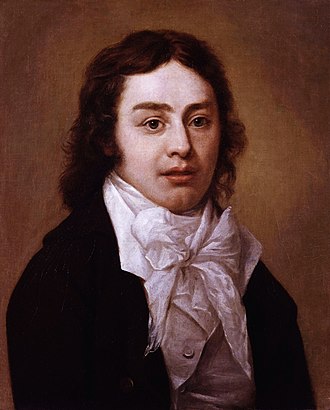 Samuel Taylor Coleridge
"The Good consists in the congruity of a thing with the laws of the reason and the nature of the will, and in its fitness to determine the latter to actualize the former: and it is always discursive. The Beautiful arises from the perceived harmony of an object, whether sight or sound, with the inborn and constitutive rules of the judgment and imagination: and it is always intuitive."
Samuel Taylor Coleridge"I believe that the unity of man as opposed to other living things derives from the fact that man is the conscious life of himself. Man is conscious of himself, of his future, which is death, of his smallness, of his impotence; he is aware of others as others; man is in nature, subject to its laws even if he transcends it with his thought."
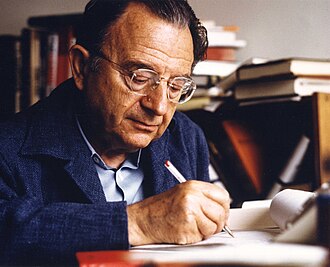 Erich Fromm
"Who made you glorious as the gates of heaven Beneath the keen full moon? Who bade the sun Clothe you with rainbows? Who, with living flower Of loveliest blue, spread garlands at your feet? God! let the torrents, like a shout of nations, Answer! and let the ice-plains echo, God! God! sing, ye meadow-streams, with gladsome voice! Ye pine-groves, with your soft and soul-like sounds! And they too have a voice, yon piles of snow, And in their perilous fall shall thunder, God!"
Samuel Taylor Coleridge"All Nature seems at work. Slugs leave their lair — The bees are stirring — birds are on the wing — And Winter slumbering in the open air, Wears on his smiling face a dream of Spring! And I the while, the sole unbusy thing, Nor honey make, nor pair, nor build, nor sing."
Samuel Taylor Coleridge"Taste is the intermediate faculty which connects the active with the passive powers of our nature, the intellect with the senses; and its appointed function is to elevate the images of the latter, while it realizes the ideas of the former."
Samuel Taylor Coleridge