Quote
"However it may be confounded or covered up or counterfeited, this elemental capacity to fight against injustice remains the distinguishing characteristic of human beings."
R
Rollo May"[T]he daimonic power does not merely take the individual over as its victim, but works through him psychologically, it clouds his judgment, makes it harder for him to see reality, but still leaves him with the responsibility for the act. This is the age old dilemma of my own personal responsibility even though I am ruled by fate. It is the ultimate statement that truth and reality are psychologized only to a limited extent. Aeschylus is not impersonal but transpersonal, a believer in fate and moral responsibility at the same time."
Rollo Reece May was an American existential psychologist and author of the influential book Love and Will (1969). He is often associated with humanistic psychology and existentialist philosophy, and alongside Viktor Frankl, was a major proponent of existential psychotherapy. The philosopher and theologian Paul Tillich was a close friend who had a significant influence on his work.
"However it may be confounded or covered up or counterfeited, this elemental capacity to fight against injustice remains the distinguishing characteristic of human beings."
"It is highly significant, and indeed almost a rule, that moral courage has its source in identification through ones own sensitivity with the suffering of ones fellow human beings."
"When I fall in love, I feel more valuable and I treat myself with more care. We have all observed the hesitant adolescent, uncertain of himself, who, when he or she falls in love, suddenly walks with a certain inner assuredness and confidence, a mien which seems to say, "You are looking at somebody now." … this inner sense of worth that comes with being in love does not seem to depend essentially on whether the love is returned or not."
"In any age courage is the simple virtue needed for a human being to traverse the rocky road from infancy to maturity of personality. But in an age of anxiety, an age of her morality and personal isolation, courage is a sine qua non. In periods when the mores of the society were more consistent guides, the individual was more firmly cushioned in his crises of development; but in times of transition like ours, the individual is thrown on his own at an earlier age and for a longer period."
"Art is a substitute for violence. The same impulses that drive persons to violence — the hunger for meaning, the need for ecstasy, the impulse to risk all — drive the artist to create. He is by nature our archrebel. … the essence of the rebellion is in the new way of seeing nature and life."
"My fellow liberals and I in America, and in Europe to a lesser extent, believed so strongly in peace and world brotherhood in those days that we could not even see Hitler or the destructively daimonic reality he represented. Human beings just couldnt be that cruel in the our civilized twentieth century — the accounts in the papers must be wrong. Our error was that we let our convictions limit our perceptions. We had no place for the daimonic; we believed that the world must somehow fit our convictions, and the whole daimonic dimension was ruled out of our perception. Not to recognize the daimonic itself turns out to be daimonic, it makes us accomplices on the side of the destructive possession. The denial of the daimonic is, in effect, a self-castration in love and a self-nullification in will. And the denial leads to the perverted forms of aggression we have seen in our day in which the repressed comes back to haunt us."
"O dread and silent mount! I gazed upon thee, Till thou, still present to the bodily sense, Didst vanish from my thought: entranced in prayer, I worshipped the Invisible alone."
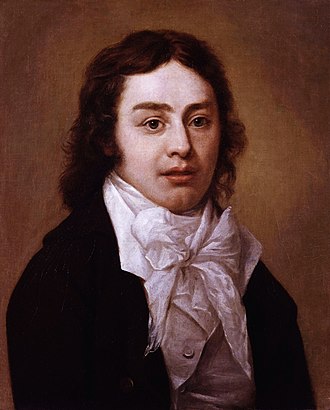 Samuel Taylor Coleridge
"Mister Toombs was willing to dissolve the Union to save slavery, Mister Phillips, to save liberty; while Mister Seward, denounced and derided by both, declared that the deepest instinct of the American people was for union. Reserved rights. State rights, limited powers, the advantages of union and disunion, were the cucumbers from which we were busily engaged in distilling light, overlooking the fact of nationality in discussing the conditions of union. We were speculating upon costume. We gravely proved that the clothes were the clothes of a woman, or of a child, without seeing that whatever the clothes might be there was a full-grown man inside of them. "The Constitution is a contract between sovereign States", shouted Mister Toombs, "let Georgia tear it and separate". "The Constitution is a league with hell", calmly replied Mister Phillips, "let New York cut off New Orleans to rot alone". "Oh, dear! it"s a dreadful dilemma", whimpered President Buchanan. "States have no right to secede, and the United States have no right to coerce. Oh, dear me! it"s perfectly awful! I"m the most patriotic of men, but what shall I do? what shall I do?" Separate! Cut off! Secede! It was of a living body they spoke, which, pierced anywhere, quivered everywhere."
 Wendell Phillips
"Its never a matter of ethics versus pragmatism; its a question of which informs the other. Humans have shown themselves capable of almost unlimited imagination and innovation—qualities that could be said to define human beings. People have used this capacity to do both great good and great harm. The point is that when humans set their minds to doing something, its frequently possible. It makes sense to first ask what people want to do and why, from an ethical standpoint, and then get to the pragmatic how-to questions. The very process of asking whats right is how people fill out ethics in praxis, to meet new demands and dilemmas, new social conditions and contexts. Anarchism, then, brings an egalitarian ethics out into the world, making it transparent, public, and shared. It maintains an ethical orientation, while continually trying to put such notions into practice, as flawed as the effort might be. When other people come into contact with this ethical compass, they will hopefully "get it" and incorporate the same values into their lives, because it works. It offers directionality to political involvement and buttresses peoples efforts to remake society. It turns surviving into thriving. Thats the crucial difference between a pragmatic versus ethical impulse: people, in cooperative concert, qualitatively transform one anothers lives."
"Thats... the big discovery of this principle of computational equivalence of mine. ...This is something which is kind of a follow-on to Gödels theorem, to Turings work on the ... that there is this fundamental limitation built into science, this idea of computational irreducibility that says that even though you may know the rules by which something operates, that does not mean that you can readily... be smarter that it and jump ahead and figure out what its going to do."
"The art of leading, in operations large or small, is the art of dealing with humanity, of working diligently on behalf of men, of being sympathetic with them, but equally, of insisting that they make a square facing toward their own problems."
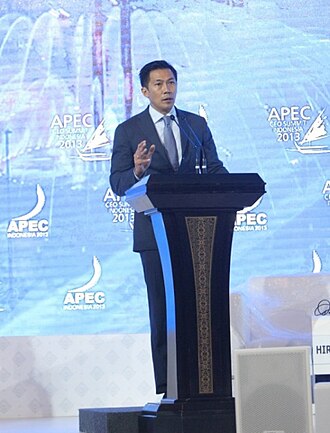 Leadership
"The establishment of "The Times" newspaper is an example, on a large scale, of a manufactory in which the division of labour, both mental and bodily, is admirably illustrated, and in which also the effect of domestic economy is well exemplified. It is scarcely imagined, by the thousands who read that paper in various quarters of the globe, what a scene of organized activity the factory presents during the whole night, or what a quantity of talent and mechanical skill is put in action for their amusement and information."
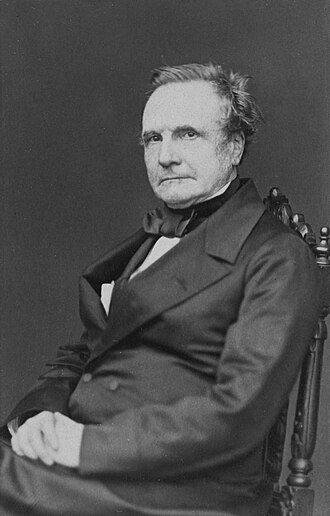 Charles Babbage