Quote
"In Deductive Reasoning, we cannot have any truth in the conclusion which is not virtually contained in the premises."
W
William Whewell"The Process of Induction may be resolved into three steps ; the Selection of the Idea, the Construction of the Conception, and the Determination of the Magnitudes. These three steps correspond to the determination of the Independent Variable, the formula, and the coefficients, in mathematical investigations; or to the Argument, the Law, and the Numerical Data, in a Table of an Inequality. The conceptions involved in scientific truths have attained the requisite degree of clearness by means of the Discussions respecting ideas which have taken place among discoverers and their followers. Such discussions are very far from being unprofitable"
William Whewell was an English polymath. He was Master of Trinity College, Cambridge. In his time as a student there, he achieved distinction in both poetry and mathematics.
"In Deductive Reasoning, we cannot have any truth in the conclusion which is not virtually contained in the premises."
"A Natural System is one which attempts to make all the divisions natural, the widest as well as the narrowest; and therefore applies no characters peremptorily."
"We cannot observe external things without some degree of Thought; nor can we reflect upon our Thoughts, without being influenced in the course of our reflection by the Things which we have observed."
"The Sight cannot decompose a compound colour into simple colours, or distinguish a compound from a simple colour"
"The solution is, that we do not see the image on the retina at all, we only see by means of it."
"We unfold out of the Idea of Space the propositions of geometry, which are plainly truths of the most rigorous necessity and universality. But if the idea of space were merely collected from observation of the external world, it could never enable or entitle us to assert such propositions: it could never authorize us to say that not merely some lines, but all lines, not only have, but must have, those properties which geometry teaches. Geometry in every proposition speaks a language which experience never dares to utter; and indeed of which she but half comprehends the meaning."
"The wound is the place where the Light enters you."
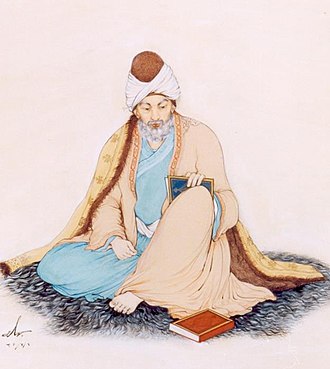 Rumi
Rumi"Be the change that you wish to see in the world."
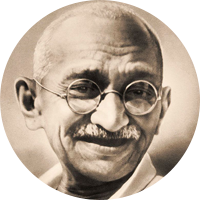 Mahatma Gandhi
"In philosophy equally as in poetry it is the highest and most useful prerogative of genius to produce the strongest impressions of novelty, while it rescues admitted truths from the neglect caused by the very circumstance of their universal admission."
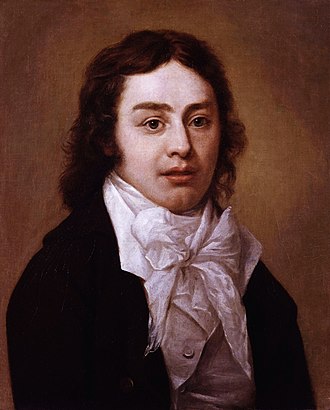 Samuel Taylor Coleridge
"An [hypertext] encyclopaedia will be an overall attempt by the knowledgeable, the learned societies or anyone else, to represent the state-of-the-art in their field. An encyclopaedia will be a living document, as up to date as it can be, instantly accessible at any time. It will contain carefully authored explanations and summaries of the subject, as well as computer-generated indexes of literature. A reference to a paper from the encyclopaedia conveys authority and acceptance by academic society. A measure of a paper’s standing may be conveyed by the number of links it is away from an encyclopaedia."
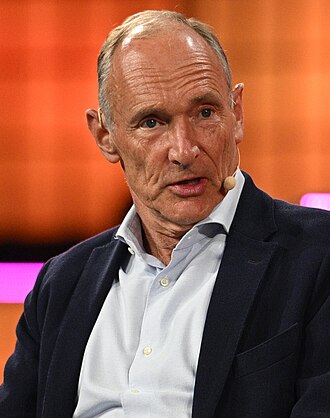 Tim Berners-Lee
"The British intellectual tradition is empirical and liberal, the French is rationalist and aristocratic, and the German is idealist and conservative. ...In the great ontological debate between mind and matter, German philosophy comes down solidly on the side of mind. Its emphasis is intuition as opposed to reason, ideas as opposed to facts."
"To know the mighty works of God, to comprehend His wisdom and majesty and power; to appreciate, in degree, the wonderful workings of His laws, surely all this must be a pleasing and acceptable mode of worship to the Most High, to whom ignorance cannot be more grateful than knowledge."