Quote
"The evolutionary epic is probably the best myth we will ever have."
E
E. O. Wilson"The rules followed are tight enough to produce a broad overlap in the decisions taken by all individuals and hence a convergence powerful enough to be labelled human nature."
Edward Osborne Wilson was an American biologist, naturalist, ecologist, and entomologist who developed the field of sociobiology.
"The evolutionary epic is probably the best myth we will ever have."
"Pure knowledge is the ultimate emancipator. It equalizes people and sovereign states, erodes the archaic barriers of superstition and promises to lift the trajectory of cultural evolution. But I do not believe that it can change the ground rules of human behavior or alter the main course of historys predictable trajectory."
"[Biology has] become the paramount science, exceeding other disciplines, including physics and chemistry at least, in the creative tumult of its disciplines and disputations. [...] Ill also be so bold at this point to suggest that we are now at the edge of establishing the two fundamental laws of biology: The first law is that all of the phenomena of biology, the entities and the processes, are ultimately obedient to the laws of physics and chemistry. Not immediately reducible to them, but ultimately consistent and in consilience with them, by a cause and effect explanation. The second law is that all biological phenomena, these entities and processes that define life itself, have arisen by evolution through natural selection."
"Intertribal aggression, escalating in some cultures to limited warfare, is common enough to be regarded as a general characteristic of hunter-gatherer social behavior."
"The only other mammalian carnivores that take outsized prey are lions, hyenas, wolves, and African wild dogs. Each... has an exceptionally advanced social life, prominently featuring the pursuit of prey in coordinated packs."
"A schema is a configuration within the brain, either inborn or learned, against which the input of the nerve cells is compared. ...the conscious mind ...can fill in details that are missing from the actual sensory input and create a pattern in the mind which is not necessarily present in reality. In this way, the gestalt of objects—the impression...—is aided by the taxonomic powers of the schemata."
"We have created a wealthy society with tens of millions of talented, resourceful individuals who play virtually no role whatsoever as citizens. Bringing these people in — with their networks of influence, their knowledge, and their resources — is the key to creating the capacity for shared intelligence that we need to solve our problems."
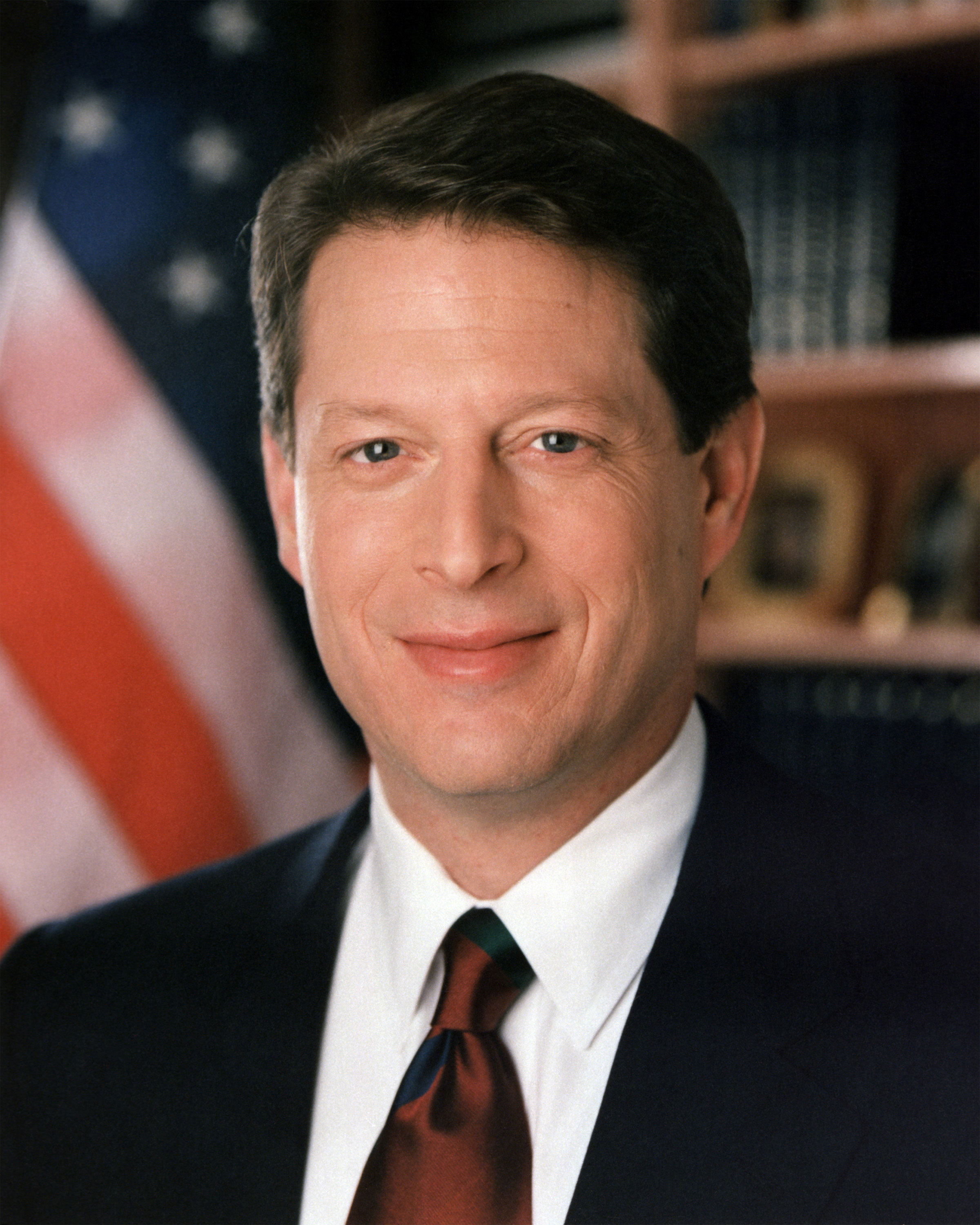 Al Gore
"As in respect of the first wonder we are all on the same level, how comes it that the philosophic mind should, in all ages, be the privilege of a few? The most obvious reason is this: The wonder takes place before the period of reflection, and (with the great mass of mankind) long before the individual is capable of directing his attention freely and consciously to the feeling, or even to its exciting causes. Surprise (the form and dress which the wonder of ignorance usually puts on) is worn away, if not precluded, by custom and familiarity."
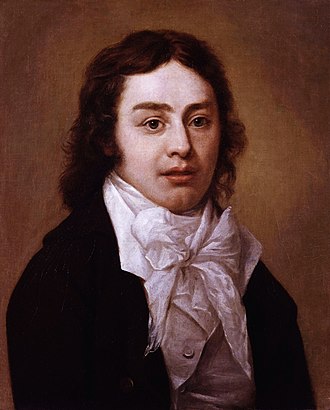 Samuel Taylor Coleridge
"The dualistic philosophy reigned supreme in Europe, dominating the development of Western science. But with the advent of atomic physics, findings based on demonstrable experiment were seen to negate the dualistic theory, and the trend of thought since then has been back to the monistic conception of the ancient Taoists."
"Under the rule of a repressive whole, liberty can be made into a powerful instrument of domination. The range of choice open to the individual is not the decisive factor in determining the degree of human freedom, but what can be chosen and what is chosen by the individual."
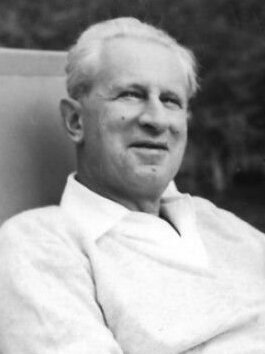 Herbert Marcuse
"All economic activity is carried out through time. Every individual economic process occupies a certain time, and all linkages between economic processes necessarily involve longer or shorter periods of time."
"I believe that the main lesson which our generation has learnt is that we must find a new limit for the activities of government, a limit which leaves ample scope for sensible experimentation but which secures the freedom of the individual as the mainspring of all social and political activity. The whole purpose of these lectures has been to suggest that we can find such a limit if we are willing to revive and develop the ancient ideal of the Rule of Law."