Quote
"Unless our ideas are questioned, they become part of the furniture of eternity."
W
Walter Lippmann"The self-evident truth which makes men invincible is that inalienably they are inviolate persons."
Walter Lippmann was an American journalist. With a career spanning 60 years, he is famous for being among the first to introduce the concept of the Cold War, coining the term "stereotype" in the modern psychological meaning, as well as critiquing media and democracy in his newspaper column and several books, most notably his 1922 Public Opinion.
"Unless our ideas are questioned, they become part of the furniture of eternity."
"The ideal of the omni-competent, sovereign citizen is ... a false ideal. It is unattainable. The pursuit of it is misleading. The failure to achieve it has produced the current disenchantment. At the root of the effort to educate a people for self-government there has ... always been the assumption that the voter should aim to approximate as nearly as he can the knowledge and the point of view of the responsible man. He did not, of course, ever approximate it very nearly. But he was supposed to. It was believed that if only he could be taught more facts, if only he would take more interest, if only he would read more and better newspapers, if only he would listen to more lectures and read more reports, he would gradually be trained to direct public affairs. The whole assumption is false ... No progress can be made towards this unattainable ideal. This democratic conception is false because it fails to note the radical difference between the experience of the insider and the outsider ... No device of publicity, no machinery of enlightenment can endow [the outsider] during a crisis with the antecedent detailed and technical knowledge which is required for executive action. The public must be put in its place, so that it may exercise its own powers, but no less and perhaps even more, so that each of us may live free of the trampling and the roar of a bewildered herd."
"Looking back we can see how indirectly we know the environment in which nevertheless we live. We can see that the news of it comes to us now fast, now slowly; but that whatever we believe to be a true picture, we treat as if it were the environment itself."
"[N]ews and truth are not the same thing and must be clearly distinguished. The function of news is to signalize an event, the function of truth is to bring to light the hidden facts, to set them into relation with each other, and make a picture of reality on which men can act. Only at those points, where social conditions take recognizable and measurable shape, do the body of truth and the body of news coincide."
"We have come to see that Huxley was right when he said that “a man’s worst difficulties begin when he is able to do as he likes.” The evidences of these greater difficulties lie all about us: in the brave and brilliant atheists who have defied the Methodist God, and have become very nervous; in the women who have emancipated themselves from the tyranny of fathers, husbands, and homes, and with the intermittent but expensive help of a psychoanalyst, are now enduring liberty as interior decorators; in the young men and women who are world-weary at twenty-two; in the multitudes who drug themselves with pleasure; in the crowds enfranchised by the blood of heroes who cannot be persuaded to take an interest in their destiny; in the millions, at last free to think without fear of priest or policeman, who have made the moving pictures and the popular newspapers what they are."
"[T]here is nothing disastrous in the temporary nature of our ideas. They are always that. But there may very easily be a train of evil in the self-deception which regards them as final. I think God will forgive us our skepticism sooner than our Inquisitions."
"I should say that when people talk about capitalism its a bit of a joke. Theres no such thing. No country, no business class, has ever been willing to subject itself to the free market, free market discipline. Free markets are for others. Like, the Third World is the Third World because they had free markets rammed down their throat. Meanwhile, the enlightened states, England, the United States, others, resorted to massive state intervention to protect private power, and still do. Thats right up to the present. I mean, the Reagan administration for example was the most protectionist in post-war American history. Virtually the entire dynamic economy in the United States is based crucially on state initiative and intervention: computers, the internet, telecommunication, automation, pharmaceutical, you just name it. Run through it, and you find massive ripoffs of the public, meaning, a system in which under one guise or another the public pays the costs and takes the risks, and profit is privatized. Thats very remote from a free market. Free market is like what India had to suffer for a couple hundred years, and most of the rest of the Third World."
"He, who begins by loving Christianity better than Truth, will proceed by loving his own Sect or Church better than Christianity, and end in loving himself better than all."
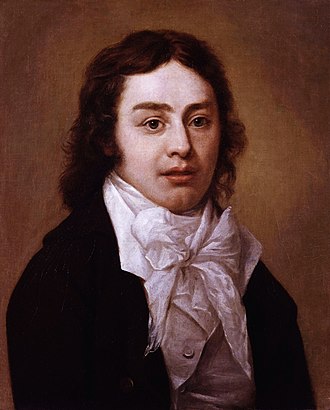 Samuel Taylor Coleridge
"I believe that the unity of man as opposed to other living things derives from the fact that man is the conscious life of himself. Man is conscious of himself, of his future, which is death, of his smallness, of his impotence; he is aware of others as others; man is in nature, subject to its laws even if he transcends it with his thought."
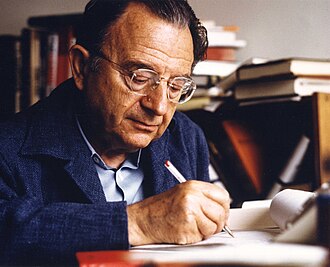 Erich Fromm
"You cant manage yourself, Root. How do you expect to manage others?"
"Do not try to make the brilliant pupil a replica of yourself."
"I believe that man is in the last resort so free a being that his right to be what he believes himself to be cannot be contested."