SHAWORDS

The solution … was found only after the rise of nuclear physics, and, — Arthur Eddington

"The solution … was found only after the rise of nuclear physics, and, strange to relate, was not known to Eddington when he developed his celebrated theory of stellar structure between 1916 and 1924. Indeed, it is one of the most intriguing facts in the history of science that the two most influential theories concerning the stars — Newtons theory of gravitation and Eddingtons theory of stellar construction — were each developed so successfully although Newton was ignorant of the origin of gravitation and Eddington of the origin of stellar energy."
A
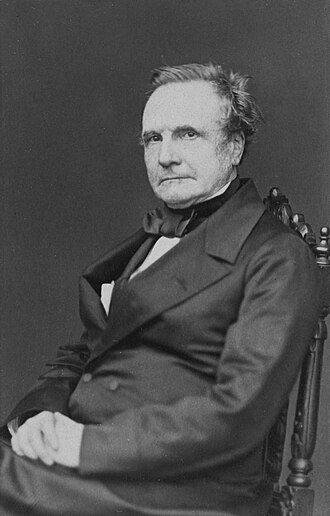
Arthur Eddington
Arthur Eddington
author107 quotes

Sir Arthur Stanley Eddington was an English astrophysicist and mathematician. The Eddington limit, the natural limit to the luminosity of stars, or the radiation generated by accretion onto a compact object, is named in his honour.

More by Arthur Eddington

View all →
Quote
"If to-day you ask a physicist what he has finally made out the æther or the electron to be, the answer will not be a description in terms of billiard balls or fly-wheels or anything concrete; he will point instead to a number of symbols and a set of mathematical equations which they satisfy. What do the symbols stand for? The mysterious reply is given that physics is indifferent to that; it has no means of probing beneath the symbolism. To understand the phenomena of the physical world it is necessary to know the equations which the symbols obey but not the nature of that which is being symbolised. … this newer outlook has modified the challenge from the material to the spiritual world."
A
Arthur Eddington

More on Success

View all →
Quote
"One of the first major steps in the direction of modern skepticism came through the victory of Occam over Aquinas in a controversy about language. The statement that modi essendi were replaced by modi significandi et intelligendi, or that ontological referents were abandoned in favor of pragmatic significations, describes broadly the change in philosophy which continues to our time. From Occam to Bacon, from Bacon to Hobbes, and from Hobbes to contemporary semanticists, the progression is clear: ideas become psychological figments, words become useful signs. ... To one completely committed to this realm of becoming, as are the empiricists, the claim to apprehend verities is a sign of . Probably we have here but a highly sophisticated expression of the doctrine that ideals are hallucination and that the only normal, sane person is the healthy extrovert, making instant, instinctive adjustments to the stimuli of the material world."
O
Ontology
Quote
"I, too, believed it was impossible to change the existing society into one that would be for the benefit of all; neither could I espouse any given ideal for society. But [...] I felt that even if one did not have an ideal vision of society, one could have one’s work to do. Whether it was successful or not was not our concern; it was enough that we believed it to be a valid work. The accomplishment of that work, I believed, was what our real life was about. Yes. I want to carry out a work of my own; for I feel that by so doing our lives are rooted in the here and now, not in some far-off ideal goal."
P
Purpose
Quote
"The war was finished. It had lasted ten equivalent years and taken ten million lives. Thus it was neither of long duration nor of serious attrition. It hadnt any great significance; it was not intended to have. It did not prove a point, since all points had long ago been proven. What it did, perhaps, was to emphasize an aspect, sharpen a concept, underline a trend. On the whole it was a successful operation. Economically and ecologically it was of healthy effect, and who should grumble? And after wars, men go home. No, no, men start for home. Its not the same."
R
R. A. Lafferty